
A 48 team World Cup means it took us a while to reach the top 10 in the power rankings, but having arrived at this stage, we’re talking about teams with some of the biggest stars in world football today like Portugal with Joao Neves and Nuno Mendes, and Senegal with Sadio Mane and Nicolas Jackson. We are also talking about former World Cup Champions with pedigree and high expectations like Germany and Brazil. Here is your look at teams ranked 6-10.
10. Morocco
(Group C with Brazil, Haiti, and Scotland)
There are two clear leaders in Group C, both top-10 sides and legitimate title contenders. Morocco finished fourth at the last World Cup and, depending on which version of events you believe, either won the most recent African Cup of Nations by default or lost to Senegal in a thriller. Regardless, the Atlas Lions are a top-tier team — one that practically never loses against CAF competition.
Qualifying was smooth, built on the foundation of Morocco’s world-class football infrastructure and integrating European born heritage players. They defeated Cameroon and Nigeria at AFCON — two teams that narrowly missed out on World Cup qualification. In the March window, a 2-1 win over Paraguay showed their consistency, followed by a late equalizer to draw with a feisty Ecuador side. Their opener with Brazil will certainly reshape the group’s outlook, but they should feel confident against the other opponents.
Experience defines this team. Captain Achraf Hakimi (PSG) already has 95 caps at just 27, Yassine Bounou remains between the posts, and Manchester United’s Noussair Mazraoui anchors the defense. Real Madrid’s Brahim Díaz provides attacking spark, with Sofyan Amrabat (Real Betis) and Youssef En-Nesyri (Al-Ittihad) key fixtures as well. The squad isn’t as deep as others in this range, but their championship pedigree and mentality more than compensate.
9. Senegal
(Group I with France, Iraq, and Norway)
Three of the four teams in this group are ranked inside the top 15, while the fourth — Iraq — are defensively solid. It’s a classic “group of death,” but Senegal stack up well. The Lions of Teranga have only reached the World Cup four times but famously reached the 2002 quarterfinals. This version of Senegal is experienced, confident, and fully believes it won the latest AFCON.
Idrissa Gueye (Everton), Sadio Mané (Al-Nassr), and Kalidou Koulibaly (Al-Hilal) have formed the spine of this team for more than a decade, and this looks likely to be their final World Cup together. The next generation is ready, though — Chelsea’s Mamadou Sarr brings energy, and 24-year-old Nicolas Jackson (Bayern Munich) looks a capable scorer. Senegal lack obvious weaknesses. They’re tactically disciplined, close-knit, and battle-tested — the kind of opponent no seed wants to face. Another deep run for sub-Saharan Africa isn’t far-fetched and it’s most likely to come from this team.
8. Brazil
(Group C with Morocco, Scotland, and Haiti)
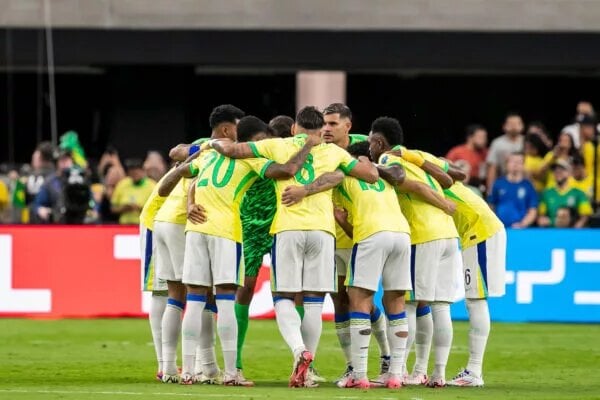
Brazil finished fifth in South American qualifying, level on points with Paraguay — a side ranked in the 20s this tournament. Under the old format, the Seleção might have been in danger of missing the World Cup entirely. Five-time champions, Brazil remain the heartbeat of this competition, but history tells a story: since lifting the trophy in 2002, they haven’t reached another final and crashed out of Copa América 2024 in the quarterfinals.
The old guard is mostly gone. Marquinhos (PSG) provides experience, while Neymar appears too unfit to feature. The future rests with Barcelona’s Raphinha and Real Madrid’s Vinícius Jr. The talent pool remains vast — with Joao Pedro (Chelsea) and Casemiro (Manchester United) adding Premier League steel — but questions persist at the back. Veterans like Danilo Luiz (Flamengo) are still being called up at 34, and the midfield no longer dominates games like it once did. Promising stars such as Endrick remain inconsistent. This ranking owes more to Brazil’s prestige — and to Carlo Ancelotti’s legendary pedigree — than to recent results.
And those results are shaky. Argentina thrashed Brazil 4–1 last March, and losses to Bolivia away, Japan away, and France in the United States followed, along with a draw against Tunisia. They managed to thump Croatia in the most recent window. In short: Brazil are unpredictable. They’ll almost certainly make the knockouts, but whether they inspire fear or suffer frustration from there remains to be seen. This team has lofty expectations but also immense pressure.
7. Portugal
(Group K with DR Congo, Uzbekistan, and Colombia)
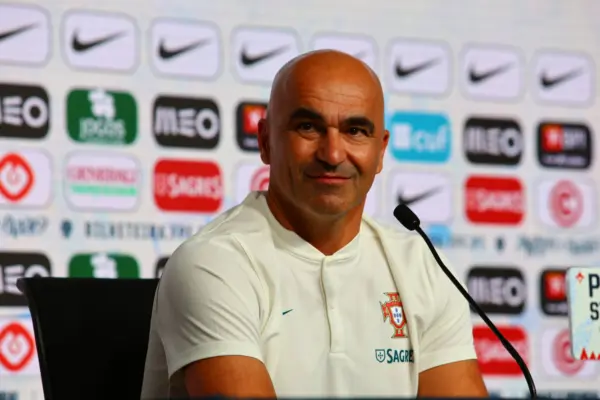
Only the wealthy will make it to Miami for Colombia vs. Portugal on Matchday 3, but the Seleção have ambitions beyond the group stage. The Cristiano Ronaldo “problem” still looms large — not because of his output, but because of his influence. At 41, Ronaldo still scores at astonishing rates for both Portugal and Al-Nassr, yet his game has narrowed to pure finishing, meaning Portugal play in the back a man down. Manager Roberto Martínez, meanwhile, is still searching for the championship formula that eluded him with Belgium’s golden generation.
In qualifying, Portugal drew with Hungary and lost to Ireland — two teams that didn’t qualify — though they did notch a solid March win over the United States. A goalless draw with Mexico, however, highlighted their inconsistencies. This Portugal side doesn’t exude dominance. The goalkeeping position lacks a marquee figure, with Rui Silva and José Sá possibly splitting duties. The backline features talent in Nuno Mendes (PSG) and Joao Cancelo (Barcelona), but their true strength lies in midfield.
João Neves and Vitinha (both PSG) form a classy midfield pairing, supported by Rúben Neves, Bruno Fernandes (Manchester United), and Bernardo Silva (Manchester City). Up front, alongside Ronaldo, are Gonçalo Ramos (PSG), Pedro Neto (Chelsea), and João Félix (Al-Nassr) — respectable names, but thinner in star power than other top contenders. Portugal should advance without issue, but unless Ronaldo summons one last vintage run, this team feels destined to fall short of lofty expectations.
6. Germany
(Group E with Curaçao, Ecuador, and Ivory Coast)
Germany have drawn a tricky group, but on paper remain the strongest side in it. After two straight World Cup group-stage exits, a third looks improbable — especially under Julian Nagelsmann, who at 38 is one of the youngest managers in the tournament. Germany lost three matches in a row last summer, but haven’t been beaten since, recovering with a dominant 6–0 win over Slovakia to secure qualification. Wins over Switzerland and Ghana in recent windows show that the goals are flowing again.
This is a reimagined Germany. Antonio Rüdiger (Real Madrid) anchors the defense alongside Jonathan Tah (Bayern Munich) and Nico Schlotterbeck (Dortmund). The midfield, though, is the heartbeat: Florian Wirtz (Liverpool) has emerged as a star, teenage sensation Lennart Karl (Bayern Munich) is one to watch, and veterans Kai Havertz, Joshua Kimmich, Leon Goretzka, Leroy Sané, and Serge Gnabry add experience and depth. The Bayern DNA runs deep, and it shows in both tempo and intensity.
The glaring issue is up front. Newcastle’s Nick Woltemade is the only (somewhat) trusted striker, and that could prove decisive. If you shut down Germany’s midfield, you can mute their entire rhythm — something Ecuador, or any well-drilled defensive side, might achieve. Still, if Wirtz catches fire, this team has the talent and structure to make another legitimate run at the title.
Main Photo Credit: Smartframe Images