
Belgium Sets Up World Cup Quarterfinal with Spain
The quarterfinal field at the 2026 FIFA World Cup is nearly complete, and after Monday’s action one thing became clear: Belgium arrives with momentum, while Spain arrives with questions despite advancing. Belgium dismantled the United States 4-1 in Seattle in what was their best performance of the tournament, while Spain edged Portugal 1-0 in a match that never came close to living up to its billing.
The result sets up a Belgium vs Spain quarterfinal that, on paper, should heavily favor Espana, but Belgium don’t appear ready to back down against any opponent.
Belgium Punishes United States Defensive Mistakes
For all the optimism surrounding the United States, Monday night was a harsh reminder of how unforgiving knockout football can be.
Belgium came out aggressive from the opening whistle and looked nothing like the cautious side that had stumbled through portions of the group stage. Manager Rudi Garcia made several bold changes to his lineup, handing Nicolas Raskin a start in midfield ahead of veteran Kevin De Bruyne and giving Dodi Lukebakio the nod over the ill Jeremy Doku. Charles De Ketelaere was trusted as the starting striker and repaid that faith almost immediately.
The Belgian forward punished a defensive error to open the scoring in the ninth minute and then struck again in the 33rd minute. His second goal arrived just two minutes after Malik Tillman had momentarily lifted American hopes with a stunning free kick that made it 1-1.
That brief equalizer masked what was actually happening on the field. Belgium dominated the opening 45 minutes, finding space repeatedly through midfield while the American press failed to generate any real pressure. Belgium outshot the United States 11-3 in the first half and created the overwhelming majority of the dangerous chances. Mauricio Pochettino’s side was fortunate to trail by only a single goal at halftime. Veteran defender Tim Ream was being bullied by a Belgium side that exploited his lack of footspeed.
Amadou Onana was forced off injured before the break, but veteran Hans Vanaken entered for Belgium and ultimately settled the match.
Pochettino attempted to spark a response by removing Sergino Dest, who struggled defensively throughout the evening, and introducing Gio Reyna. The move failed to shift momentum. Instead, the United States continued to look disorganized while Belgium remained composed and dangerous. All the drama around the red card of Folarin Balogun against Bosnia being suspended by FIFA, ultimately didn’t alter the outcome.
The decisive moment arrived when goalkeeper Matt Freese endured a nightmare error. Misjudging a relatively straightforward long-range pass, Freese fumbled at his feet and allowed Vanaken’s long range strike to find the net and make it 3-1. Any hope of an American comeback effectively disappeared.
Belgium never looked threatened after that.
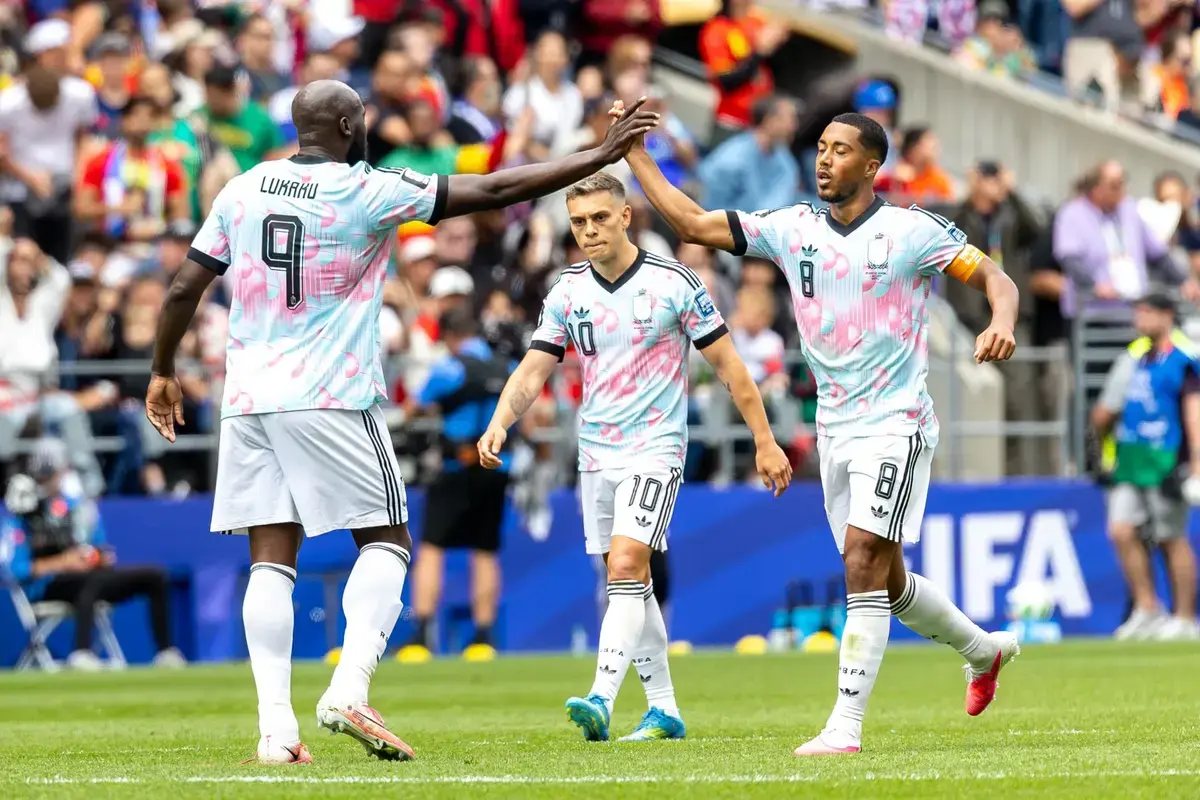
To add insult to injury, Romelu Lukaku came off the bench and scored in stoppage time, twelve years after tormenting the United States at the 2014 World Cup. The veteran striker’s goal made it 4-1 and completed a comprehensive Belgian victory.
The final image of the American tournament was equally painful. Christian Pulisic, who had suffered an injury after his leg struck a Belgian defender in the second half, left the field emotionally devastated and in tears. The momentum generated by the group stage, the record television audiences and the feel-good atmosphere surrounding the national team partially evaporated in one brutal evening.
Belgium’s victory also completed a disappointing Round of 16 for CONCACAF. Mexico fought bravely but fell 3-2 to England despite playing with a man advantage for much of the second half, with that man advantage, they simply resorted to pinging crosses into the box with shorter players, while Canada was overwhelmed 3-0 by Morocco. The United States suffered the heaviest defeat of the trio, and suddenly the narrative of a host-nation breakthrough, a CONCACAF breakthrough has been replaced by a familiar reality: UEFA remains the dominant force in international football and the World Cup lights were too bright for CONCACAF.
Rudi Garcia’s Belgium Suddenly Looks Dangerous
The historic comeback against Senegal no longer looks like a lucky escape.
Against the United States, Belgium finally resembled a complete team. Raskin controlled the midfield, De Ketelaere provided a clinical edge in attack, Lukebakio stretched the American defence and Courtois remained his dependable self at the back.
Questions remain. Onana’s injury status is important, Doku’s health will need monitoring and Spain presents a far more difficult tactical challenge than the United States. Yet Belgium has started to resemble a top 10 side again.
They also have very little pressure. Spain enters the quarterfinal as the favorite. Belgium enters with momentum and confidence. Belgium are hitting the FIFA casino with house money.
Spain and Portugal Produce an Iberian Disappointment
If Belgium versus the United States was entertaining, even while being chaotic, Spain versus Portugal was the exact opposite.
This was supposed to be one of the glamour ties of the Round of 16. Instead, it became one of the tournament’s dullest matches.
The atmosphere inside the indoor stadium in Dallas felt strangely flat at times, and the football mirrored it. Spain finished with 1.69 expected goals compared to Portugal’s 0.63, but even those numbers flatter the spectacle. For long stretches both teams looked content to circulate possession without taking risks or forcing the issue.
Spain controlled the midfield throughout. Rodri dictated tempo, Pedro Porro was influential down the right flank and Lamine Yamal remained their most dangerous attacking outlet. Yet the same problem that has occasionally plagued Spain under Luis de la Fuente resurfaced once again: a lack of ruthlessness in front of goal.
Mikel Oyarzabal missed an excellent early opportunity and never fully recovered. Spain moved the ball well, advanced into dangerous positions and repeatedly worked openings, but lacked the cutting edge to capitalize. Spain would string together passes, make runs, and arrive near the box only to see it empty with white Spanish shirts, and full of burgundy Portuguese ones.
Portugal were arguably worse.
Once again, their best player was goalkeeper Diogo Costa. He had already kept Portugal alive against Colombia, Croatia and DR Congo earlier in the tournament, and he was forced into another strong performance here. Nuno Mendes and the Portuguese defence largely held up their end of the bargain, but the midfield failed to create meaningful service.
Vitinha, Pedro Neto, Bruno Fernandes, and Joao Neves never imposed themselves on the game. Cristiano Ronaldo played the full 90 minutes but remained largely anonymous, managing only three shots and never looking likely to produce a decisive moment. Goncalo Ramos never left the bench, continuing a tournament-long pattern in which Roberto Martinez appeared unwilling to seriously challenge Ronaldo’s role in the side. Ramos had a great goalscoring record, he was an impact player against Croatia, but he only could watch on as a frustrated bystander, as Portugal continued to “play with 10 men” for large periods of the game.
Portugal seemed content to drift toward extra time.
Spain eventually made the changes that mattered.
Ferran Torres entered and immediately brought more energy to the attack. Mikel Merino followed and, six minutes after entering the match, found the winner in the 91st minute. Portugal lost track of him near the area, Torres delivered the assist and Merino finished the chance that settled an otherwise forgettable contest.
Spain deserved to advance, but “deserved” is not the same as convincing.
Spain vs Belgium in the Quarterfinals, Could The Favorites Be Knocked Off?
Spain’s defensive record remains exceptional, and that alone makes them a serious contender. Yet there is a growing sense that they are leaving opportunities on the table. The victory against Austria exposed the higher level attacking potential earlier in the tournament, but Portugal slowed the game to a crawl and Spain never made an earnest attempt to find another gear or change the tactics.
Belgium presents a completely different challenge.
Garcia’s side, at least the 2.0 version, attacks with pace, transitions quickly and suddenly looks capable of scoring multiple goals against quality opposition. Spain remains the favorite, largely because they continue to defend so well, but if Monday demonstrated anything, it is that Belgium enters this quarterfinal at least capable of pulling the upset, but both teams are inconsistent.
One side arrives after its best performance of the World Cup. The other arrives after one of the dullest victories of the tournament. That alone should make this quarterfinal fascinating as Real Madrid’s Thibaut Courtois lines up against a Spanish team he’s largely familiar with.
Main Photo Credit: Smartframe Images