

Spain’s Machine Finally Reaches Football’s World Cup Summit
The debate is over as Spain Wins the World Cup final 1-0 in extra time.
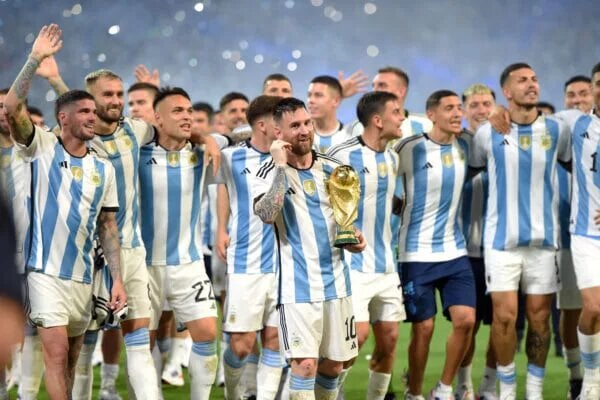
Spain are world champions once again, and with it comes a new argument that will echo throughout football for years to come. Are they now the greatest international team of the modern era?
After winning UEFA Euro 2024, Spain arrived at the 2026 FIFA World Cup carrying enormous expectations. They leave New York having exceeded them all. A 1-0 extra-time victory over Argentina secured the nation’s second World Cup and completed one of the most complete international tournament performances football has seen in decades. Spain are the best team of the decade.
Whether supporters watched every minute of the final or simply glanced at the statistics afterward, the conclusion was the same. Spain controlled almost every aspect of the match. They dictated possession, they dictated tempo and they dictated where the game would be played. Argentina never managed to pull Spain into the emotional, chaotic battles that had rescued them throughout the knockout stage.
Instead, Spain forced Argentina to play at Spain’s pace.
That has been their greatest weapon throughout this tournament.
The final itself will not be remembered alongside the classics. It was nowhere near the spectacle of Argentina versus France four years ago. It lacked the relentless dynamic football many hoped to see between two giants of the game. Instead it became a slow, tactical contest where every touch felt significant and every mistake potentially fatal.
Spain were perfectly comfortable with that.
Argentina Never Found Their Way Into The Match
The opening half was almost entirely one-way traffic.
Spain finished the first 45 minutes with nearly 65 percent possession and completed an astonishing 348 passes before halftime. Rodri and Fabián Ruiz calmly recycled possession, constantly forcing Argentina’s midfield to chase shadows while Spain’s defensive line quietly filled spaces whenever Messi attempted to drift deeper searching for the ball.
Yet for all of Spain’s control, there was very little end product.
Lamine Yamal produced the best opportunity of the opening period, finding enough room to test Emiliano Martínez early, but Argentina’s goalkeeper once again reminded the football world why he’s the man with the golden gloves. Every Spanish opportunity seemed to end with Martínez standing in the way, one man defying a nation’s dream.
That was the only reason Argentina remained alive.
Because going forward, Lionel Scaloni’s side had nothing.
Argentina’s slow starts had become a familiar storyline throughout the knockout rounds. Against Cape Verde they needed extra time. Against Egypt they required another late comeback. Switzerland pushed them beyond 90 minutes. England led deep into the semifinal before Argentina found another escape.
Eventually the champions always woke up.
This time they never did.
Argentina reached halftime without any meaningful attacking sequence, without sustained possession and without any indication they knew how to hurt Spain. Their passing became increasingly conservative, Messi was repeatedly forced away from dangerous areas, and Julián Álvarez found himself isolated against Pau Cubarsí and Aymeric Laporte.
The second half offered no improvement.
Argentina failed to register a single shot in normal time.
Not one.
For a nation led by Lionel Messi in what was almost certainly his final World Cup appearance, it was almost impossible to believe.
Spain’s Defense Produced A Masterpiece
Much of the attention throughout the tournament understandably focused on Lamine Yamal, Rodri and Spain’s midfield dominance, because football is typically about scoring goals.
The final belonged to the back four, and goalkeeper Unai Simon.
Cubarsí, still only 19 years old, delivered perhaps the finest performance of his young career. Laporte’s experience perfectly complemented the teenager’s composure, while Pedro Porro and Marc Cucurella rarely allowed Argentina’s wide players any meaningful joy. Argentina left bottled up and far too central in their play. Cubarsi and co. had to battle Kylian Mbappe and Messi in consecutive matches to win the World Cup, and they kept clean sheets in both games.
Messi constantly searched for space.
He simply could not find any.
Unlike previous knockout opponents, Spain refused to overreact whenever Messi drifted inside looking to orchestrate attacks. One defender would step, another would cover and Rodri would quietly slide into passing lanes before danger ever developed.
The result was astonishing.
The greatest player in football history left the World Cup Final without leaving his fingerprint on it. Argentina looked old and played their worst international game in nearly a decade.
Rodri and Fabián Ruiz dictated every phase of midfield play while Alexis Mac Allister and Rodrigo De Paul chased without reward. Nico González, surprisingly preferred in the starting lineup, never influenced proceedings before eventually disappearing entirely.
Spain were not simply keeping the ball. They were exhausting Argentina mentally.
Every minute without possession became another minute closer to fatigue. Another minute closer to frustration.
That frustration finally boiled over late in the second half.
Enzo Fernández’s red card was less about one reckless challenge than everything that had happened beforehand. Argentina had spent nearly 90 minutes chasing shadows, arriving second to loose balls and watching Spain patiently move possession from one side of the pitch to the other.
Eventually, the pressure broke them. Suddenly Argentina were facing extra time with only ten men. Still, they refused to attack.
Scaloni trusted Martínez. He trusted penalties. He trusted that one moment might somehow rescue another improbable victory.
Spain had different ideas.
Ferran Torres Writes His Name Into World Cup History
For the opening stages of extra time, Spain almost became guilty of the same hesitation that had frustrated Argentina all evening.
Playing against ten men, Luis de la Fuente’s side continued circulating possession patiently but struggled to turn complete control into genuine chances. It almost felt as though Spain had become too respectful of the moment, too aware that one mistake could hand Argentina the opportunity they had been desperately chasing for nearly two hours.
Spain thought they had finally found the breakthrough when Nico Williams bundled the ball into the net, only for the goal to be ruled out after Mikel Merino was adjudged to have fouled Nicolás Otamendi just before. Spanish supporters inside MetLife Stadium celebrated, then stood frozen as the referee chalked it off. On a foul that was far from clear, and would have been debated further if the result of the game had been different.
The pressure never stopped. Spain continued knocking on the door. Eventually the door gave way.
In the 106th minute, Ferran Torres found himself in exactly the right place. Spain worked the ball into the penalty area one final time, Torres reacted quicker than anyone wearing blue and white, and from close range calmly buried the finish beyond Emiliano Martínez.
One goal. One touch. One World Cup. History has a funny habit of repeating itself.
In 2010, Spain defeated the Netherlands in extra time through Andrés Iniesta, another Barcelona player delivering the greatest goal of his career. Sixteen years later it was another Barcelona attacker writing himself into Spanish football folklore.
Torres may or may not have a long future at Barcelona. Questions surrounding his club future have followed him for months. None of that matters now.
He is a World Cup-winning goalscorer. He will never buy another drink in Spain again.
History Has A Funny Way Of Repeating Itself
There was another historical parallel impossible to ignore.
In 2014, Germany frustrated Argentina for 113 minutes before substitute Mario Götze scored the winning goal in extra time, denying Lionel Messi the World Cup.
Twelve years later, Spain followed almost the exact same blueprint.
Control possession.
Remain disciplined.
Limit Argentina’s transitions.
Wait patiently.
Strike in extra time.
The only Argentine starter remaining from that heartbreaking afternoon in Rio de Janeiro was Messi himself.
Football had come full circle.
In 2010 Spain won the World Cup in extra time.
In 2026 they did it again.
Against ten men.
Against Argentina.
Against the greatest player the sport has ever seen.
History is rarely identical. Sometimes it simply rhymes.
Argentina Finally Ran Out Of Escapes
To their credit, Argentina finally, briefly, abandoned their shell after falling behind.
Ironically, with only ten men they looked more dangerous than they had with eleven.
Giuliano Simeone nearly forced one final miracle, missing a clear opportunity late in the second period of extra time after finally getting behind Spain’s defense. It was one of only two Argentine shots all evening, a remarkable statistic for the defending world champions.
Perhaps the match would have unfolded differently had Lionel Scaloni trusted his attacking players earlier. Perhaps Lautaro Martínez, one of Argentina’s biggest match winners throughout the tournament, should never have spent so much of the evening watching from the bench.
Instead Scaloni chose a passive approach. The same caution that had nearly cost Argentina against Egypt. The same caution that required extra time against Cape Verde. The same caution that somehow survived Switzerland and England, in part because both teams made clear errors that cost them the win. This time there would be no miracle.
Argentina’s strange, exhausting journey through the knockout rounds had finally reached its end. They had spent the tournament absorbing pressure, surviving scares and producing late escapes. Eventually there was no escape left.
Spain’s Reign Should Last For Some Time
Champions of Europe. Champions of the World. Owners of arguably the best defensive tournament in modern World Cup history. Spain conceded just one goal throughout the entire competition. That statistic alone barely tells the story.
Unai Simón certainly deserves enormous credit, but Spain’s defensive brilliance went far beyond goalkeeping. Opponents rarely even tested him. Rodri controlled matches before attacks developed. Cubarsí and Laporte eliminated danger before it reached the penalty area. Pedro Porro and Marc Cucurella balanced aggression with remarkable positional discipline.
Spain did not simply prevent goals. They prevented shots and were able to hold onto the ball. Their attack was never overwhelming. They rarely buried opponents beneath waves of chances. They never needed to. When your defense gives away almost nothing, one goal is usually enough.
Argentina never discovered another plan beyond hoping Messi could produce one magical pass or Spain would concede a dangerous free kick or penalty. Neither happened. Spain were simply too disciplined. Too intelligent. Too well coached.
One Generation Ends, Another Begins
The closing scenes perfectly captured two nations heading in opposite directions.
As the final whistle sounded, emotions boiled over. Leandro Paredes confronted Spanish players and started a WWE style fight. Nicolás Otamendi exchanged heated words as tempers flared. This became the first World Cup Final since the inaugural tournament where both finalists shared the same native language, and that only raised the emotions. There was nothing unclear when these teams exchanged words, but it was Argentina that approached the game with a bitterness, and it ended in a crash out of frustration.
Paredes and Otamendi’s shouting and pushing changed nothing.
Father Time remains undefeated. Argentina’s remarkable generation had finally reached midnight.
Lionel Scaloni hinted afterward that this may also mark the end of his own extraordinary journey.
“I deserve to take the time to decide what I’m going to do. I will fulfill the contract until December and then will think what to do.
“This place is incredible. I never imagined I’d be in such a wonderful position.
“It’s very unlikely a group as wonderful as this will ever come together again, and that hurts me deeply.”
Across the hallway, Spain celebrated the beginning of something rather than the end.
Rodri, the player of the tournament, one of the most accomplished in the history of the sport, summed it up perfectly.
“This group has been sensational. We are World Cup winners. It’s incredible to say that out loud.
“For me, this was the most difficult World Cup ever. We beat an Argentina side who have all my respect, and have the best player of all time, Lionel Messi.
“Only people who have been through what I’ve been through can know how this feels. I’ve always felt support from everyone.”
Yamal is still a teenager. Cubarsí is still a teenager. Rodri remains the heartbeat of the world’s best midfield.
Spain won the last European Championship. Now they have won the World Cup. Beating them requires a superhuman performance.
Thank You For Following Along
The World Cup ends where every tournament eventually does.
One nation celebrates. The others begin wondering what comes next.
Spain leave New York carrying the trophy back across the Atlantic, the undisputed kings of international football and the national team of this generation.
Argentina leave knowing the regeneration begins immediately. By the next World Cup, much of the lineup that reached consecutive finals will be gone. A new Copa América cycle begins, and with it comes the difficult task of replacing one of the greatest groups of players the nation has ever produced.
The World Cup returned to the Americas. Europe takes the trophy home.
As for us, thank you for following our coverage throughout this remarkable tournament. From qualifying to the opening whistle, from the group stage to another unforgettable World Cup Final, it has been a privilege covering football’s greatest competition.
The Nations League is around the corner. The AFC Asian Cup awaits. The UEFA Champions League, Europa League, Copa Libertadores and football across the Americas and worldwide never truly stop.
Because this remains the beautiful game.
Even on the days when it is cagey. Even on the days when it is ugly, and especially on the days when history is made.
Main Photo Credit: Smartframe Images