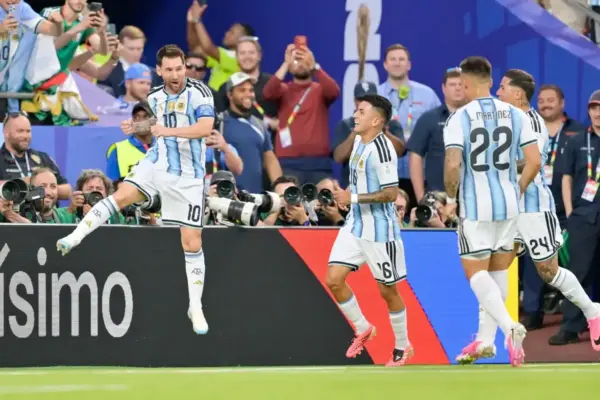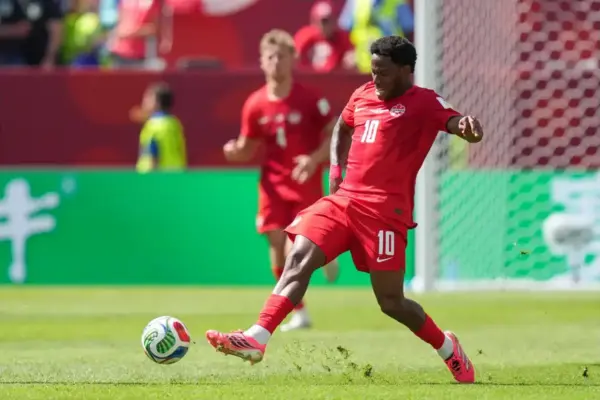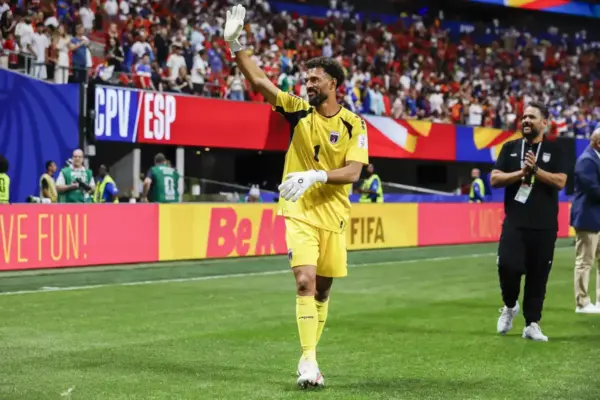


For the first time ever, we have our 48-team field for the 2026 FIFA World Cup. DR Congo were the 47th nation to qualify, finally breaking Jamaica’s resistance with an extra-time winner in Guadalajara. DR Congo’s ’s 1-0 victory in the intercontinental playoff was followed a few hours later by Iraq, who became team No. 48 with a 2-1 win over Bolivia on a late night in Monterrey, completing the expanded World Cup lineup across Canada, Mexico, and the United States. Earlier today, Bosnia and three more teams from Europe joined the World Cup field.
DR Congo Celebrate First World Cup Since 1974
DR Congo are a nation that has endured political, economic, and social upheaval for decades, and on the football pitch they have been absent from the World Cup since 1974. After a strong CAF qualifying campaign in one of world football’s most cutthroat regions, they arrived at the playoff tournament with real belief. They had to beat Jamaica to get over the line, and they did exactly that.
Jamaica offered far too little on the night. They were content to sit deep, defend, and cycle the ball side‑to‑side instead of really testing the Congolese back line. DR Congo outshot them 19–6 and carried most of the attacking threat, pushing the game into the kind of territory where one moment could decide everything. That moment came in extra time, when Axel Tuanzebe rose highest and powered in a header in the 100th minute to win it. Jamaica never found a second gear, and Leon Bailey’s muted performance summed up an attack that was never truly a threat.
CAF now has 10 representatives at this World Cup, and African football looks as deep and dangerous as it ever has. DR Congo drop into Group K alongside Portugal, Colombia, and Uzbekistan, a group that they will try to spring an upset in. This is the same DR Congo side that drew Senegal at the Cup of Nations and beat Cameroon and Nigeria on the road to this tournament — three nations with far stronger historical reputations in African football. The pedigree of their qualifying victims, combined with their playoff performance, makes them a serious dark horse to trouble the more established names.
Iraq Return to the World Stage for the First Time Since 1986
A new generation of Iraqi fans will get to celebrate a World Cup appearance. The Lions of Mesopotamia defeated Bolivia 2-1 in Monterrey, securing a place at the tournament for the first time since 1986. Ranking and recent form suggested Iraq, out of the AFC confederation, were slight favorites, but they still had to overcome a South American side desperate to salvage something from another difficult cycle.
Ali Al‑Hamadi set the tone in the 10th minute, giving Iraq a 1-0 lead and allowing them to sit deeper, defend compactly, and force Bolivia to chase the game. Moisés Paniagua pulled Bolivia level in the 38th minute, hinting at a potential comeback, but the second half belonged to Iraq. Aymen Hussein, a domestic legend and emotional leader of this group, connected with a cross and made history in the 53rd minute. From there, Iraq defended intelligently, limited Bolivia to half-chances, and managed the clock with the kind of maturity you expect from a team that has grown up together through the Asian qualifying grind.
For Bolivia, this is more heartbreak in a long line of qualifying disappointments for a South American nation that loves football, but struggles to excel at it. For Iraq, it is validation. At roughly 8 a.m. on Wednesday morning in Baghdad, the World Cup field was officially complete — and Iraq were in. They now face a monumental group-stage test against France, Senegal, and Norway, but for a young side that has already proven it can suffer and survive, that challenge will be embraced rather than feared.
New Faces, New Stories in a 48-Team World Cup
This is the first World Cup with 48 teams, and the expanded field has opened doors for nations that previously would have fallen just short. DR Congo and Iraq are part of that story, but they are not alone. Curaçao, Jordan, Cape Verde, and Uzbekistan will all be debutants at this tournament, joining the finals for the first time in their history. For many fans of Cinderellas, these are the teams that will define the character of a 48‑team World Cup: smaller federations, emerging talent pools, and fanbases experiencing the World Cup for the first time.
Jordan booked their ticket by finishing second in Asia’s Group B behind South Korea and then confirming qualification with a statement 3-0 away win over Oman, and they now find themselves in a group with Austria, Algeria, and Argentina — three strong nations. Curaçao, one of the smallest nations ever to qualify, rode a golden generation and a tight CONCACAF campaign into their first World Cup, adding another Caribbean flavor to the tournament. Cape Verde took down Cameroon to secure top spot in their CAF group, while Uzbekistan earned their way into Group K with Portugal, Colobmia and DR Congo.
These nations will arrive as underdogs on paper, but the expanded format — with more third‑place teams advancing and a Round of 32 rather than a straight Round of 16 — gives them realistic routes to dream beyond just three group games. In a 48‑team tournament, upsets are not side stories; they are baked into the structure.
The Stage Is Set
With DR Congo and Iraq punching the final two tickets, the 2026 World Cup field is complete: 48 teams, a record number of debutants, and a wider range of football cultures than we have ever seen at a men’s World Cup. Traditional powers like Argentina, France, Brazil, Germany, England, and Spain will still dominate the headlines, and even some “big” footballing nations like Italy and Denmark missed the tournament. But the texture of this tournament will come just as much from sides like DR Congo, Iraq, Curaçao, Jordan, Cape Verde, and Uzbekistan — teams that had to navigate longer routes, harder travel, and steeper odds to get here, often with only the local fanbase watching. The stage is set. Now the world gets to see what these 48 teams do with it.