
On Monday, UEFA, the governing body of football in Europe, reluctantly approved a proposal to stage a LaLiga game between Barcelona and Villarreal in Miami this December. Alongside a Serie A game between AC Milan and Como 1907 scheduled for Perth in February 2026, these two matches would be the first official European domestic games played for points outside of Europe. Previously, matches beyond Europe’s borders were only permitted as exhibitions, cup games, or other less important formats.
FC Barcelona’s Quest to Solve Their Financial Squeeze
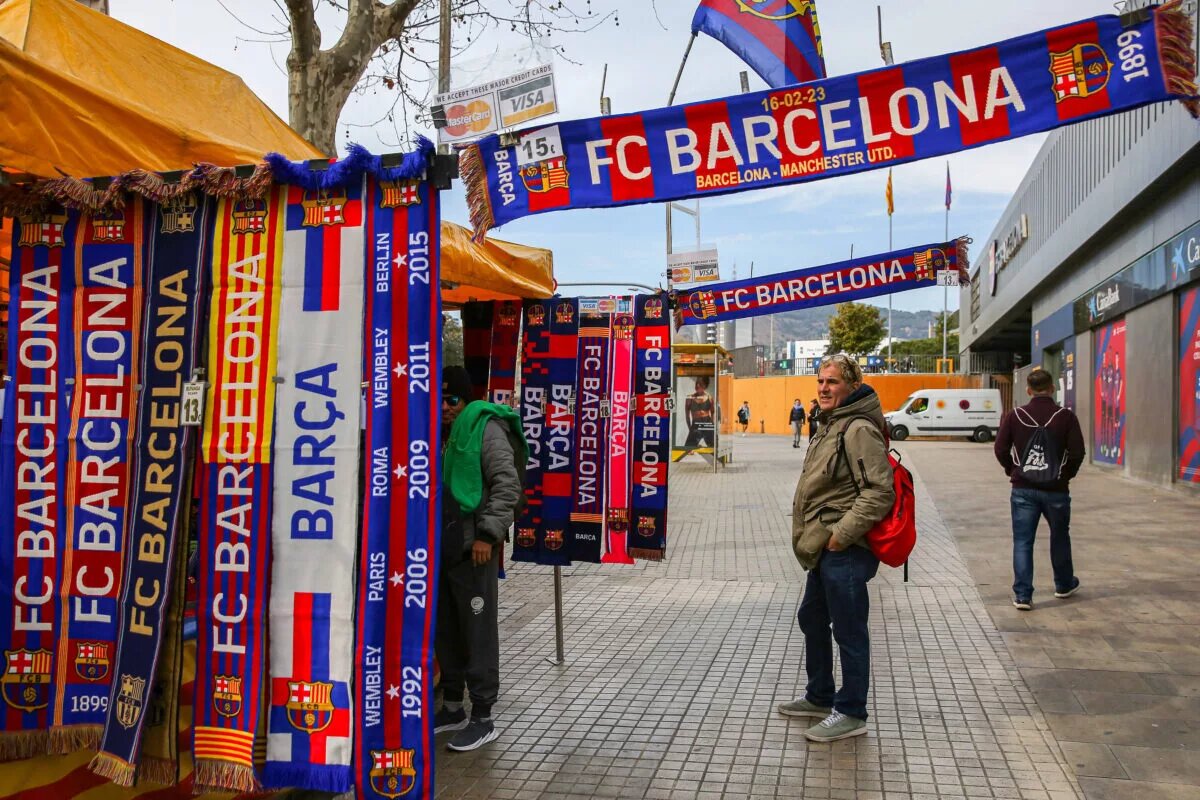
The catalyst for this “difficult” decision by UEFA, LaLiga, and ultimately FIFA, is FC Barcelona’s ongoing struggle to solve their financial crisis. Publicly revealed in 2021 by club president Joan Laporta, FC Barcelona was drowning in $1.6 billion of debt. Around that time, international superstar Lionel Messi left the club for PSG—a team backed by Qatari ownership that could offer him a record contract and surround him with other global stars like Neymar Jr., another former Barcelona player.
While Barcelona has remained competitive in both LaLiga and the Champions League—winning two LaLiga titles since the financial crisis began—they are walking a financial high wire. The term “levers” has become footballing lore, as the club has used extraordinary measures to comply with LaLiga (and UEFA’s) financial fair play rules. These include selling seat licenses, future TV and commercial media rights, and stadium naming rights for the new Camp Nou, now sponsored by Spotify. The new stadium is still experiencing setbacks in opening. Last year, player Dani Olmo was nearly removed from the roster as Barcelona had to appeal LaLiga’s decision that it lacked the financial capacity to register him.
Barcelona’s Solution? Games Abroad
While Barcelona isn’t the only club struggling financially, they are the most famous—and their global fanbase expects them to win every match, whether it’s an El Clásico against Real Madrid or a Champions League clash with PSG or Manchester City. The problem is, without state or commodity-based backing, they fear they are falling behind.
One solution? Playing more games abroad. While Real Madrid filled stadiums during their participation in the 2025 FIFA Club World Cup in the United States, Barcelona didn’t qualify. The U.S. market—along with Saudi Arabia, the Gulf States, and China—remains one of the quickest ways for football clubs to generate fast revenue that can be used on player wages, transfer fees, world-class training facilities, and other modern necessities to be competitive.
The game against fellow Champions League participant Villarreal in Miami is surely the first step in a long-term effort to monetize LaLiga games and balance the books, especially as the 2026 World Cup fuels football fever in the United States.
Europe’s Other Leagues Struggle to Compete with the Premier League
Like Spain’s LaLiga, Italy’s Serie A, and the rest of Europe’s “big four” leagues, those outside the Premier League have significantly fallen behind in their ability to pay massive transfer fees and player wages. Even mid- and lower-table Premier League clubs can now splash the cash to improve their fortunes. The Premier League has become a global phenomenon, with TV broadcast rights and merchandise sales thriving on every continent. Fan clubs have spread worldwide, with friendlies selling out across the U.S. and Asia, and South American fans tuning in to see players like Chelsea’s Enzo Fernández and Newcastle’s Bruno Guimarães. Over 70% of Premier League players now come from outside England. In 2024, the Premier League opened an office in China, while the Premier League fan fest roadshow is a hit across the United States.
These leagues also face pressure from Saudi Arabia’s high-spending Pro League, with even younger players tempted by life-changing money, such as former Serie A top scorer Mateo Retegui and Al-Hilal’s 22-year-old striker Marcos Leonardo.
Having already lost market share—and money—from the Premier League’s global rise, the rest of world football is scrambling to catch up in an endless financial chase. La Liga clubs like Villarreal want to remain competitive in the Champions League, while lacking a truly global fanbase. AC Milan, Juventus, Inter Milan and other Italian clubs once enjoyed a golden era in the 1990s, and with more American owners than ever, they are hoping to return to that dream era, by boosting profits from abroad.
Cup Games Set a Precedent
Galatasaray and Fenerbahçe’s Turkish Super Cup final was famously cancelled due to disagreements between the clubs and Saudi authorities over a planned nationalistic display before the match. The Final Four of Italy’s Supercoppa will be played in Saudi Arabia, as is Spain’s Super Cup. The 2022 French Super Cup, featuring Messi and Neymar’s PSG, was held in Tel Aviv, Israel, while Liga MX contests the Leagues Cup with MLS in the United States.
These matches are often considered less important than domestic league games, but they’ve proven profitable opportunities for federations and clubs to commercialize football by taking the show on the road.
Concerns About Player Welfare and Fairness Are Unlikely to Matter
Injuries caused by packed schedules, shortened careers, and widening financial disparities are constant talking points—but they’ve yet to make a real impact. Tottenham flew to Asia within hours of their Premier League season ending, making 10 million. Barcelona took a red-eye to the United States mid-season, and hours after a La Liga game, to play Mexico’s Club América in the rain, earning 5 million to “help the club financially” in the process.
FIFA has expanded the Club World Cup and increased its importance, resulting in clubs like Chelsea, PSG, Bayern Munich, and Real Madrid replacing pre-season preparations with large rosters, with competitive, revenue-generating fixtures featuring a near best XI. That doesn’t even include international duties—Barcelona are currently feuding with the Spanish federation over the workload of wonderkid Lamine Yamal, and teams like Brazil continue traveling to Asia for World Cup preparations and profit.
Absent an organized players’ strike, concerns about welfare are unlikely to slow football’s global expansion or the growing fixture congestion. That same fixture congestion has allowed leagues and clubs to have more football matches to sell off globally.
If You Can’t Beat Them, Join Them: UEFA & CONMEBOL’s Inevitable Pivot to Profit
UEFA and South America’s CONMEBOL, much like FIFA, are doing everything they can to keep up in the global financial arms race. UEFA has sought to expand the profit margins of its marquee competition, the Champions League, while also adding the Nations League for international play. The introduction of the Conference League has further crowded the calendar with more fixtures and commercial inventory.
CONMEBOL has similarly boosted profits by hosting Copa América in the United States and appealing to the South American diaspora eager to pay premium prices to see stars like Lionel Messi and James Rodríguez—even though the U.S. belongs to CONCACAF and South American countries have lost hosting rights, and the ability to make local profits for their citizens in the process.
UEFA president Aleksander Čeferin can call the LaLiga and Serie A games abroad “regrettable,” but within two years—should FIFA approve the model—UEFA will likely join the global roadshow, taking early-stage games or even a Champions League final overseas, likely to one of the NFL stadiums in the United States, or more amusingly from the “Riyadh Air Metropolitano” in Madrid to Riyadh, Saudi Arabia.
UEFA’s Ties with Marketing Agency Relevent
The local NBC News affiliate in Miami reported in August “The Miami game is a promotion by U.S. agency Relevent, now a crucial partner of UEFA and the ECA, which has pushed for years to take a La Liga game to Hard Rock Stadium.
Relevent’s top executives were with UEFA in Monaco in a beachside hotel developing their strategy to sell tens of billions of dollars in Champions League commercial rights for six years of competitions starting in 2027.”
Modern football has long stopped prioritizing local fans or local clubs. The globalization of the game isn’t slowing down anytime soon. The NFL already hosts regular-season games in Europe and Brazil, and UEFA could soon make a similar case for the Champions League—continuing to fend off the “Super League” concept by adopting many of its ideas. Despite the public claims of initial hesitation, UEFA will inevitably follow the money, turning overseas games into just another revenue stream.
Main Photo Credit: IMAGO / Pro Sports Images