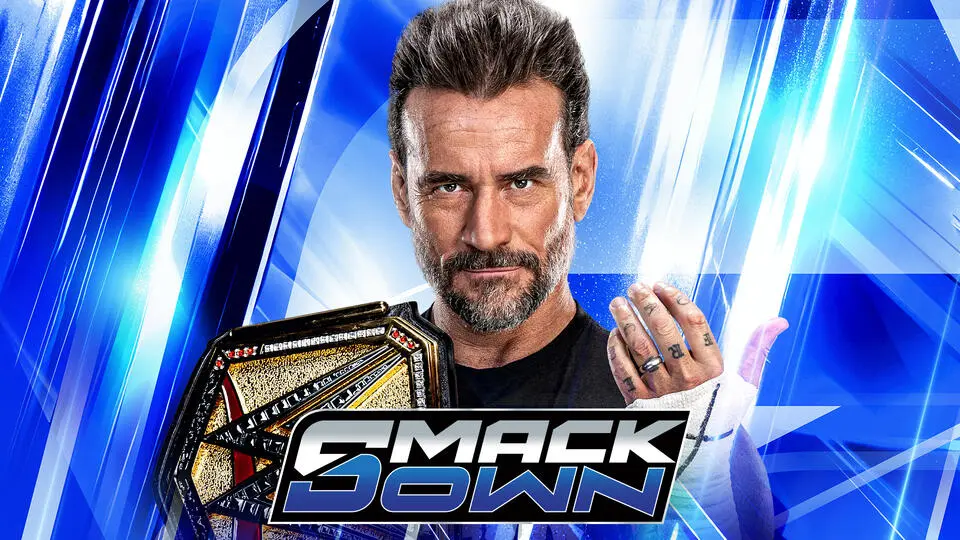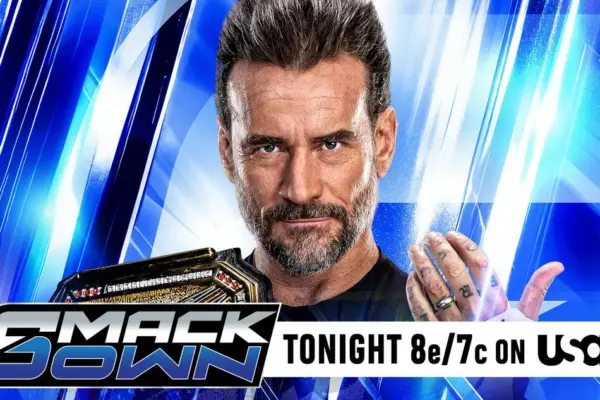

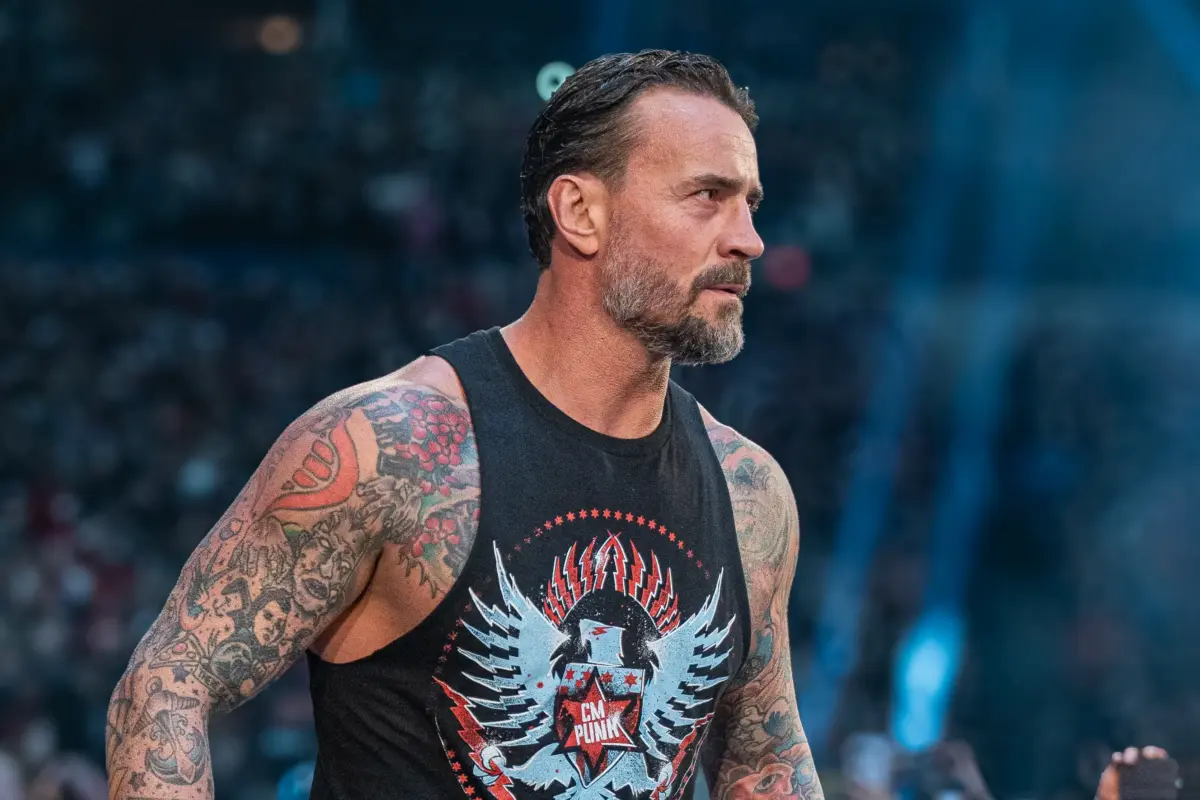

Returning to WWE Raw on July 6th, CM Punk beat Sami Zayn for the Undisputed WWE Championship, and for the second time this year, many (fair to say) former fans of “The Best in the World” were quick to say, again, CM Punk sold out.
It’s a phrase leveled at Punk since his return to WWE. Whilst marketed as the moment hell froze over, Punk crossed his Rubicon. It marked a passing of the point of no return. Regardless of the justification during Punk’s interview with Ariel Helwani, returning to WWE wasn’t punk rock for some.
CM originally stood for Chick Magnet. Some joke C now stands for Corporate, but Controversy Magnet is just as fitting. Controversy undoubtedly made Punk stand out. Along with his mastery of the dark arts of wrestling, his triple-razor-blade mind, and his machine gun tongue. Those latter two qualities have defined Punk’s brand of chaos and redefined the wrestling landscape on multiple occasions, making Punk a cult leader as a cult figure.
That willingness to blow up bridges and burn buildings with pipe bombs in the service of his principles, for a long time, was what made him admirable. Yet in repairing the WWE bridge with seeming hypocrisy, words and actions suggest to some a moral flexibility.
Punk’s recent title win, along with finally getting him his WrestleMania main event, feels symbolic, like many other key moments in the Straight Edge Savior’s career. CM Punk is as much a symbol/surrogate as he is a wrestler. For those detractors, Punk’s actions echo these poetic lines describing William Wordsworth “selling out” the radical Romantic movement in exchange for a title and personal gain.
“Just for a handful of silver he left us,
Just for a riband to stick in his coat.” The Lost Leader, Robert Browning.
CM Punk’s Blurred Lines: Business vs Punk
The devil is in the details, and with CM Punk, detractors can muster up a laundry list of Punk’s words to illustrate the case for hypocrisy.
Main eventing a “night 4 of a buy one gets one free extravaganza”…
The apology needs to be as loud as the disrespect…
It’s easy. I’ve done it myself, using Punk’s comments on commentary of how if you have a problem with the former Jungle Boy, you’re the problem when discussing Jack Perry’s second chance.
The kayfabe of character, as opposed to the man, and working the crowd with a fanbase divided by tribalism, blurring the lines between story and fact. When AEW shows footage of the incident at All In 2023, revealing CM Punk did, in fact, choke Perry, the story was more than about the two men. Rather, it was metaphorical for the time of AEW’s decline against WWE’s Renaissance, with perhaps an intended meta-narrative of AEW’s Corporate Elite backfiring.
In that Helwani interview, CM Punk suggested the magic that makes him unique and great at his job is that fans cannot always see or know where the line exists between the character and man. Punk is a master worker; the two become one.
Undoubtedly, we as fans are biased. Ultimately, some fans feel betrayed by Punk. Yet simultaneously, some felt betrayed by AEW’s imperfections after Brawl Out and the promotion’s subsequent identity crisis.
Much of CM Punk’s narrative after leaving AEW was initially business-related. Compared to the wrestling and passion-oriented verbiage in AEW. Focusing on business doesn’t sound punk rock. Although wrestling, like music, is a business, the ethos of punk can be more than just lifestyle choices and identity. It’s a philosophy full of symbolism, virtue on a high pedestal, yet, surprisingly, flexibility and tribalism.
The Problems with the Punk Rock Ethos
Having written this year about the crossover between punk rock and wrestling, I learned a lot about a music genre I’ve always felt alienated from. Although in spirit, I’m ideologically punk, the more I’ve examined the genre, the more it seems my perceptions of punk’s idealism and gatekeepers who focus on preserving the purity of the art form contradict reality. I was half-right.
Before, my general knowledge of punk was limited to the fascinating debate surrounding whether The Sex Pistols and The Clash were authentic punks or manufactured corporate “boy bands” in a rebellious guise. That emphasis on labeling the point when an artist “sells out” mirrors more than just wrestling fan outrage and the history of canceling in wrestling.
The uniform core of punk is inherently left-leaning, politically conscious, anti-establishment, built around DIY ethics and giving a voice to the voiceless. There’s a special reverence surrounding the punk mindset. Whilst the ideology is admirable and noble, in practice, there are contradictions, divisions, or gatekeeping. But like any genre, some sub-genres and offshoots can be as cliquish as high school.
Ironically, the uniqueness of punk involves, depending on subculture, degrees of conformity. An expectation/pressure within groups/circles to listen to the “right” bands, dress the same, do the right things, etc. It’s a groupthink not dissimilar to pro wrestling fan tribalism that sometimes tips into Orwellian doublethink.
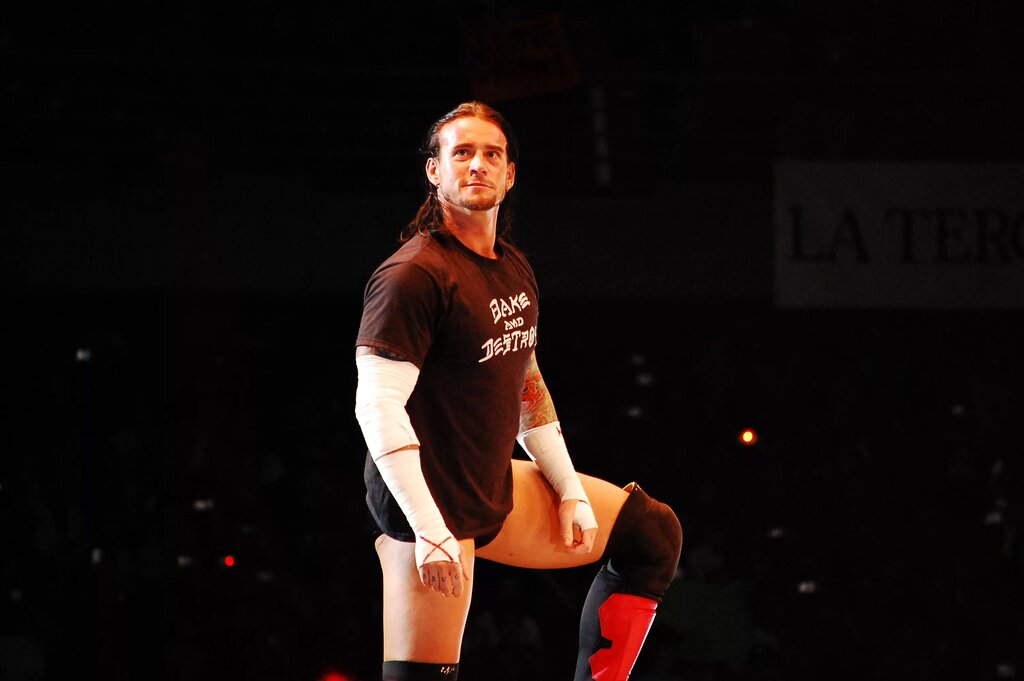
I write this not to bury Punk, but rather to illuminate its complex dimensions and contradictions, which reflect the complexity of CM Punk’s identity. Punk isn’t pure, either in artistry or lifestyle. CM Punk’s particular brand of punk, Straight-Edge, has a stereotypical association with a “holier-than-thou” attitude and militantism, derived from the counter-movement’s desire to move away from the genre’s conformity and culture of excess.
These characteristics are used to judge Punk’s perceived hypocrisy.
Punk and Politics
When fans accuse CM Punk of selling out, it’s more about his selling out his integrity rather than going mainstream and getting the money bag, although the two go hand in hand. Punk, like the Sex Pistols, Iggy Pop and Green Day, has been accused of changing to a more commercial style. To focus on Punk’s in-ring style, the differences between his WWE run and AEW run are too microscopic and would ignore the wider context.
Going for the jugular, it’s about CM Punk’s politics, or rather his appearance of silence/selectivity presently, which is why CM Punk appears a sellout. Having spent his career playing a character that amplified the man’s Straight Edge beliefs, particularly in the role of heel and tweener and during some of his best work, undeniably, this has tattooed Punk’s politics onto the performer.
During his AEW run, CM Punk wore pro-choice T-shirts, posed and showed his support for pro-LGBTQ+ rights banners and at one MMA event (Cage Fury Fighting), showed pro-Palestine support, asking for the genocide to stop. In contrast to WWE, CM Punk, on the Masked Men Show, characteristically and ornery, stated he did not believe WWE wanted performers to be outward with their political views.
It seems contradictory when WWE and its executives, like Triple H, say their world is not political, yet have publicly been involved in the the current U.S. administration at executive signings or attending the UFC 250 Freedom at the White House.
Contrast CM Punk’s indifference to other employees leaving because of WWE’s association with the current U.S. regime, like Mick Foley, and you might spot a pattern. Likewise, an apology and attending an event in Saudi Arabia became another example of how, symbolically, for some, Punk wasn’t the man they thought he was.
Punk in a Broad Church/Caferia
For some, CM Punk has fallen off the pedestal. It doesn’t seem to bother Punk himself, who, when interviewed by Helwani, The Masked Men, and others, focuses on himself and being his version of authentic. If people don’t like that, it’s on them.
CM Punk the man is perhaps more flexible than Punk the unrelenting and dogmatic character. Bruce Prichard, on his Something to Wrestling With podcast, discussed how Punk drank a shot in honor of Harley Race, out of respect for the business. Prichard said Punk was aware one drink wouldn’t kill him.
Does flexibility by punk rock standards make a sellout? Such a judgment is itself ironic and reflective of the wider culture punk is supposed to be rebelling against. To quote the founder of Look Out Records and member of The Lookouts:
“When standards are established as to what is or isn’t punk, punk has ceased to be a relevant art form. It’s just like … born-again Christians… Everything is judged only in relation to how well it conforms to the established norms of the bible and the church.” Larry Livermore, Larrylivermore.com.
Punk is a broad church. Punk has always been the Art Freaks table on the Mean Girls cafeteria map. Its culture and ethos co-exist and work within the hierarchy and rules of the wider ecosystem. Does that make Punk, Janice or Regina when she declares the rules are stupid and made-up? Whether you see Punk as a hypocritical sellout or a saint is arbitrary.
If the Sex Pistols were sellouts, does it diminish their impact? Whatever we call Punk, does it change history or the lens we view it through? My conclusion when discussing the Hangman Adam Page’s controversy: we don’t judge others based on their moral lines and ethics, but our own.