
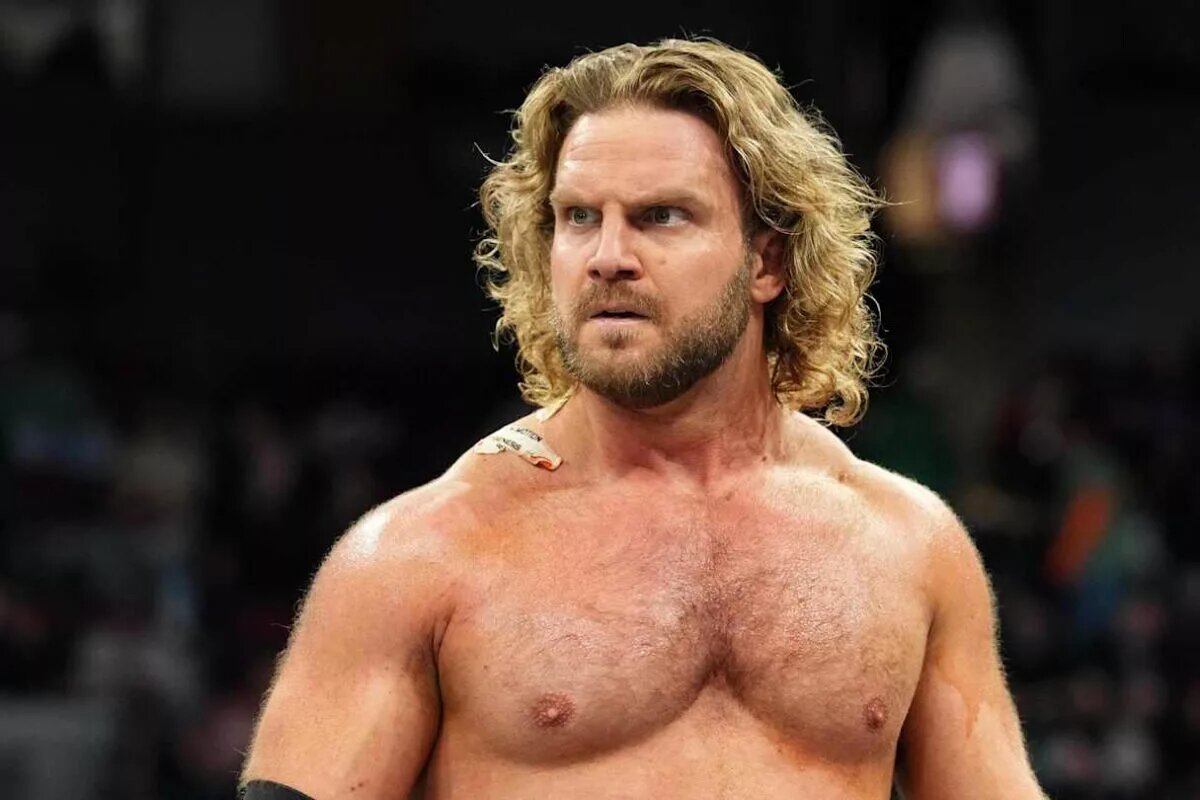

The statement “Hangman” Adam Page gave to Sports Illustrated about a recent photograph taken with Marty Scrull, a wrestler ostracised during the Speak Out movement in 2020, showed Page’s acceptance that fans are entitled to feel the way they feel about the image and his friendship with a person accused of sexually assaulting an inebriated 16-year-old girl.
The inherent issue for readers of any statement given to the public after a controversy is the biases, experiences, and level of trustworthiness you hold with the statement maker. Page’s statement is not an apology, but he is clear at several points that he does not endorse Scrull or wish to whitewash allegations of behaviour and actions he called “abhorrent. Disgraceful…There’s no excuse. I completely recognise that.”
“If you hear all that, and you listen to all that, and you feel like maybe you wouldn’t have done the same thing had you been in my shoes, or maybe you still feel uncomfortable being a fan of mine, or even if you’ve lost, like, the smallest amount of respect for me because of any of that, I would just want to say I completely understand that. I can respect it and accept it.
I guess who I am is, when people treat me with kindness, I try to return it. I have never really wanted to get into that. And that’s more or less why I have a private relationship with him. Not out of a sense of self-preservation or shame… But I guess I’ve just always thought that he’s still a human being, and that relationships are complicated, but they’re still relationships, and he’s still a human being. ” Hangman Adam Page, transcript from Sports Illustrated.
Gold in hand and challenges ahead. A big night for the new #AEW World Trios Champions Hangman Adam Page & JetSpeed!
Watch #AEWDynamite LIVE on TBS & HBO Max pic.twitter.com/59S0PKTy1H
— All Elite Wrestling (@AEW) January 22, 2026
Intertwined: the Character and the Man
Respecting and recognising that, even with this statement, some fans’ perception, respect, and/or love for Page will never be the same again feels like a rare acceptance of the situation. Something that statements made by others in wrestling and the wider public sphere have been accused of failing to express.
Yet, I mention this not to draw a comparison but to highlight the fatal flaw of whataboutism. Some can and will point fingers at other wrestlers’ alleged or proven actions to divert attention. It doesn’t change accountability. The false equivalency that promotes tribalism and polarisation changes nothing.
To be crystal clear, all fans are entitled to maintain or alter their feelings and respect for Page. What’s wrong is/will be the performative and tribalistic weaponisation of the wider moral issues, justifying preferences in wrestlers and wrestling. There have and will be arguments. Bad faith, but also those in good faith. Focused not just on an image and sustained friendship, whether it continues or ends, but on what it represents to different fans.
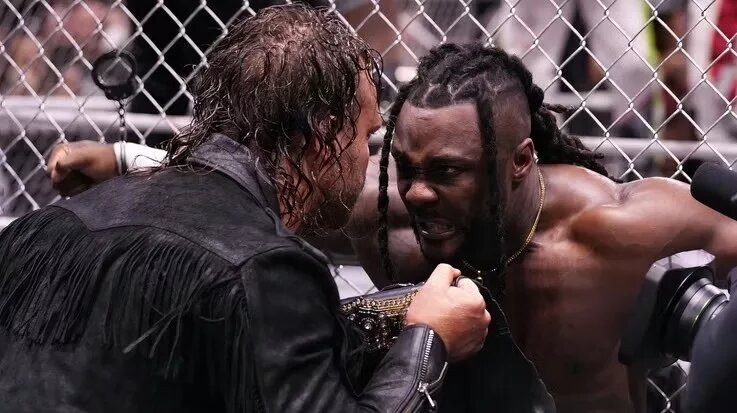
Some have/would argue that Page is not the one accused. Therefore, he has done nothing wrong on a human level. That mirroring of the character, who in fiction burned down his nemesis’s house, and live fans gasp and think the Hangman might maim Swerve Strickland, doing nothing wrong.
It adds complication because when discussing any wrestler, or public figure, for that matter, who transgresses against a group’s moral culture, we’re dealing with two intertwined layers. The idea of the person created by their character in the media and public space, and the human behind the character.
What Makes a Cowboy a Modern, Relatable Hero?
Where one ends and the other begins is hard for us as audiences to tell. Some, like with the legacy of Hulk Hogan, prove divisive because heroes are constructs. Some fans will choose the art over the artist, but this is more than cognitive dissonance. It’s about recognising and trying to separate the art from the artist.
This is the Fallacy of Disconnection. Rarely can you separate the two. The public mask is welded and built into the wearer’s skin. They are interlinked and cannot be separated. To do so is to minimise or place out of sight, to forget it, which is used by some as a means of protecting their own sense of interlinked identity.
“Hangman” Adam Page means more to many AEW fans than just being the promotion’s main character. Page’s uniqueness as a character and the perceptions of the man behind the persona, based on comments in promos, interviews, and infrequent social media posts, represent a progressive view of wrestling some fans identify with. Me included.
A bias on the table, Page is my favourite wrestler in AEW and of the modern age. I’ve written countless analytical pieces inspired by Page from AEW’s showcasing of modern masculinity, Page’s mirroring arcs of imposter syndrome and relapse into anxiety and anger, and more.
As an anxious millennial, blonde-haired, non-traditional, male teacher, I’m aware that I have a parasocial bond with Page that goes beyond the character to the man himself. I’m a Hangman Girlie (a gender-neutral term) who appreciates both aspects of Stephen Woltz (Page’s real name). The character and the man seem to me and many other fans to be interchangeable. The image and idea of being a modern hero is at the heart of the controversy and its fallout.