
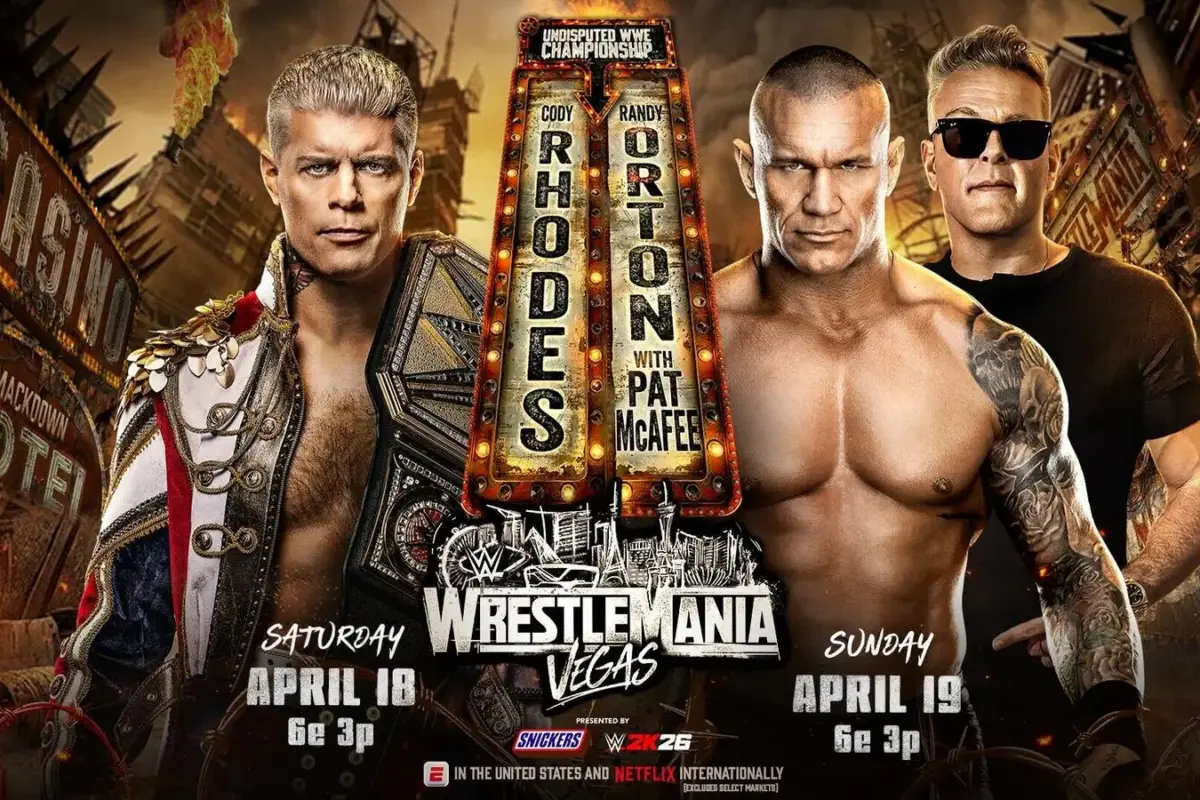

We are three days removed from WrestleMania 42, and there is certainly a lot to talk about. If a casual were to ask the perfect way to describe this year’s two-night spectacle, it would be “split-personality.” While one half felt like a polished tribute to the legends of the past, the other felt like a chaotic, high-speed collision course into the future of the industry. One noticeable change, however, was that the event’s grandeur and magic waned under the weight of constant interruptions and excessive advertising.
Night 1 delivered mostly quick matches, with the exception of the 28-minute and 18-second main event between Cody Rhodes and Randy Orton, alongside relentless advertising. The trailers for the upcoming Hulk Hogan Netflix documentary were shown so frequently that fans might feel they’ve already seen the film. Ultimately, the four-hour, seven-match broadcast offered just 86 minutes of wrestling against a staggering 74 minutes of commercials.
Perhaps the most frustrating match of Night 1 was the co-main event between Liv Morgan and Stephanie Vaquer, clocking in at just 6 minutes and 51 seconds. The two had one of the best builds in a year otherwise defined by lackluster storytelling, only to receive what felt like the ultimate slap-in-the-face treatment.
While online speculation suggests Morgan hadn’t fully recovered from the attack by Vaquer two weeks prior that landed her in concussion protocol, this was undeniably a match that failed to live up to its potential.
On Night 2, however, WWE rose to the occasion despite the lingering skepticism from fans. The card kicked off with arguably the most highly anticipated matchup of the entire weekend between Brock Lesnar and Oba Femi. Even though it was short, lasting only 4 minutes and 38 seconds, it still managed to accomplish everything that fans were hoping for.
“The Ruler” officially became the next big star by slaying and conquering “The Beast.” The match was followed by one of the most shocking moments in recent WrestleMania history: an emotional Lesnar removed his gloves and boots, signaling to fans that this was his final match and he was retiring.
The opening helped set the mood for the rest of the night, as fans enjoyed high-quality matches from start to finish. The Intercontinental Championship ladder match saw Penta retain in incredible fashion; meanwhile, Trick Williams defeated Sami Zayn to become the new United States Champion, and Finn Balor dominated Dominik Mysterio in his “Demon” persona.
The last two matches also didn’t disappoint, as Jade Cargill had her best match since arriving in WWE against Rhea Ripley. This led into the main event between Roman Reigns and CM Punk, which was so incredible that many fans are calling it the best main event in years.
While things may have seemed like sunshine and rainbows for Night 2, fans dealt with the same frustrations that plagued Night 1. Viewers at home still sat through long advertisements alongside shorter matches. Although Punk vs. Reigns clocked in at 33 minutes and 57 seconds, the entire three-and-a-half-hour broadcast featured only 82 minutes of wrestling compared to 60 minutes of commercials and advertising plugs.
In all, nearly 25% of the total runtime across both nights was eaten up by commercials. Coupled with a 15% drop in attendance compared to last year, the message is clear: TKO’s focus on the bottom line is actively hurting the overall quality of the product by prioritizing profit margins over the fan experience.
When the bottom line matters more than the matches, the “WrestleMania Magic” begins to fade. Let’s examine how WWE can fix this trajectory for future WrestleManias and restore the prestige and grandeur that fans expect from the Grandest Stage of Them All. If WWE doesn’t pivot soon, the Showcase of the Immortals will become nothing more than a glorified billboard.
Less Involvement in Storylines
First, let’s address the elephant in the room: TKO’s frustrating interference in creative storylines. While the company successfully pivoted from the original Roman Reigns vs. The Rock matchup to create “The Final Boss,” TKO’s meddling has largely been a total failure ever since.
Since WrestleMania 40, TKO has been responsible for two of the most disastrous creative involvements in recent memory. Last year, we saw Travis Scott integrated into John Cena’s iconic heel turn alongside The Rock, with the artist later playing a crucial role in the finish of the Cena vs. Rhodes main event. Despite the fact that history was being made as Cena became a record-setting 17-time World Champion, the significance of the moment was overshadowed by Scott’s unnecessary presence.
This year, TKO made an arguably even bigger mistake by casting Pat McAfee as the one responsible for waking up “The Viper,” Randy Orton. This decision was reportedly pushed by TKO CEO Ari Emanuel, given that he is McAfee’s agent.
Moving forward, TKO needs to stop getting involved in creative and let the experts do their job. And while fans may be sick of the constant celebrity involvement, the frequency isn’t necessarily the issue; it’s the execution. IShowSpeed’s storyline with The Vision and their subsequent Night 1 match is a prime example of how to do it right.