

This Is Why Brazil Hired Carlo Ancelotti
For 45 minutes against Japan in the World Cup Round of 32, Brazil looked exactly like the team its critics feared they could become. Japan sliced through the midfield with surprising ease, Japan’s Kaishu Sano exposing the lack of pace from 34-year-olds Casemiro and Danilo before putting the underdogs ahead. It was the same vulnerability Brazil showed in the group stage draw against Morocco, when Casemiro struggled to cover ground against quicker opposition. The upset everyone predicted suddenly felt real.
Ancelotti could have stayed patient. Instead, he changed the match, spurring a 2-1 victory.
Lucas Paquetá, who had struggled to influence the game between Japan’s compact defensive lines and injured himself, made way for Endrick at halftime as Brazil committed fully to attack. Rather than forcing play through the congested middle, Ancelotti instructed Vinícius Júnior to stay wider and stretch Japan’s back line, creating room for Bruno Guimarães to dictate possession while the rest of the team attacked from the flanks. Brazil accepted the risk of leaving space behind them because losing cautiously was never going to be enough.
The adjustment completely changed the rhythm of the match. Japan, who had defended courageously for a half, suddenly found themselves pinned inside their own half. Cross after cross rained into the penalty area, Brazil’s press became relentless, and every clearance seemed to come straight back. Roger Bonet perfectly summarized Ancelotti’s influence, noting that Brazil initially tried to attack centrally before recognizing Japan’s compact defensive block wouldn’t allow it. Rather than stubbornly persisting with the original plan, Ancelotti simply adapted, “shifting the attack back to the wings and trusting the qualities of his players”
Casemiro’s afternoon also became one of redemption. After a difficult opening half in which his lack of mobility was exposed and an early yellow card left him walking a tightrope, the veteran midfielder rose highest to head home Brazil’s equalizer. It didn’t erase the concerns about an aging midfield that has looked vulnerable throughout the tournament, but it reminded everyone why Ancelotti continues to trust experienced players in the biggest moments.
Japan deserve enormous credit for the discipline they showed, but once they retreated completely into a low block they invited wave after wave of Brazilian pressure. The same mistake South Africa made against Canada one day earlier was repeated here. Brazil finished with 69 percent possession and 19 shots to Japan’s five, while Japanese goalkeeper Zion Suzuki was eventually overwhelmed by the volume of dangerous deliveries into his box. Deep into extra time, Bruno Guimarães threaded a perfectly weighted pass into Gabriel Martinelli’s run, and the Arsenal winger calmly finished to complete a comeback that had felt inevitable for much of the second half.
Brazil Is Still a Work in Progress
This wasn’t a flawless performance, nor should anyone pretend it was. Brazil’s midfield can still be exposed by younger, quicker opponents, and there will be questions about whether the back line can withstand sustained pressure against a team such as Norway if Erling Haaland awaits in the Round of 16. Mexico, Ecuador or England would present entirely different tactical problems later in the tournament.
Yet that’s almost beside the point. This Brazil side is still discovering what it wants to be under Ancelotti. It doesn’t have the effortless swagger of the great Seleção teams of previous generations, nor is it built around one superstar carrying the attack. Instead, it is evolving from game to game, with Ancelotti willing to abandon ideas that aren’t working, trust his remarkable depth, and allow players like Vinícius Júnior, Endrick and Martinelli the freedom to decide matches.
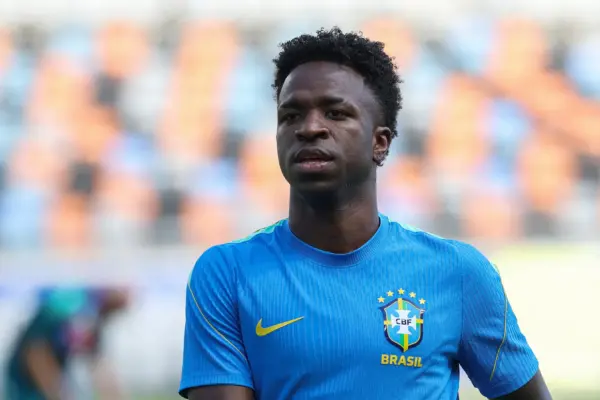
While Vinicus didn’t find the net in this match, he had one of the best attacks of the tournament, the ball pinging off the post after a perfect run. He’s still a true game changer, a player unlocked by Ancelotti.
That flexibility is why Brazil hired him. Throughout the comeback, television cameras repeatedly found Ancelotti standing calmly on the touchline while everyone around him appeared increasingly anxious and shouting. One supporter captured the feeling perfectly afterward: “When Brazil was down 1-0 at halftime, everyone else was panicking. Every time the camera showed Ancelotti, he looked completely relaxed. A lesser manager would have panicked. That comeback was pure Don Carlo.”
Brazil still has limitations, and stronger opponents will almost certainly expose some of them before this tournament is over. But when Ancelotti’s adjustments click and this attack begins to flow, there are few teams in world football more entertaining to watch. Sunday’s comeback wasn’t just a place in the Round of 16. It was another glimpse of a Brazil side that is slowly, and perhaps dangerously for the rest of the tournament, finding itself.
Perhaps that is why Ancelotti feels increasingly unique in modern football. While so many elite managers are defined by systems and structure, the Italian has always been defined by feel. He trusts great players to solve problems, but he also knows exactly when to intervene. Against Japan, he changed the game without panic, without ego, and without abandoning what makes Brazil Brazil. For a nation chasing a sixth World Cup, Don Carlo once again showed why many now regard him as football’s last true Don.
Main Photo Credit: Smartframe Images