
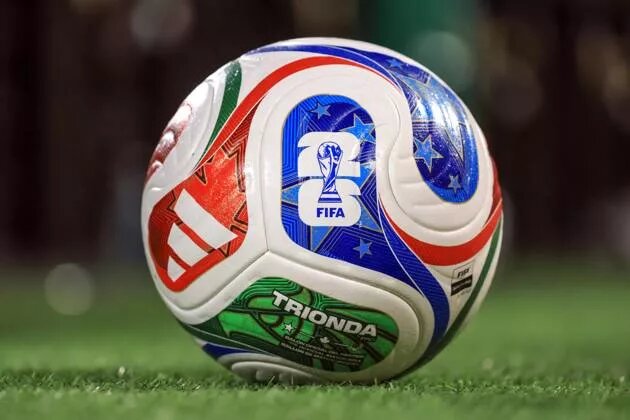
When Cape Verde, a small island nation of just 600,000 people, qualified for their first-ever FIFA World Cup on Monday, celebrations erupted across the Lusophone world. The scenes of joy, of players and fans united in triumph, was a historic sight. But as I watched the Blue Sharks make history, a frustrating thought came to mind. In 2026, Cape Verde joins Jordan and Uzbekistan as World Cup debutants, yet there’s a hollow space where digital celebrations should be. These historic moments deserve to be immortalized not just in our memories, but in the virtual stadiums where so many of us first fell in love with the beautiful game. Due to the 2026 FIFA World Cup not being licensed in video games, that’s not possible.
No Official World Cup Video Game in Sight
Remember when World Cup games were cultural events? When the countdown to release day felt as significant as the tournament itself? Those were more than just games—they were gateways to football cultures we might never have discovered otherwise. I can still recall the excitement of purchasing the 2002 FIFA World Cup game, the game manual promising adventures in South Korea and Japan that my young self could barely imagine. Through that disc, I journeyed to footballing corners of the world I’d only seen in movies and books, discovering the passion of nations I knew little about from a video game.
Now, as FIFA and EA’s partnership dissolved, those gateways have closed. The 2026 World Cup, with its record sponsorship deals for things like cars and banking, and an expanded format including teams like Cape Verde, exists only in reality, not in our consoles. The void is palpable, a digital ghost haunting what should be a celebration of football’s global reach. How did we get here? In 2022, EA Sports announced an end to their relationship with FIFA, ending nearly three decades of collaboration that brought the World Cup to life in our living rooms. What remains is a hollow space where once digital dreams were made. This is despite the United States, Canada, and Mexico being among the 10 largest gaming markets in the world.
The Virtual Stadium: Lost Connections to Distant Football Cultures
World Cup games were a passport to football’s diverse landscape. Through them, players who were never at internationally famous clubs like striker Siphiwe Tshabalala, whose opening goal for South Africa in 2010 became legendary, and Singapore’s naturalized Serbian Aleksandar Duric, who found international stardom in his late 30s become known to the wider world. These weren’t just virtual avatars—they became connections to real people, real cultures, real stories that transcended borders. I spent countless hours guiding Saudi Arabia’s Nawaf Al Temiyat from Al-Hilal to Golden Boot glory in 2002, feeling a strange sense of pride when this virtual player from a club I’d never seen lifted the trophy. The 2006 game added qualifying for the first time, allowing me to pilot nations like Cape Verde themselves through the very process they’ve now accomplished in reality, along with play with teams like 2006 debutants Trinidad and Tobago, Ukraine, and Togo. The 2010 South Africa edition became a cult classic with 199 playable nations, meaning I could steer Cambodia or Iraq to World Cup glory against all odds.
These experiences weren’t just entertainment—they were education. They fostered curiosity and understanding for football cultures far from what I had been exposed to. Now, players like Jordan’s Yazan Al-Naimat, Uzbekistan’s Igor Sergeev, and Cape Verde’s 39-year-old goalkeeper Vozinha will never have their moments enshrined in digital glory. These aren’t just missing statistics in a game—they’re lost opportunities for connection, for understanding, for the magic of discovering football’s unsung heroes from the comfort of our living rooms, a chance to make the world seem a little smaller than it is.
The Long Slow Break Up: When Business Broke Our Hearts
From 1993 to 2022, EA and FIFA built a gaming empire together. World Cup titles were regular releases, each more anticipated than the last. But as licensing fees soared, EA walked away, preferring to secure exclusive rights to major leagues like the Premier League, Champions League, and “La Liga EA Sports” while FIFA was left without a gaming partner. The result? EA FC, a game that feels increasingly soulless, dominated by pay-to-win Ultimate Team modes that prioritize profit over passion.
What hurts most is how this corporate divorce has diminished the very essence of what made these games special. The World Cup, with its global diversity and underdog stories, has been replaced by a focus on established leagues and superstar players. EA FC may be visually stunning and photo realistic, but it lacks the soul of those earlier titles that celebrated football’s global tapestry. Meanwhile, FIFA navigates a brave new world without its most visible cultural ambassador, leaving fans like me caught in the middle of a corporate breakup that cost us something irreplaceable. The 2024 rumors of a FIFA tie in with 2K Sports look increasingly unlikely, as the licensing burden was heavy.
No Longer a Winning Eleven: The Decline of Football Gaming
For years, Konami’s Pro Evolution Soccer offered an alternative to FIFA’s dominance. It had its flaws, but it had heart—gameplay that felt authentic, and a Master League mode that kept us coming back. I remember the heated debates with friends about which series was superior, the passionate arguments about gameplay mechanics versus presentation. Those arguments seem quaint now, as Pro Evolution Soccer eventually lost the licensing war, and despite a meaningful presence in Asia and South America, they gave up competing directly with EA.
Today, rebranded as eFootball, PES is a shadow of its former self: a free-to-play, online-focused shell with limited offline options and no modding capabilities. The competition that once pushed both franchises to improve has vanished, leaving us with a monopoly that seems to have forgotten why we fell in love with football games in the first place. The absence of genuine competition has created a vacuum where innovation once thrived, leaving fans with fewer choices and diminishing quality. The current version of eFootball promotes tie ins with the card game Yu-Gi-Oh! alongside FC Barcelona, rather than anything like a World Cup qualifying campaign, even though Konami was the partner for the 2025 eWorldCup, a FIFA Esports tournament.
UFL is a free-to-play game with significant player licensing but no team licensing and is mainly online focused. Football Manager is a management and simulation game with 19 million players and a chance to play even smaller leagues, but it was delayed for a year, and the 2026 edition is highly anticipated, though the UK based developers are under pressure to deliver.
Flickering Torches: Modders Keep the Dream Alive
Amidst this gloom, a dedicated community of modders battles against the darkness. On PC, they’ve transformed FIFA 16 into something remarkable with the “FIFA Infinity patch,” adding 136 new leagues and 64 national teams. They’ve breathed new life into PES 2021 with “Smoke Patch Football Life,” on PC creating something more authentic than what official developers offer, with all of the kits, adboards, broadcast packages, updated commentary, and squads
These passionate creators work with limited compensation, driven only by their love for the game. They spend countless hours updating squads, creating authentic kits, and building tournament modes that corporations have abandoned. Even on Playstation, South American modders keep PES 2021 alive on PS4/PS5 through edit mode, updating squads and kits that official games ignore or refuse to license like Mexico’s Liga MX, Colombia’s Liga Betplay Dimayor, and Uruguay’s Liga Uruguayo. These digital artisans are the last guardians of football gaming’s soul, working with limited resources to preserve what corporations have left behind.
What We’ve Lost With No Virtual World Cup
Less than a year before the 2026 World Cup, as Cape Verde prepares to write their chapter in football history, I find myself mourning not just what we’ve lost in gaming, but what future generations will never experience. The ability to guide an underdog nation to World Cup glory, to discover unknown players who become virtual favorites, to feel connected to football’s global tapestry—these experiences are fading away. And in their place, we’re left with a hollow feeling, a nostalgia for something that should be evolving, not disappearing. The modders may keep the flame burning, but it’s getting harder to see in the growing darkness.
The purchase of Electronic Arts by a private equity group spearheaded by Saudi Arabia’s sovereign wealth fund, isn’t likely to improve the dynamic. When Cape Verde takes the field in 2026, I’ll be cheering them on with millions of others. But a part of me will be mourning what could have been—the chance to guide them through qualifying myself, to experience their journey in a way that only a video game could provide. That loss, intangible as it may seem, is real. It’s the loss of connection, of discovery, of the magic that made football gaming more than just a game—it made it a gateway to the world. Cape Verde will walk onto the world’s biggest stage—but in the digital realm, they’re already erased.
Main Photo Credit: Imago Images Copyright: xManuelxBlondeau/AOP.Pressx