The 2024–25 football season delivered a whirlwind of surprises, breakthroughs, and historic milestones across Europe’s top leagues. From tactical revolutions to record-breaking performances and managerial shake-ups, it was a campaign to remember. Here are the most compelling storylines that shaped this extraordinary season.
Most Interesting Facts From Europe in 2024-25
Premier League: Liverpool’s Redemption and Tactical Renaissance
Liverpool reclaimed the Premier League crown in with style and dominance, finishing 10 points clear of their nearest challengers, Arsenal. The title was sealed in April with a commanding 5-1 win over Tottenham, earning them their 20th league title and drawing level with Manchester United at the top of the all-time leaderboard.
What made Liverpool’s triumph more impressive was their tactical evolution. Manager Jürgen Klopp implemented a fluid 3-box-3 system that maximized Trent Alexander-Arnold’s creative freedom while allowing Alexis Mac Allister and Dominik Szoboszlai to control the midfield tempo. The team scored 91 goals and conceded just 28, a defensive and offensive masterclass.
Elsewhere in the Premier League:
- Arsenal continued to push boundaries with their now-iconic “love train” set-piece routine—a synchronized movement during corners that led to 15 set-piece goals.
- Tottenham, despite a disappointing 17th-place finish domestically, pulled off a European miracle by winning the UEFA Europa League, defeating Manchester United in the final. Their chaotic yet effective “Wheel of Chaos” rotational system in wide areas was widely discussed among tacticians.
Overall, the league witnessed a surge in goal-scoring, with 1,115 goals scored—second-most in a 38-match season. A record number of fast breaks (2.04 per 90 minutes) signaled a broader tactical shift towards explosive, vertical football.
La Liga: Barcelona’s Youthful Revival
Barcelona roared back to the top of Spanish football, clinching their 28th La Liga title with two games to spare. Spearheading their success was 17-year-old sensation Lamine Yamal, who contributed an astonishing 18 goals and 25 assists. His fearless dribbling and vision made him one of the breakout stars of the season and a symbol of Barça’s renewed emphasis on youth development.
Behind the scenes, manager Xavi’s decision to place faith in La Masia graduates paid off. The likes of Pau Cubarsí and Marc Guiu also featured prominently in the first team, helping secure a domestic treble that included victories in the Copa del Rey and Supercopa.
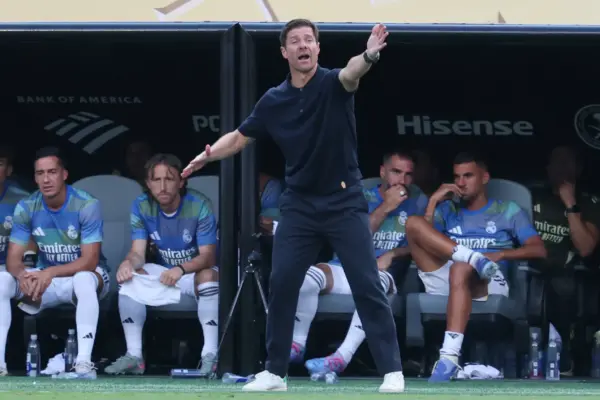
On the other side of El Clásico, Real Madrid stunned the world with their signing of Kylian Mbappé, who joined on a free transfer. However, despite his 24 goals, Real fell short in the title race, leading to the departure of Carlo Ancelotti and the appointment of Xabi Alonso as head coach.
A standout story came from Girona, where veteran Daley Blind defied age to finish among the league leaders in both interceptions and passing accuracy, underlining that experience still has a place in a league otherwise dominated by youth.
Serie A: Napoli’s Stunning Return
Arguably the most surprising domestic triumph came from Napoli, who rose from a 10th-place finish in 2023–24 to Serie A champions. Under a revitalized tactical setup and with the introduction of Scottish midfielder Scott McTominay, Napoli edged out Inter Milan by a single point.
McTominay, often overlooked in past campaigns, found new life in Serie A, scoring 12 goals and registering four assists—earning the league’s MVP honors.
- Fiorentina’s Moise Kean also had a career-best season, finishing second in the scoring charts with 19 goals.
- Promoted side Como, managed by former Spanish international Cesc Fàbregas, brought a high-energy, possession-based game that won admirers and mid-table security.
This season further confirmed that Italian football is no longer solely about tactical rigidity; it’s embracing flair and risk, and it’s paying off.
Bundesliga: Bayern Reclaim the Throne
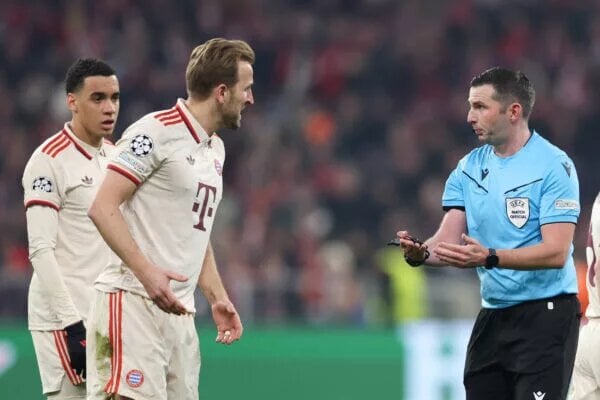
After a rare season without silverware, Bayern Munich reasserted their dominance in the Bundesliga, winning their 34th league title. Harry Kane was once again the league’s top scorer, claiming his second consecutive Torjägerkanone with 29 goals.
Perhaps the league’s most compelling story, however, was the rise of Freiburg, who came within a whisker of Champions League qualification. Attacker Vincenzo Grifo stood out with eight goals and 11 assists, while their disciplined pressing style caused problems even for the league’s elite.
The Bundesliga also delivered its usual dose of randomness—Union Berlin’s Leopold Querfeld scored a long-range strike with a goal probability of just 1.2%, illustrating why the German top flight remains one of the most unpredictable leagues in Europe.
Ligue 1: PSG’s Perfect Run
Paris Saint-Germain made history with an undefeated Ligue 1 campaign: 23 wins, 5 draws, and zero losses. This was a monumental achievement not even the Messi-Neymar-Mbappé trio managed during their time together.
Manager Luis Enrique crafted a side centered around youth and speed. With stars like Désiré Doué and Warren Zaïre-Emery flourishing, PSG not only won the league but also completed a continental treble, including the Coupe de France and their first-ever UEFA Champions League title, won in spectacular fashion with a 5-0 demolition of Inter Milan.
The French league averaged nearly 3 goals per game (2.97), the second-highest in Europe, reflecting a continental shift toward attacking football.
European Competitions: Premier League Clean Sweep
The season was unprecedented in terms of European dominance by English clubs. A record five Premier League teams lifted European trophies:
- Liverpool won the Champions League (2024)
- Tottenham captured the Europa League (2025).
- Chelsea triumphed in the Conference League (2025).
- Newcastle and Crystal Palace claimed other UEFA honors in newly introduced intercontinental tournaments.
This success ensures that nine English clubs will participate in European competitions next season, with Nottingham Forest returning to Europe after a 30-year absence. The depth of quality in the English top flight has never been clearer.
Transfer Window: Big Money, Big Risks
The summer of 2024 was one of the most aggressive transfer windows in recent memory:
- Manchester United launched a full-scale rebuild, signing Brazilian forward Matheus Cunha for £62.5 million. They also targeted Bryan Mbeumo of Brentford and are weighing options to replace goalkeeper Andre Onana, with names like Emiliano Martínez and Mike Maignan on the shortlist.
- Former United boss Erik ten Hag, now with Bayer Leverkusen, kickstarted his reign by bringing in Mark Flekken from Brentford for £11 million.
Despite high fees, clubs increasingly relied on data-driven scouting and advanced modeling, echoing a larger trend across the sport. The rise of platforms providing football tips generated by artificial intelligence further illustrates how technology and analytics are becoming central to the modern game—not just for clubs, but for fans seeking deeper insights.
Conclusion: A Season to Remember
The 2024–25 season was anything but predictable. It gave us comebacks, shock title runs, teenage superstars, and tactical evolutions. As football continues to evolve both on and off the pitch, it’s clear that data, youth development, and innovation are the engines powering a new era.
From Paris to Naples, from Liverpool to Barcelona, the beautiful game remains full of surprises—and fans around the world are already counting the days until the next kickoff.
Main photo credit: IMAGO / NurPhoto