
As wrestling has evolved, fans’ tastes have grown with it. It’s not a linear course, never that. Instead, it’s a path that spans varieties that cater to many tastes. The term “one size fits all” doesn’t apply. My case today follows that of “dark wrestling characters”, a term attributed to the spooky, the mysterious, and the deeper meanings that follow.
Considering a recent report by PWInsider that hints at a member of WWE’s TKO board’s disdain for such characters, it’s been a heated topic of debate. Do dark characters belong in pro wrestling? I’d say so, given the longevity of some gimmicks and the presentation of certain talents.
Even if it’s a temporary persona with a shelf life, these elements are interwoven with the characters that bump into it. While Wrestling Observer countered the anti-dark character report, the question remains: do they still belong in wrestling?
It’s 2026, and the query still lingers. I’ll narrow it down and present why I think there’s still a place for dark wrestling characters.
Origins of Dark Wrestling Characters
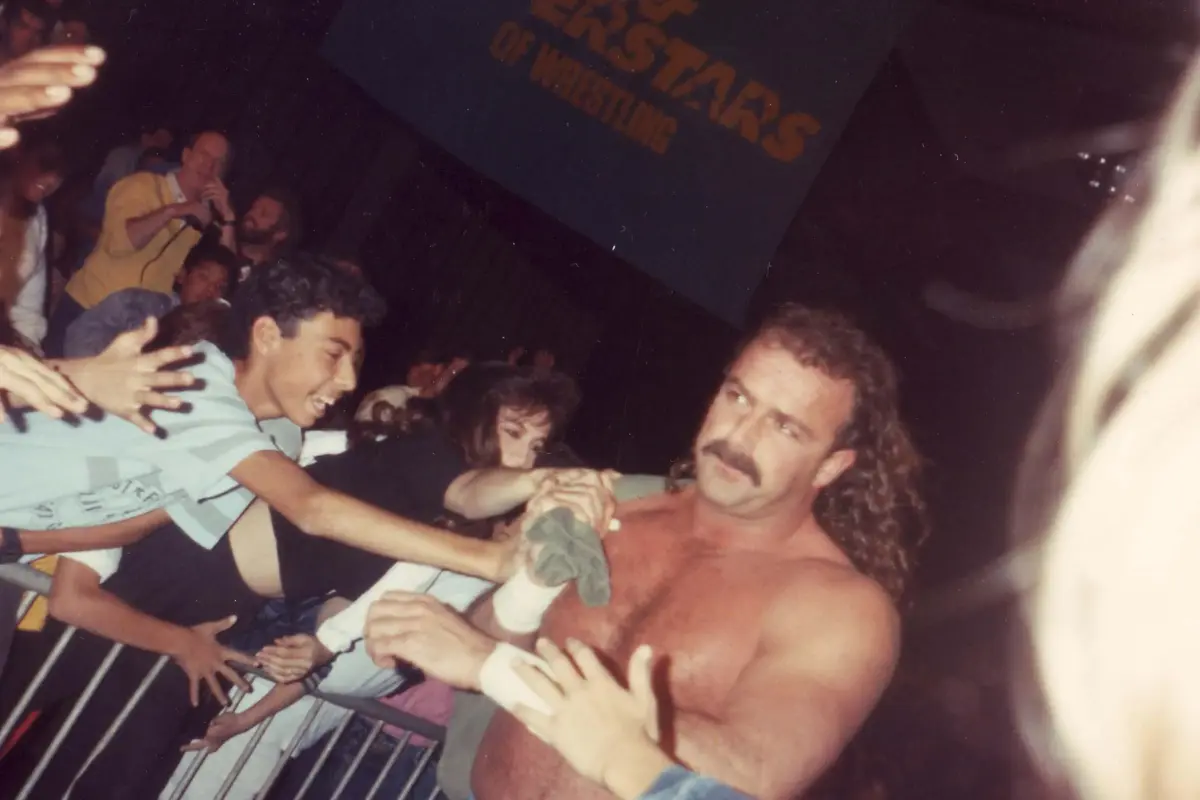
Elements of horror and thrillers span far back in pro wrestling. In the 1980s, Kevin Sullivan performed an angle where he and his followers haunted territories as a cult. This highlighted the ongoing Satanic Panic of the time. Others followed in different footsteps. Jake “The Snake” Roberts, for example, wasn’t pronounced in his presentation—just a man with a mustache and long-flowing hair.
He orated like a man reading from biblical scripture and tormented his foes with serpents. His matches were slow-paced but could end in a snap. In this, he was an entity unto himself, evergreen.
Heading closer to the end of the millennium, the 90s held something different. Mostly, WWF’s young signee Mark Calloway, otherwise known as The Undertaker. Everyone, even those privy to wrestling’s scripted nature, kept their eyes on the towering, stiff undead warlock.
Somehow, what would’ve been a silly gimmick took on its own form. He moved like a horror film antagonist, swiftly, breaking with the mechanical nature. As his character developed, The Undertaker shaped what many dark characters would look like, with some being intertwined with his story.
How Dark Wrestling Characters Become Mythological
Staying on topic with The Undertaker, Mark Calloway’s method to keep the mystery alive was instrumental in the Dead Man’s iconic tenure. He protected the character by keeping sightings of him outside of wrestling minimal and staying in character during media appearances.
Where he couldn’t speak, his manager, Paul Bearer, remarkably filled in. Throughout his career, his in-ring style changed. Instead of moving like a dead person filled with rigor mortis, he became an all-rounder, a brawler, and eventually a high-flyer before slowing down his career as the decades waned on.
Thanks to his popularity, the WWF spun his story into various others. His kayfabe brother Kane added more lore to the Undertaker’s backstory, influencing his motives as a wrestler.
Mankind, portrayed by Mick Foley, added depth as to how far the Undertaker would be willing to go in the face of unforgiving anguish and a relentless, chaotic chase. Even internationally, this happens, with Jinsei Shinzaki having encountered the Great Muta in 1996 and the Deadman in 1997.
Following this, his body would be covered in sacred Buddhist scriptures. Others, like the Ruthless Aggression Era’s Mordecai, met less favorable results. There’s always been precedent for dark characters capturing lightning in a bottle, and others…not working so well.
Elsewhere, wrestlers like Sting and Raven called to something deeper, more personal, that sowed the seeds of characters like Bray Wyatt.
Personal Demons, Trauma, and the Depth of Dark Wrestling Characters
The mythological stamps that Sting had in WCW trailed around a niche audience: superhero fans. Trading his surfer visage for one reflecting the 1994 film The Crow, Sting became a darker version of himself, adopting a vigilante modus operandi.
This was crucial for his crusade against the New World Order. Though bookers struggled to present him properly, consistently, his myth endured, culminating in a final run that left him feeling like the superhero fans grew up to see him as.
Meanwhile, ECW’s Raven tapped into the window of angst and emotion of many young fans. Through his personal demons as a heel, he resonated and cultivated a fanbase of his own. His twisted operations, combined with a promo style evocative of literature and lyric, extended the standard for dark wrestling characters.
From here, The Undertaker, Sting, and Raven were best embodied by their spiritual descendant in Bray Wyatt. Wyatt, no matter his persona, took inspiration from his personal experiences and gave hope to fans who always felt “different” while rooting for his accomplishments.
Of course, WWE couldn’t quite get behind Bray’s ideas, nor those of The Wyatt Sicks. For a machine that churns out content on a conveyor belt, they had no clue the depths and shelf life for supernatural and psychological personas born of someone else’s creativity.
In Conclusion: The Case for Dark Wrestling Characters
Regarding the recent releases on April 24, 2026, a large number of the let-gos were dark characters. Aleister Black, Zelina Vega, and The Wyatt Sicks, all gone in one fell swoop. In business, mass layoffs are expected, especially in multi-billion-dollar corporations when touting annual successes, seemingly. Whether or not the aesthetic of their character played a part, it’s a signifier that they are trends that come in waves.
When it comes to characters like Bray Wyatt’s evolution or Lio Rush’s new Blackheart angle, they are at the booker’s mercy. Like many wrestlers, they have to trust the vision of people who influence their very livelihoods. As seen with Bray, even posthumously, WWE couldn’t be bothered to fully honor him, save for Alexa Bliss carrying her Lily doll with her.
As for Lio, Tony Khan lets him run amok with his gimmick, and the fans have learned to adapt to it. Not many get that luxury; if it isn’t as simple and immediate as Undertaker, most people won’t give it a chance.
With the fluctuations in horror, fantasy, and supernatural storytelling, wrestling often moves along with it. There will always be an audience for dark characters. They call to something primal. These characters call to the unknown, the mystery, the desire to be shocked. Pro wrestling may have been barebones before, but it’s all been theatrics.
Pulling from art and fiction was always the next step beyond that. That heart is embodied in a myriad of dark wrestling characters, like “Timeless” Toni Storm and Danhausen.
There’s a place for almost everything in this industry. Dark wrestling characters are but one facet.