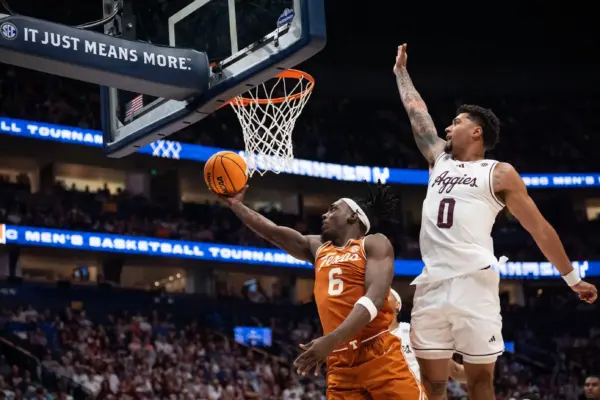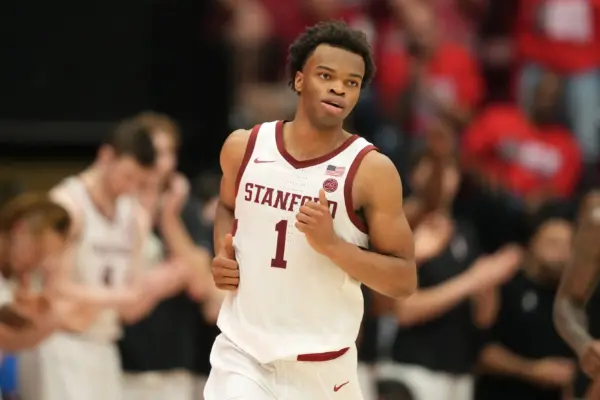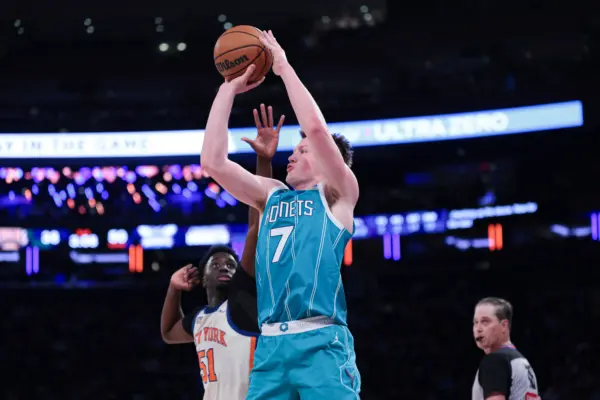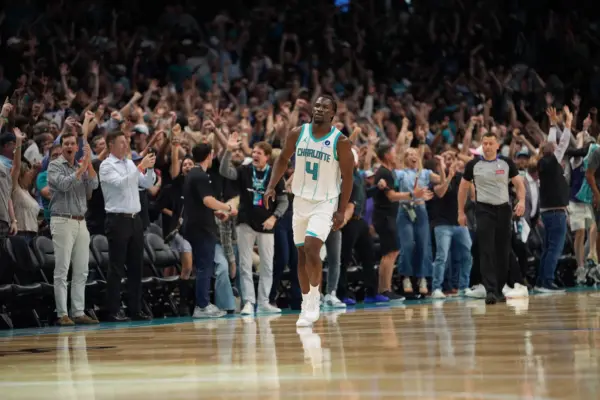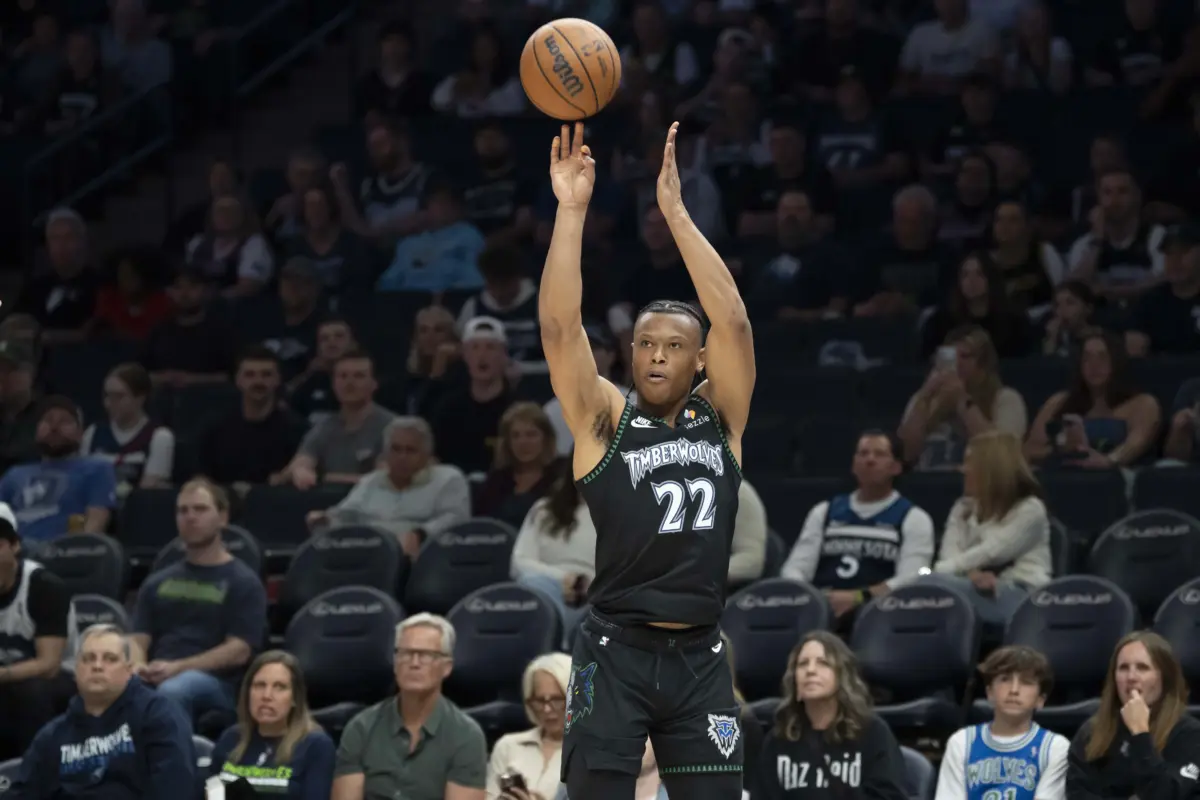

Minnesota’s latest offseason move may not have gotten as much attention as the LaMelo Ball trade, but it could be just as significant in the next three seasons. Jaylen Clark has agreed to return on a three-year, $10 million contract.
This gives the Timberwolves another affordable player as they reshape their team around Anthony Edwards and Ball during their biggest summer. The deal shows more than just confidence in Clark; it highlights the franchise’s changing priorities.
Jaylen Clark’s Return Gives Timberwolves Exactly What Anthony Edwards Needs
Jaylen Clark Fills a Need
Minnesota entered the offseason looking for more offensive firepower after building a great defense without enough offense. It found that by acquiring Ball in a blockbuster trade with Charlotte. The move gives Edwards another playmaker, but it also increases the importance of surrounding both guards with reliable defenders.
That is where Clark fits. He is not expected to create offense or carry the scoring load. His value comes from defending multiple positions, cutting without the ball, and accepting a limited offensive role. Those skills become more valuable when the team’s two best players need the ball in their hands.
Clark earned that opportunity last season. He appeared in 68 games and became one of Minnesota’s most trusted perimeter defenders. His offensive numbers remained modest, but the coaching staff consistently relied on his energy and defensive discipline against opposing guards and wings.
Anthony Edwards Gains Balance
Edwards remains the centerpiece of Minnesota’s long-term plans. Ball should reduce the offensive burden by creating shots for teammates and pushing the pace. That partnership only works if the players around them handle the less glamorous jobs every contender needs.
Clark fits that description better than many young wings. He rarely forces shots and understands his role within the offense. Instead of competing with Edwards and Ball for possession, he lets them stay aggressive while focusing his energy on defense.
That role has become even more important after Minnesota moved on from Julius Randle and Naz Reid. The roster now has fewer experienced defenders capable of matching opposing perimeter scorers. Clark helps fill part of that gap without requiring the offense to change.
Jaylen Clark Fits Payroll
The financial side of the contract may be just as important as the basketball fit. Clark’s new deal averages roughly $3.3 million per season. That is a small commitment for a rotation player on a team with several high-priced stars.
Minnesota already carries major financial commitments to Edwards, Ball, Rudy Gobert, and Ayo Dosunmu. Building a contender under the NBA’s apron rules requires productive players who outperform modest contracts. Clark gives the front office another player who can contribute without adding to payroll pressure.
The alternative would have been searching the veteran market for another defensive wing. That option likely would have cost more money and carried greater uncertainty. Minnesota instead retained a player who already knows the system and has earned the coaching staff’s trust.
Minnesota Protects Future
Clark still has areas to improve. His outside shooting must become more consistent if he wants a larger offensive role. That development will determine whether he remains a defensive specialist or grows into a full-time starter.
Even without that leap, the contract carries limited risk. Three years at $10 million is a manageable investment for a 24-year-old defender entering his prime. Minnesota does not need Clark to become another star for the deal to succeed.
The Timberwolves made their biggest statement by acquiring Ball. Re-signing Clark was quieter, but it followed the same roster-building plan. Teams built around expensive stars need dependable role players who defend, accept their responsibilities, and provide value beyond the box score.
By keeping Clark, Minnesota strengthened both its rotation and its financial flexibility. That makes this one of the offseason’s most practical moves, even if it was not the loudest.
Photo Credit: Jesse Johnson, Imagn Images via Reuters Connect