
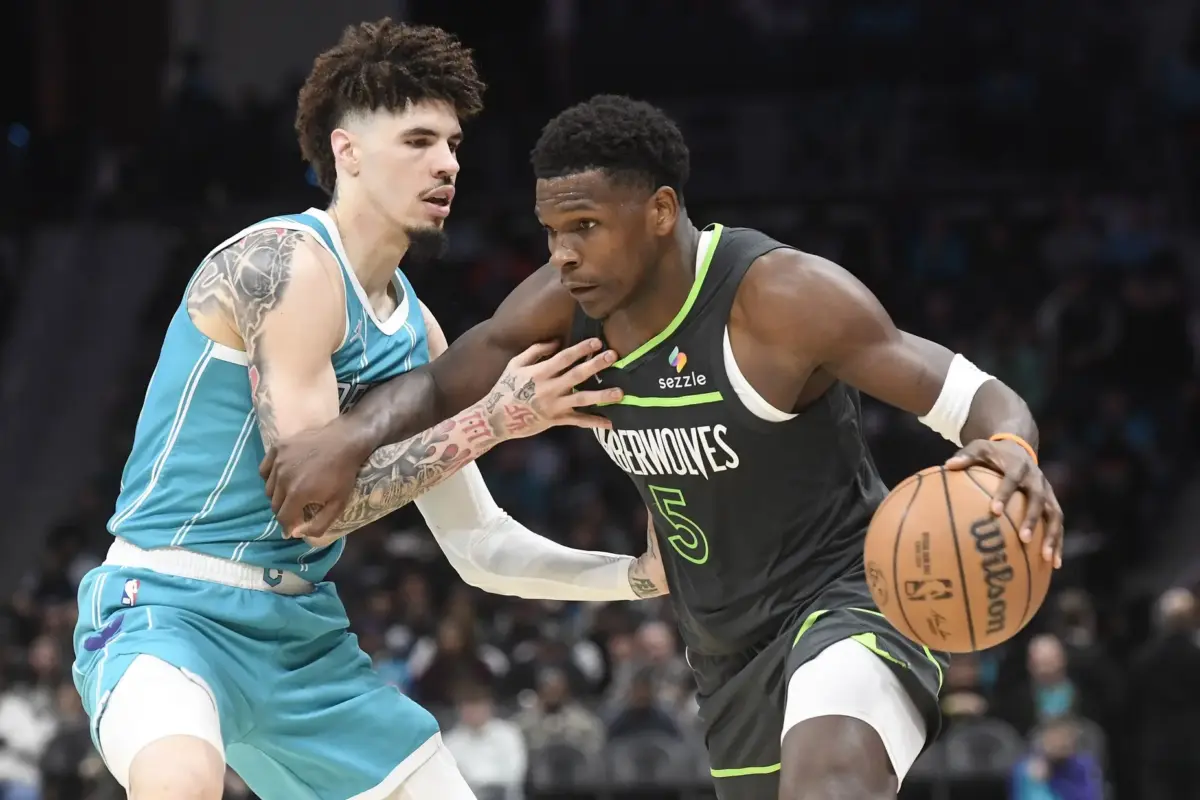

The Minnesota Timberwolves did not approach this offseason cautiously. Instead, they leaned into uncertainty and chose to reshape their roster around a bold idea. That idea centered on relieving Anthony Edwards while accepting the risks that come with acquiring a player like LaMelo Ball.
Minnesota’s decision was not simply about adding talent. It was about acknowledging that staying the same carried its own dangers. After falling short in the playoffs, the front office concluded that incremental changes would not be enough to push the team into true contention.
Timberwolves Bet Their Future on Anthony Edwards and LaMelo Ball
Anthony Edwards Needed Relief
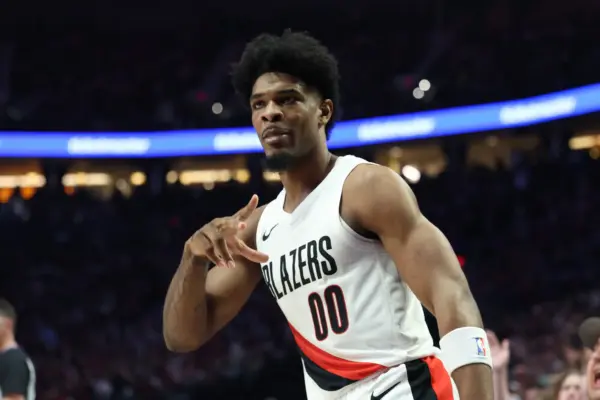
Minnesota entered the summer knowing last season exposed a weakness. The offense became too dependent on Edwards whenever playoff defenses tightened. That problem surfaced most clearly during the second-round loss to San Antonio, where the Spurs repeatedly trapped Edwards before Minnesota could establish its offense, reinforcing his frustration that had been building throughout the season.
Those possessions revealed a roster issue instead of an individual one. Edwards often created advantages, but the Timberwolves lacked another elite playmaker capable of punishing aggressive defensive coverages. As a result, president Tim Connelly shifted from protecting the roster to reshaping it. Connelly explained that philosophy after the season.
“Risky, I think, is if you’re a championship-level team and make a huge trade. I don’t know what level of risk there is when you’re bounced in the second round,” he said. “We’re not going to have a blind appetite for risk just because. But until you win it all, I think you’ve got to just keep playing hands.”
That mindset became the foundation for everything Minnesota did this offseason.
Why LaMelo Ball Was Different
The Timberwolves considered several options before completing this deal. Ball ultimately stood apart because he solves more than one problem.
His passing immediately eases Edwards’ workload. His shooting forces defenses to respect another perimeter creator. His age also aligns with Minnesota’s timeline, allowing the franchise to build around two 24-year-old stars rather than chase a shorter championship window with an older veteran.
Ball averaged 20.1 points, 7.1 assists and 4.8 rebounds last season, but the numbers tell only part of the story. His greatest value comes from creating easier shots for everyone around him. Minnesota lacked that type of offensive organizer throughout last season.
One team source summarized the front office’s thinking in an interview with The Athletic. “We needed a guy like LaMelo to make everybody better. That was the thing that was missing,” they said. That belief separates this trade from a simple talent upgrade.
A Different Offensive Identity
Minnesota has built its recent success on defense, size and physicality. Those strengths carried the team deep into the playoffs, but they also masked an incomplete offense that became harder to ignore.
Adding Ball gives the Timberwolves another player capable of initiating offense without waiting for Edwards to rescue a possession. That change should create cleaner opportunities for shooters while allowing Edwards to attack against less crowded defenses.
The move also signals a philosophical shift. Rather than surrounding Edwards with complementary role players, Minnesota is finally choosing an identity by investing in another primary creator who can share responsibility every possession.
The Price Was Real
Landing Ball required meaningful sacrifices. Naz Reid leaves after developing into one of the franchise’s most respected players. Minnesota also surrendered future draft assets that could have supported the roster for years.
Those losses reflect how urgently the organization viewed its situation. The Western Conference continues getting younger and deeper, leaving little room for patience. Minnesota decided that repeating last season’s formula carried greater risk than making an aggressive move. That calculation explains why the front office accepted a difficult trade.
The Work Is Not Finished
Ball’s arrival does not eliminate every concern. His injury history remains a legitimate question after missing significant time before last season. Minnesota also needs another reliable frontcourt contributor after moving on from Reid and Julius Randle.
Those challenges, however, are different from the ones the Timberwolves faced entering this offseason. Finding another player capable of changing the offense was always the hardest task. Minnesota now believes it has accomplished that goal.
The franchise is no longer asking Edwards to carry every important possession alone. Instead, it is betting that Ball’s playmaking can unlock a more balanced offense, extend its championship window and give the Timberwolves their clearest path toward competing with the West’s best teams.
© Sam Sharpe-Imagn Images