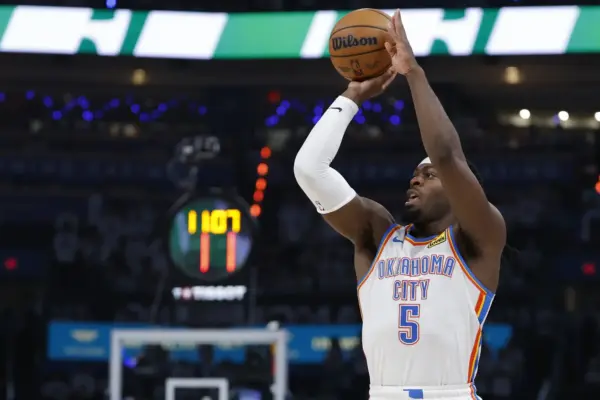

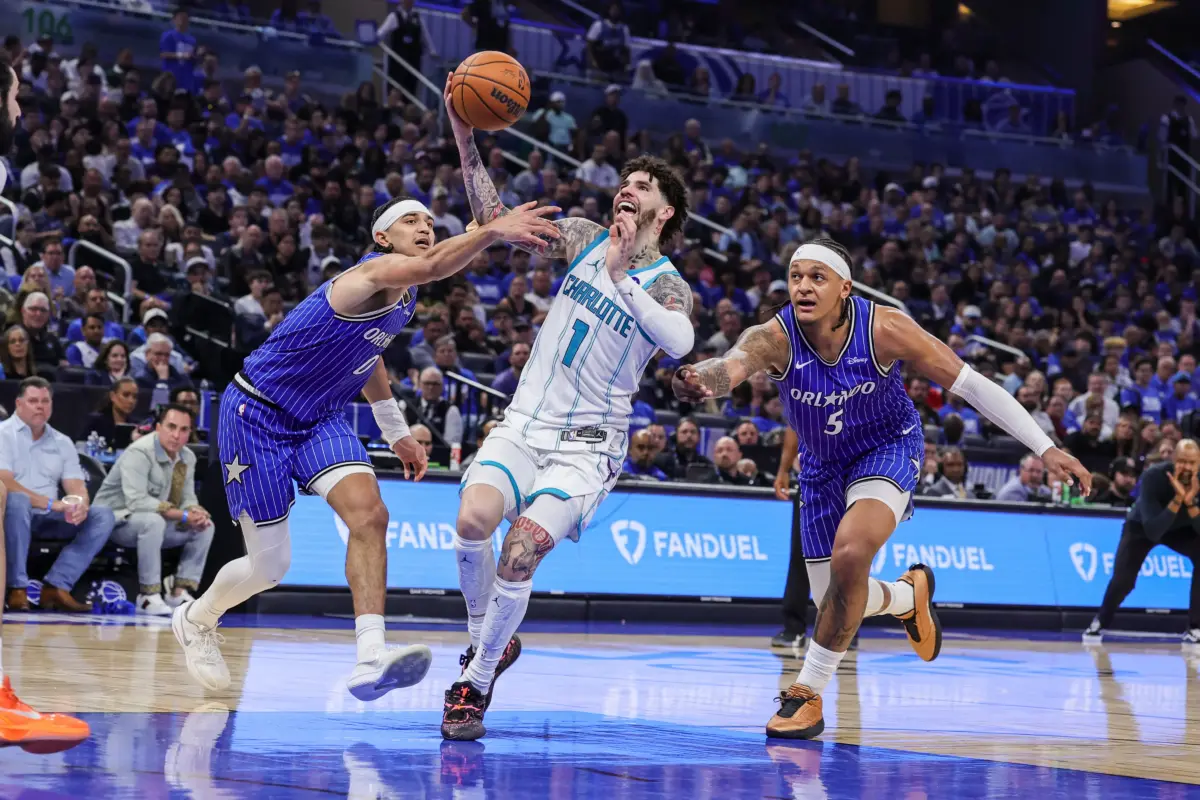

In another surprising trade, the Charlotte Hornets are sending LaMelo Ball to the Minnesota Timberwolves, according to ESPN’s Shams Charania earlier today. The trade is the Timberwolves’ second of the offseason.
Grading The Hornets-Wolves Trade Involving LaMelo Ball and What Is Next For Both Squads?
BREAKING: The Charlotte Hornets are trading star guard LaMelo Ball and Josh Green to the Minnesota Timberwolves for Naz Reid, a 2033 unprotected first-round pick, three first-round pick swaps (2028, 2029, 2030) and three second-round picks (2029, 2032, 2033), sources tell ESPN. pic.twitter.com/lkhXBWHCrA
— Shams Charania (@ShamsCharania) June 25, 2026
The Hornets and Timberwolves moved pretty quickly on the deal, as it was just last night that reports surfaced that the two teams were in talks. As Charania stated, the Hornets are trading Josh Green along with Ball in exchange for Naz Reid, a 2033 first-round pick, three second-rounders (2029, 2032, 2033), and three first-round swaps (2028, 2029, 2030).
Hornets-Wolves Trade Grade: Minnesota Gets B+
Ball is coming off his healthiest season in four years. While the 24-year-old was much maligned last year, he still averaged 20 points, 7 assists, 5 rebounds, and 1 steal. He has three years and $130 million left on his deal.
Ball immediately becomes the best point guard that Anthony Edwards has played with. Point guard has been a huge problem for the Timbworves the past two years. The Wolves point guard– Doug DiVincenzo, Mike Conley, and Bones Hyland — ranked in the bottom six in the league last year in efficiency, which was a slight improvement from the 2024-25 campaign.
Ball’s addition, along with Reid’s departure and Julius Randle’s, also means a shift in the focus of Chris Finch’s offense. After years of being an inside-outside offensive team, the Timberwolves are now constructed to be perimeter-oriented. This change in philosophy should unleash Edwards on the offensive end even more, as he won’t have to be the Wolves’ main creator.
“LaMelo Ball is very excited to go play with Anthony Edwards to try to win championships. He knows the task at hand.”@ShamsCharania breaks down the LaMelo Ball trade to Minnesota ✍️ pic.twitter.com/ZcZK8dnGfH
— First Take (@FirstTake) June 25, 2026
With the two trades, Minnesota got much younger and more athletic. Now, the Timberwolves can push the pace and run even more than last year. The Wolves did a pretty good job last year in transition, averaging 16 fastbreak points a game (11th). Ayo Dosunmu (4.1 FB points_ and Edwards thrive in the open court, while Jaden McDaniels likes to run as well.
But with Ball running the offense, those numbers should increase. Ball sees the floor extremely well and is one of the best at hitting ahead passes. His shooting gravity should open driving lanes for Edwards, Dosunmu, and McDaniels. Also, Ball’s addition instantly makes Rudy Gobert a bigger factor offensively due to his precision passing, whether it’s on lobs in pick-and-roll situations or on cuts.
Green is a good inclusion in the trade for the Wolves. The athletic Green is a defensive rotational piece who is an intelligent cutter and passer, though he is also a capable floor spacer.
Minnesota adds $32 million to its payroll with the trade with the Hornets. But, taking into account the Randle trade to Brooklyn, the total hit to the Wolves’ cap is just $1 milllion. It was the trade of Randle’s that allowed the Wolves to acquire Ball, as they used the $33.3 million trade exception obtained in the Nets trade to absorb Ball and Green’s contract.
What’s Next For the Wolves?
While Minnesota’s backcourt is pretty well set, the Wolves will need to add to the frontcourt. The Timberwolves have 12 players under contract with salaries totaling $213.4 million, including Mo Gueye, Julian Phillips, and rookie Joshua Jefferson.
Gueye and Phillips have nonguaranteed deals. Thus, putting the Wolves about $8.5 million below the second apron with three open roster spots. However, considering the ramifications of going over the second apron, they will likely start the season carrying 14 players.
More specifically, to add to the frontcourt, the Wolves need to add size. Reid was going to start at power forward for the Wolves this year alongside Gobert, McDaniels, and Edwards.
Now with Reid gone, Minnesota will need a four-man, preferably a stretch-4. If the Timberwolves don’t bring in a starting power forward, McDaniels will start there. Therefore, Edwards would slide down to the 3, and Dosunmu would likely start at the two alongside Ball.
Now, if the Wolves do bring in a starting four-man, Dosunmu would head to the bench. Joan Beringer figures to back up Gobert, though they also need a third point guard. The Wolves may be granted an injury exception for Donte DiVincenzo, who tore his ACL in early May, if he doesn’t play. But, Jon Krawczynski of The Athletic said the Wolves won’t trade the 29-year-old, who is on a $12.5 million expiring contract.
The Wolves do still have other moves in the works. They need a power forward and they need more shooting. I am told that they are not trading Donte DiVincenzo. The work continues.
— Jon Krawczynski (@JonKrawczynski) June 25, 2026
So, if DiVincenzo isn’t going to be moved. CBS Sports Sam Quinn believes the Timberwolves’ only other option to bring in a power forward via trade is to move Green.
If Minnesota is keeping Donte DiVincenzo, they somehow have to turn Josh Green’s $14.7 million salary into a playable power forward. Without draft picks, they might have to include Shannon to do so. But that’s the next order of business here.
— Sam Quinn (@SamQuinnCBS) June 25, 2026
Hornets-Wolves Trade Grade: C-
Not sure exactly what Charlotte is doing. The Hornets are coming off their best season in a decade, as they won 44 games. Yes, the Hornets needed to shake things up, but not sure trading one of their cornerstones for Reid and a first-round pick down the road. Granted, there is value in the second-round picks and swaps, but there is also risk.
On the plus side, Reid does upgrade Charlotte’s frontcourt, especially on the offensive end at center. Reid has been one of the best 6th men in the league the past three years. Reid can play either the 4 or 5 and can space the floor, averaging 1.5 threes at 37.1% clip for his career. He is also a very good passer. Defensively, he is active and a good rebounder on that end.
Reid’s role is kind of up in the air at this point. He may come off the bench or start at power forward if Miles Bridges is moved. The Hornets have made Bridges available in trades.
The bigger question is whether Coby White, who will start at point guard this year, can be as good as Ball. Ball was productive, and the Hornets were 41-31 in games he played, compared to 3-7 in the games he sat out. Also, the Hornets were +5.2 points per 100 possessions when Ball was on the court, compared to -0.2 when he was off. Granted, his shooting efficiency, defense, massive contract, and health were negatives as the organization looked to improve on the last season.
Free agent guard Coby White intends to sign a three-year, $74 million deal to return to the Charlotte Hornets, sources tell ESPN. White was a major priority for the Hornets and now steps into a new starting role in the backcourt. pic.twitter.com/vomi9igMu5
— Shams Charania (@ShamsCharania) June 25, 2026
White, a bucket-getter, had some big games for Charlotte after being acquired from Chicago. While White is a more efficient scorer, he isn’t as complete an offensive player as Ball, and defense is a weakness. White re-signed with the Hornets on a three-year, $74 million contract after the announcement of Ball’s trade.
So, like Minnesota, Charlotte’s starting lineup is set as much as it can at this stage of the season. White and Kon Knueppel, who finished second in Rookie of the Year voting this past season, will open in the backcourt. Meanwhile, Brandon Miller is the only certain starter in the frontcourt. Reid, Bridges, Moussa Diabate, and Ryan Kalkbrenner are all candidates for the other two spots.
What Is Next For The Hornets
Charlotte has 15 players under contract, including first-round picks Hannes Steinbach and Christian Anderson Jr., with a salary cap hit of $148 million. Thus, this means the Hornets have about $17 million in cap space. However, Pat Connaughton will likely have his $3.8 million club option declined, opening up a roster spot.
So, the Hornets can make another huge splash. Obviously, Bridges is the player to watch on the trade market. Here is what an NBA cap analyst said about the Hornets’ financial situation before the team re-signed White.
Charlotte Hornets salary cap situation after trading LaMelo Ball and Josh Green for Naz Reid and picks.
$75 million in room below the luxury tax line.
Enough room to re-sign Coby White, use the entirety of their $40.8 million trade exception, and $15 million mid-level. pic.twitter.com/dkRjrp3Fmg
— Yossi Gozlan (@YossiGozlan) June 25, 2026
Photo Credit: Mike Watters, Imagn Images via Reuters Connect