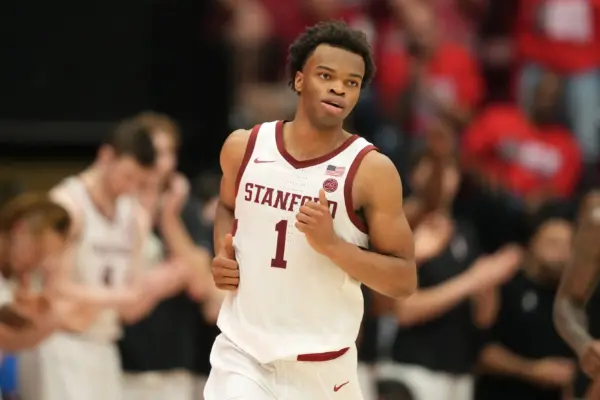

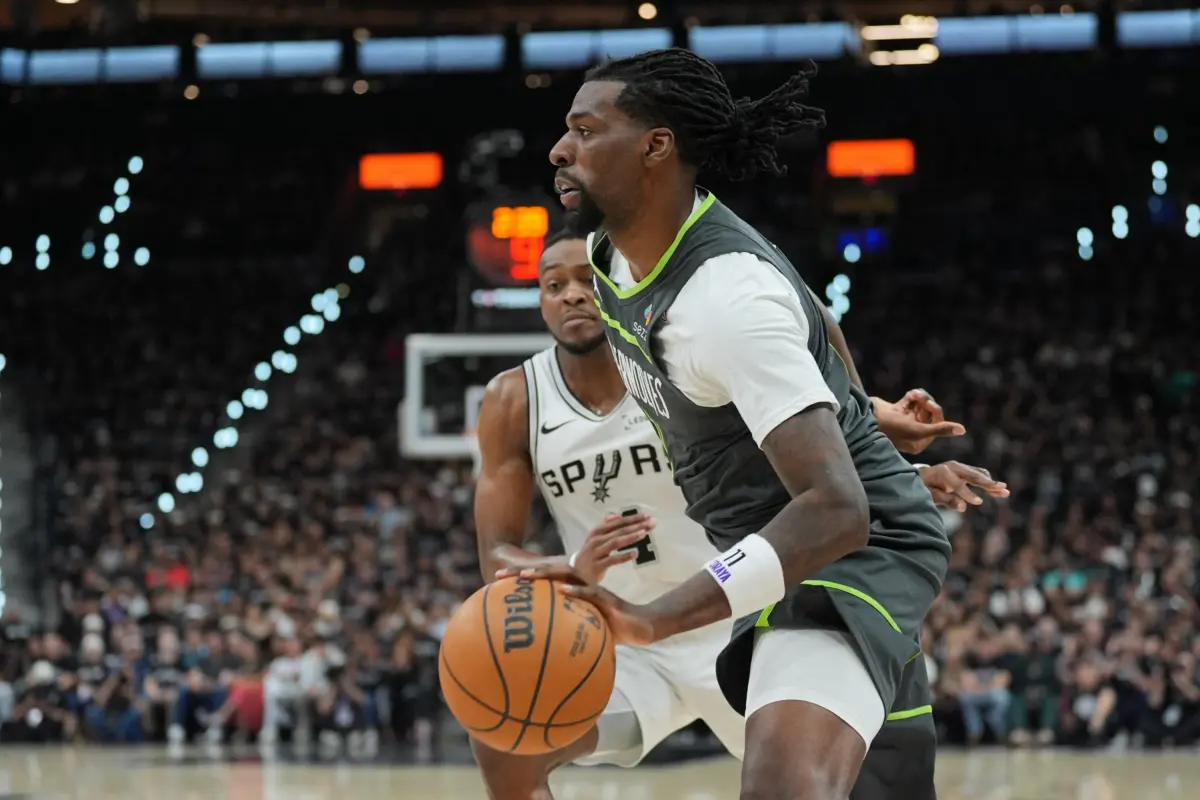

Charlotte traded LaMelo Ball on Thursday morning. By Thursday afternoon, ESPN’s Shams Charania confirmed that Coby White agreed to a three-year, $74 million deal to return as the new starting point guard. By Thursday night, teams were already calling about Naz Reid, the man Charlotte just acquired from Minnesota.
Charania reported it directly: “They already got some trade calls in on him, but the plan is right now to keep him.” That phrase “right now” is doing a lot of work — and it needs to become permanent. The Hornets must not trade Naz Reid. Not this week, not this summer, not until this roster has had a full season to show what it is without Ball running the point.
With White now locked in as the starter, the roster picture clarifies quickly. White at point guard. Kon Knueppel and Brandon Miller at the wings. Moussa Diabate at center. Reid fills the power forward spot — and suddenly Charlotte has a starting five that is coherent, complementary, and genuinely competitive. That picture disappears the moment Reid does.
The Charlotte Hornets Must Not Trade Naz Reid
Reid Gives Charlotte Something They Cannot Replace
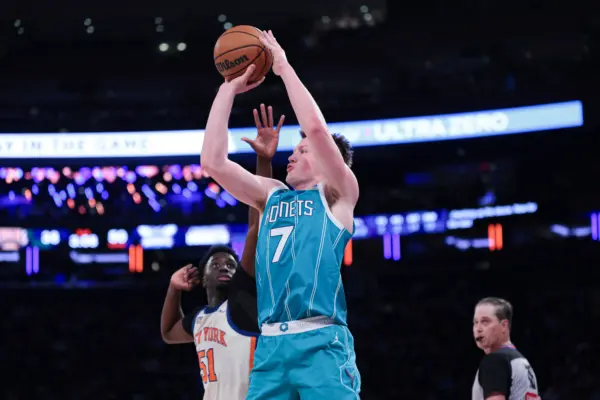
Reid averaged 13.6 points and 6.2 rebounds last season and shot 36.2% from three — making him one of the most functional shooting bigs available at his contract price anywhere in the league. He does not demand plays. He moves intelligently off the ball, catches and shoots, finishes on cuts, and defends multiple positions without creating matchup problems. For a team now built around White’s creation, Knueppel’s movement shooting and Mille,r’s scoring, that selfless profile is exactly what the frontcourt needs alongside Diabate.
Furthermore, Hannes Steinbach — Charlotte’s 14th pick — is a 19-year-old who needs time before he can anchor an NBA frontcourt rotation at the highest level. Trading Reid returns Charlotte to a frontcourt anchored entirely by Diabate and Ryan Kalkbrenner, with Steinbach needing development time Charlotte’s window does not afford. That is not a step forward. It is a step backward dressed up as asset management.
More importantly, Reid was the frontcourt solution Charlotte acquired in the Ball trade. Moving him before he plays a single game would undermine the logic behind that deal. The Hornets would essentially solve their biggest roster weakness only to recreate it immediately.
Use the $40 Million Exception to Build — Not to Replace
Charlotte already possesses one of the league’s most valuable roster-building tools: the NBA-record $40 million trade exception created in the Ball deal. Combined with the expiring contracts of Miles Bridges and Grant Williams, Peterson has multiple avenues to add another impact player without sacrificing a key piece of the current roster.
That flexibility is precisely why trading Reid makes so little sense. The Hornets do not need to move one of their most complete frontcourt players just to create room for another acquisition — they already have the financial tools to improve the roster. Rather than reopening the hole Reid was acquired to fill, Peterson should use those assets to strengthen the supporting cast around him. The priority should be adding to this core, not reshuffling it before it has even played a game together.
The Last Word
Think about what Charlotte has assembled. White, as the starting point guard on a three-year deal. Knueppel as a foundational wing and long-term building block. Miller returning healthy from shoulder surgery. Diabate at his best on a bargain contract. Steinbach adds frontcourt depth. Reid provides size, shooting, and playoff experience. That is a genuine NBA roster — not a perfect one, but a competitive and coherent one.
Flipping Reid before he plays a single game in a Hornets uniform dismantles that picture. It risks sending the message that this franchise panics, that Charlotte can be exploited in the days after a major move, and that the front office does not trust its own decisions. Peterson must close this door firmly. Take the calls, decline every offer, and get to work building around the roster that already makes sense.
Photo Credit: Daniel Dunn, Imagn Images via Reuters Connect