


With the 2025 season in the books, several high‑profile players inch closer to defining their long‑term legacies.
If the 2026 campaign turns out to be their last, some current stars and veteran stalwarts would enter Cooperstown conversations with serious statistical credentials. Below, we examine each active MLB candidate for the Hall of Fame — how their resumés stack up, and where uncertainty lingers.
The Hall of Fame Track for Active MLB Stars
Mike Trout: All‑Around Greatness
Few players define generational excellence like Mike Trout. Going into 2026, he leads all active players in career WAR with approximately 87.5 WAR, a threshold that historically aligns with first‑ballot Hall of Famers.
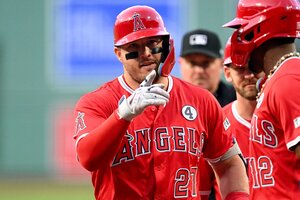
Over 14 full seasons, he has compiled more than 5,900 at-bats, belted 404 home runs, posted an OPS well above league average, and combined power, speed, and defensive value — a trifecta rare in any era. Those peak-to-career numbers reflect both elite production and sustained value, giving him a near‑automatic “first‑ballot or bust” profile if he hung up the cleats after 2026.
Justin Verlander: Modern‑Era Ace With Career Depth
As of 2025, Justin Verlander has logged more than 20 seasons, amassed hundreds of wins, thousands of strikeouts, and over 3,500 innings pitched. On active leaderboards, he ranks second in WAR among pitchers with about 81.7 WAR for his career.
His accolades — multiple Cy Young Awards, an MVP, no‑hitters, postseason dominance — reflect a rare blend of peak excellence + longevity. In an era when starting‑pitcher usage is more limited than in past generations, Verlander’s durability and high‑level performance make a compelling Hall case. He stands among the most complete pitchers of his generation.
José Altuve: Middle‑Infield Consistency and Value
Having debuted in 2011, José Altuve has over a decade of major‑league service, affording him ample opportunity to accumulate counting stats and impact. As of 2025, he remains a steady offensive contributor, combining hitting, speed, and defensive value — a profile that historically fares well among middle infielders considered for the Hall.
If he continues to perform and reaches customary career milestones (hits, WAR, durability), his case will likely rest on a long, productive career at a premium defensive position — second base. That kind of consistency and position value could resonate strongly with voters.
José Ramírez: Versatility, Power, and Steady Accumulation
José Ramírez offers a different but attractive package: positional versatility, switch‑hitting power, and consistent offensive production over many seasons. He ranks high among modern players for extra‑base hits and overall production from non‑corner infield and outfield positions. According to recent data on multi‑hit and extra‑base hit frequency among his peers, Ramírez remains among the leaders.
While he may not carry the single‑season dominance of Trout or Verlander, his cumulative totals — combined with versatility — provide a realistic long‑term Hall profile if his career is extended through 2026.
Max Scherzer: Strikeout Monstrosity and Relentless Performance
In terms of WAR among active pitchers, Max Scherzer sits among the top tier with roughly 75.6 WAR to his name as of 2025.
Scherzer has repeatedly produced elite seasons, compiling high strikeout totals, deep innings, and multiple Cy Young Awards while adapting to shifts in usage patterns league‑wide. In today’s game — where starters rarely approach 300 innings a season — his durability and consistent performance make him one of the most compelling pitching candidates for future Hall consideration.
Aaron Judge: Power, Milestones, and First‑Ballot Potential
At the end of 2025, Aaron Judge reached 10 MLB seasons, making him eligible for the Hall of Fame under the service requirement. Among active players, his WAR is around 62.3.
His 2025 season alone — a .331 batting average, 53 home runs, and a 1.145 OPS — reinforced his status as one of the game’s most feared sluggers. Combine that peak with his cumulative power numbers, and Judge projects as a strong first‑ballot candidate if he continues producing through 2026. His power — especially if he ends with 450–500 home runs — and overall offensive value position him among modern elite outfielders.
I’ve said it before and I’ll say it again:
Aaron Judge could leave baseball today to pursue a career as a LEGO reseller, and he would cartwheel into the Hall of Fame on the first ballot pic.twitter.com/u0zdYorSAR
— Fuzzy (@fuzzyfromyt) July 12, 2025
Bryce Harper: Power, Patience, and Longevity
Bryce Harper, with more than a decade of big‑league service, adds balance to the Hall discussion. Over his career through 2025, Harper has compiled over 350 home runs, more than 1,200 RBI, and maintained a career OPS north of .900. His combination of power, on-base skill, and consistent production gives him a profile similar to many first basemen and sluggers already enshrined.
If he carries that production through 2026, Harper’s career — defined by both peak seasons and steady accumulation — could earn him serious consideration, especially among voters who value power and impact over era differences.
Honorable Mentions: Longevity, Specialized Value, or Position‑Based Cases
Some players may not have the same home run or strikeout totals as the stars above — but their resumés merit attention, especially under modern Hall of Fame criteria that increasingly value WAR, longevity, and role-specific excellence.
Kenley Jansen enters 2025 with 476 career saves, ranking him among the all‑time leaders and well ahead of most contemporaries. Though relievers often face uphill battles for Cooperstown votes, Jansen’s longevity and sustained success give him a realistic shot at later‑ballot consideration.
Craig Kimbrel, with 440 career saves, is another high‑volume reliever with a long track record. While high save totals alone may not guarantee enshrinement, as reliever valuation slowly evolves, Kimbrel remains among the most statistically decorated closers of the modern era.
Paul Goldschmidt and Nolan Arenado represent corner‑of-the-diamond veterans with long careers, consistent offensive production, and defensive contributions. Among active players, they rank in WAR among the top first and third basemen, respectively. Their candidacies might depend heavily on cumulative totals and how voters compare modern corner defenders to historical norms.
Salvador Pérez — a catcher known for power and durability behind the plate — rounds out the list. Catchers often struggle to match the counting‑stat milestones of everyday players, but Pérez’s combination of offense, defense, and longevity could make him a sleeper candidate, especially in eras where value is measured more broadly than traditional stats.
What This All Means — Hall‑of‑Fame Debates in the Modern Era
Evaluating Hall of Fame worthiness in the 2020s requires balancing traditional counting stats with advanced value metrics, longevity, and changing positional demands. Players like Trout, Verlander, Scherzer, Judge, and Harper combine elite individual seasons with long careers of high performance — a package difficult for voters to ignore.
On the flip side, players like Jansen, Kimbrel, Goldschmidt, Arenado, and Pérez illustrate how evolving standards and positional emphasis can reshape what counts as a Hall of Fame resumé. Closer save totals, first‑base/third‑base production, and defensive/value-based metrics may carry more weight — giving these “honorable mentions” a path, if not a guarantee.
If these active MLB players’ careers ended after 2026, the Hall of Fame ballot would likely include a mix of generational locks, strong candidates, and intriguing fringe cases. The conversation would reflect not just nostalgia, but an analytics-informed re‑evaluation of what makes a player “Hall-worthy” in a changed game.
Main Photo Credit: Gregory Fisher-USA TODAY Sports