In recent months, several wrestling controversial figures have re-emerged in prominent positions on TV. Each generates buzz, and news and receives negative to mixed responses from different sections of the fandom.
I write mixed because some fans have no feelings about Tessa Blanchard returning to TNA. Some are happy to compromise. Rather than demanding Hulk Hogan is once again removed from WWE, some will accept booing and laughing as enough.
Others are indifferent or welcoming to Ric Flair returning to WWE. And, although removed from wrestling, some fans have already made up their minds about Vince McMahon’s pending legal case despite the investigation still ongoing.
Some fans believe these figures should never return to the squared circle. Some do not mind or care. Yet, unlike other debates in our fandom, plenty fall into the space between those binary opinions.
For some, it depends on the person and their supposed or proven wrongdoing. This debate/discord connects to a wider and divisive cultural phenomenon: “cancel culture”.
Its meaning and execution are complex. Its meaning is the removal of support to a person (usually a public figure) due to objectionable behavior.
The accused is supposed to be ostracized. They are supposed to be removed from responsibility or prominence, be fired, and/or suffer publicly.
Yet, it’s become a catch-all term covering abuses of power, criticism of comedy, and jokes about stupid social media posts. The fear of being “canceled” has been exaggerated, minimized, and bastardized muddying its purpose and intentions.
It’s also not a new concept. Not in culture or wrestling. What’s changed, to some degree, is who has the power to do the cancelling.
Setting Expectations
This article and its subsequent parts are not concerned with judging wrestlers or fans. It’s not about questioning or asserting morality.
It’s not about evaluating fairness or wrongdoing. Or asking if someone paid for their mistakes or if someone “got away with it”. It’s an analysis exploring cultural changes.
It’s a look at how both the wrestling business and its fans have/are responding to scrutiny. In some ways, no different from other institutions/businesses in our culture, yet different because of wrestling’s quirks and shadowy history.
Regardless of whether the law or moral social rules and expectations are broken, individuals are harmed and lives altered. As many sides as possible will be examined.
This Isn’t New
Canceling is a new word for an old concept. We need to also be clear there’s a difference between someone being canceled and facing legal proceedings.
Vince McMahon is under federal investigation for allegations related to his alleged past actions. That is separate from being canceled.
Where some argue McMahon is “canceled” is the perceived removal and minimization of his role and history with the WWE. The irony is that McMahon himself took similar steps with controversial wrestling figures to address the public backlash, as I’ll explore in part two.
The idea of canceling combines two traditions. First, public shaming that goes back further than the Puritans. Shaming is a means of retributive justice.
That someone should experience a punishment that’s equivalent to or more than the harm they caused. It’s biblical. “Eye for an eye, tooth for a tooth.”
The second part was an act that was previously private and secretive: blackballing. Originating in elite men’s clubs, like The Masons, members would vote secretly on whether they would accept a potential new member using colored balls.
White = in, black = out. One black ball could mean complete rejection from membership therefore ostracizing from the group. Similarly, breaking social conventions could also lead to exclusion.
You’re Out
The boys’ club, closed-shop mentality is part of professional wrestling’s origins. The idea of trust remains central, not just between wrestlers, but with the decision-makers also.
As an entity, wrestling often governs itself. The use of retributory justice in the form of shaming or exclusion is justified by the “protect the business” mentality of wrestling from outside threats. I’ll touch more on shaming in a future part.
Although wrestlers governed themselves, their power is unequal. Promoters and owners (“the office”) hold overreaching power. They have/can determine the standards and rules and ultimately decide who can and cannot work in their organization.
The NWA governed most of North American pro wrestling before Vince McMahon’s expansion. Operating as a fraternity or mafia depending on your viewpoint, members (promoters, wrestlers, and even referees) were expelled for breaking agreements, conventions, or wrongdoing.
The Department of Justice, during an investigation in 1953, claimed they had seen an NWA blacklist. Witnesses collaborated and stated they had heard Sam Muchnik, the NWA President, discuss the practice at various times.
Wrestlers such as Thunderbolt Patterson, were blacklisted for competing in “outlaw” promotions operating outside the control of the NWA. For example, Angelo Poffo’s International Championship Wrestling. Blackballing was widespread across and between territories.
Eddy Mansfield was ostracized for exposing the work nature of the business on ABC’s 20/20. Contrastingly, Dr David Schultz was frozen out of WWF for slapping John Stossel on the same show. His act was ironically to protect the business.
Differently, others were blackballed for personal reasons. Supposedly, Spike Huber was blacklisted after marrying and divorcing Dick The Bruiser’s daughter.
Brotherhood Goes Public
I’ll discuss the use of shaming backstage and on screen in a future part. Yet, it’s important to recognize the private means of wrestlers resolving their issues through wrestler’s court has become superseded at times by public callouts. In part, due to the availability and ease of social media, combined with fan knowledge of what happens behind the scenes.
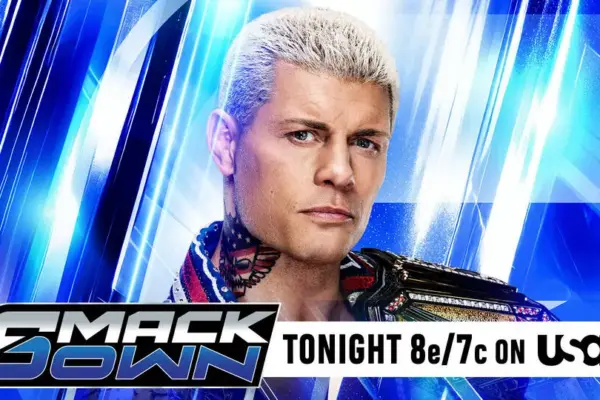
In 2017, the current Undisputed WWE Champion, Cody Rhodes, during his popular and star-making indy-run, responded to AAA’s Sexy Star breaking TNA Knockout Rosemary’s arm in-ring. Rhodes stated:
“Sexy Star will never set foot in one of my locker rooms. I hope others follow suit.”
Taking the matter to the public forum, Rhodes used his power to assert and pressure promotions to aid the blackballing of a fellow wrestler. However, this highlights an inequity. Some wrestlers with drawing power and political sway can make such statements.
Rhodes, at the time, was one of the hottest acts outside of WWE. He had clout with fans and promoters to utilize. Someone lower down the pecking order would not necessarily carry the same weight or impact if they made such a statement about another wrestler.
Although wrestlers with less power can have their voices heard, it can take a movement and a wave of support to do so. The Speaking Out Movement, wrestling’s #MeToo movement, resulted in numerous victims of abuse in the UK and elsewhere calling out accusers.
They received large-scale public support that helped pressure promotions to release wrestlers and/or cause many to step away from the industry. We saw the impact of fan support and condemnation to make positive changes to the wrestling industry.
Conversely, there are various limitations to social media outrage from fans and wrestlers. These I’ll dissect in part two.
More From LWOS Pro Wrestling
Header photo – WWE – Stay tuned to the Last Word on Pro Wrestling for more on this and other stories from around the world of wrestling, as they develop. You can always count on LWOPW to be on top of the major news in the wrestling world, as well as to provide you with analysis, previews, videos, interviews, and editorials on the wrestling world.