
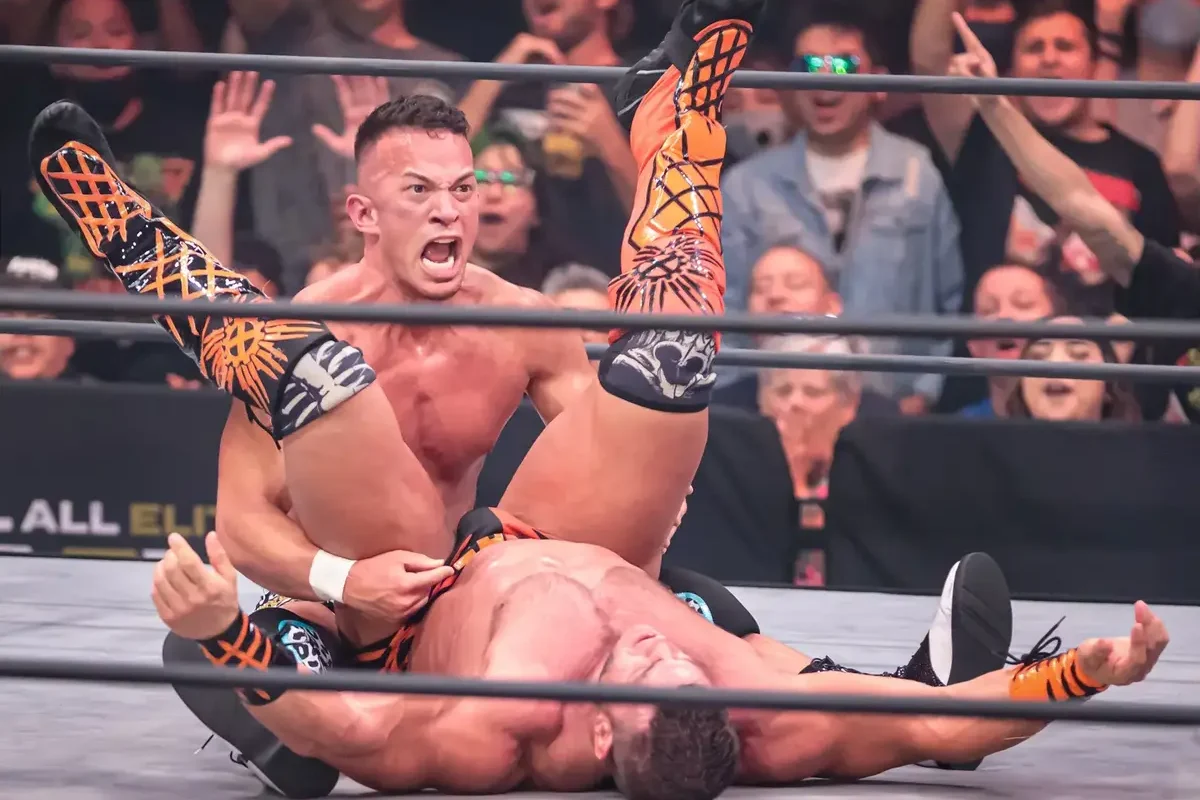

One of the most overlooked creative developments in All Elite Wrestling during 2026 has been the quiet stabilization of its upper midcard. This shift did not come with a reset button, sweeping rebrands, or sudden pushes. Instead, AEW refined how certain wrestlers are framed, protected, and rotated, resulting in a tier that now feels purposeful rather than crowded.
In earlier years, AEW’s upper mid-card often blurred into either the main event or the lower card. Wrestlers hovered in place, collecting strong matches without a clear narrative direction. In 2026, that ambiguity has largely been resolved.
Defining the Upper Mid-Card Without Overexposure

AEW’s current upper mid-card functions as a pressure valve between championships and long-term contenders. These wrestlers are credible enough to challenge for titles, credible enough to headline television, and credible enough to lose without losing momentum.
The key change is consistency of framing. Wrestlers are no longer cycled randomly into title matches. Instead, they are positioned through wins over peers, meaningful losses, and story continuity that stretches across months rather than weeks.
This has made the tier feel intentional.
Case Study: Konosuke Takeshita and Competitive Credibility
Konosuke Takeshita represents a different, but equally important function of the upper mid-card. His role centers on competitive legitimacy. Takeshita does not need heavy storyline exposition. His positioning communicates that facing him matters.
In 2026, AEW has leaned into his physical credibility and international background without overcomplicating his presentation. He wins often, loses rarely, and when he does lose, it is framed as a significant accomplishment for his opponent.
This approach reinforces the idea that the upper mid-card is not simply a holding pattern. It is a proving ground.
Case Study: Ricky Starks and Character Stability
Ricky Starks has benefited from AEW’s emphasis on character continuity. Rather than reinventing him after every momentum shift, AEW has allowed Starks to remain himself while adjusting the stakes around him.
His positioning in 2026 reflects trust. He can open a show, anchor a segment, or headline without explanation. His confidence on the microphone and clarity of persona make him an ideal upper midcard pillar.
This is a subtle, but important evolution. AEW no longer treats charisma as something that must be immediately capitalized on. Instead, it is banked.
Case Study: Jay White and Strategic Losses
Jay White illustrates how AEW uses strategic losses to elevate the tier as a whole. White is protected not by undefeated streaks, but by context. His losses are rarely clean, rarely rushed, and often serve to elevate the opponent rather than diminish him.
This keeps White positioned as a dangerous tactician rather than a fragile contender. He exists comfortably in the space between challenger and champion, which is precisely where the upper midcard should live.
AEW’s willingness to allow him to lose without panic reflects creative maturity.
Rotation as a Feature, Not a Bug
Another critical element of AEW’s repositioning is rotation. Upper mid-card wrestlers are not expected to carry weekly television indefinitely. Time off, brief absences, and reduced match frequency prevent burnout and preserve anticipation.
This also allows AEW to spotlight different combinations without diluting importance. When a wrestler returns to prominence, it feels earned rather than forced.
Rotation gives the illusion of depth while preserving individual momentum.
Why This Matters in 2026
AEW currently produces multiple weekly television hours, plus pay per views. Without a stable upper mid-card, that volume becomes a liability. In 2026, it has become a strength.
By clarifying roles, protecting credibility, and prioritizing long term perception over short term reaction, AEW has created a tier that supports the entire ecosystem. Main events feel bigger because the challengers feel legitimate. Lower card wrestlers feel closer to opportunity because the ladder is visible.
Most importantly, nothing about this repositioning feels loud. There were no declarations. No slogans. No dramatic creative shifts. That restraint may be the clearest sign yet that the company understands not just how to build stars, but how to sustain them.