
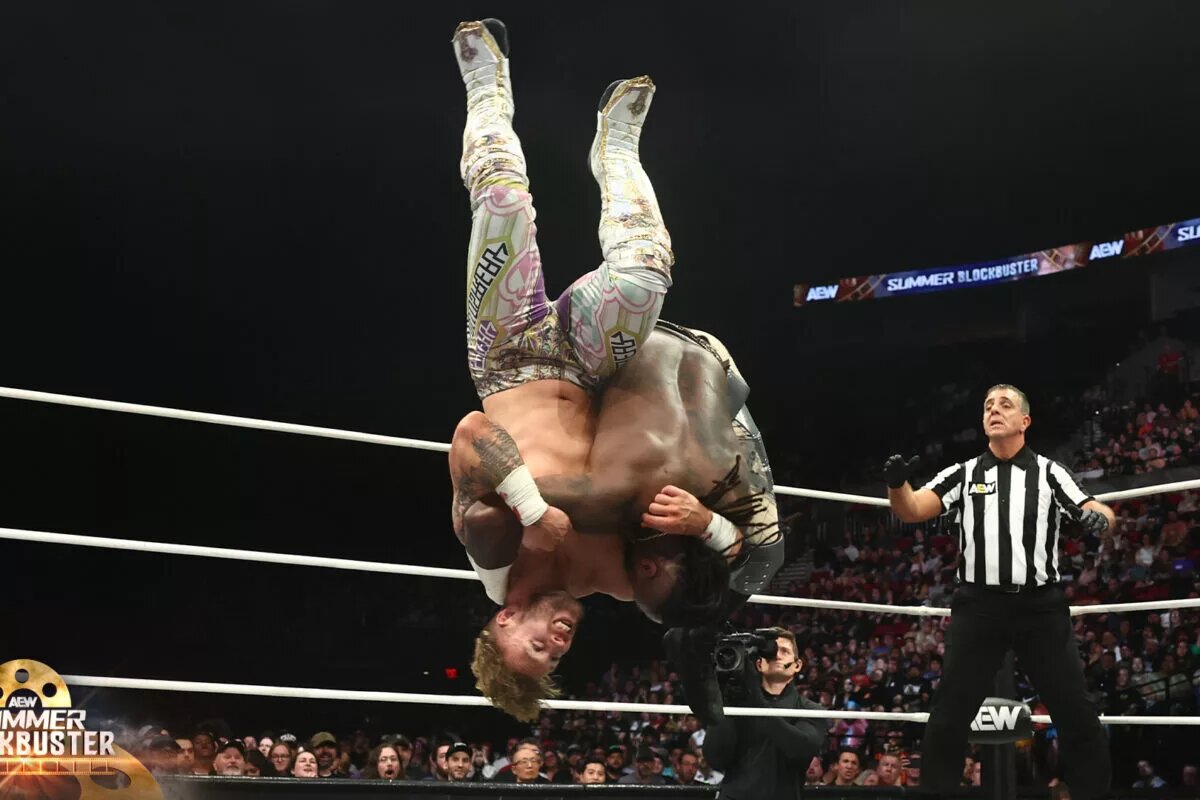

The noise made when wrestlers switch “sides” from AEW to WWE, whether it’s been Cody Rhodes, Aleister Black, Jade Cargill, Ricky Saints, Ethan Page, Blake Monroe, etc., produces conflicting narratives. Praise and critique.
Stories that often show support for a preferred wrestling company flung as truths. It’s like politics. Streamlined, simplified, and understandable stories. Distilled from complexity into straightforward, relatable stories.
AEW receives criticism for not knowing/doing enough to maximize its wrestlers. They can’t make stars like WWE. From match production and coaching to how wrestlers dress for Dynamite, it comes back to making “stars”.
Note: I’m not explicitly or implicitly discussing “business” or money, left on the table or not. Only creative input, wrestlers’ presentation, and how this impacts fans’ emotional investment.
Counterarguments using “what aboutery” might emphasize that the market leader’s strength pushes style over substance. PR over reality. Look at some fans’ acceptance that Ron Killings’ return was a work.
Or ignoring/not knowing/believing the sometimes-obvious ways new/returning WWE stars retain key elements of their AEW presentation/character. A mine and history WWE is weirdly exploiting and something over time that might make the pendulum swing back the other way.
In wrestling fandom, we get a lot of varied noise offering truth dressed like an extremely woolly sheep. Lots of fluff. However, trim it and there’s something solid and alive underneath the misconceptions.
Like AEW’s philosophy has, does, and will continue to expose wrestlers who are not willing or able to adapt and grow into being “Elite”. Particularly because, unlike WWE’s culture of “Entertainment”, AEW gives its wrestlers greater freedom to take greater risks.
No Floaties but a Rope
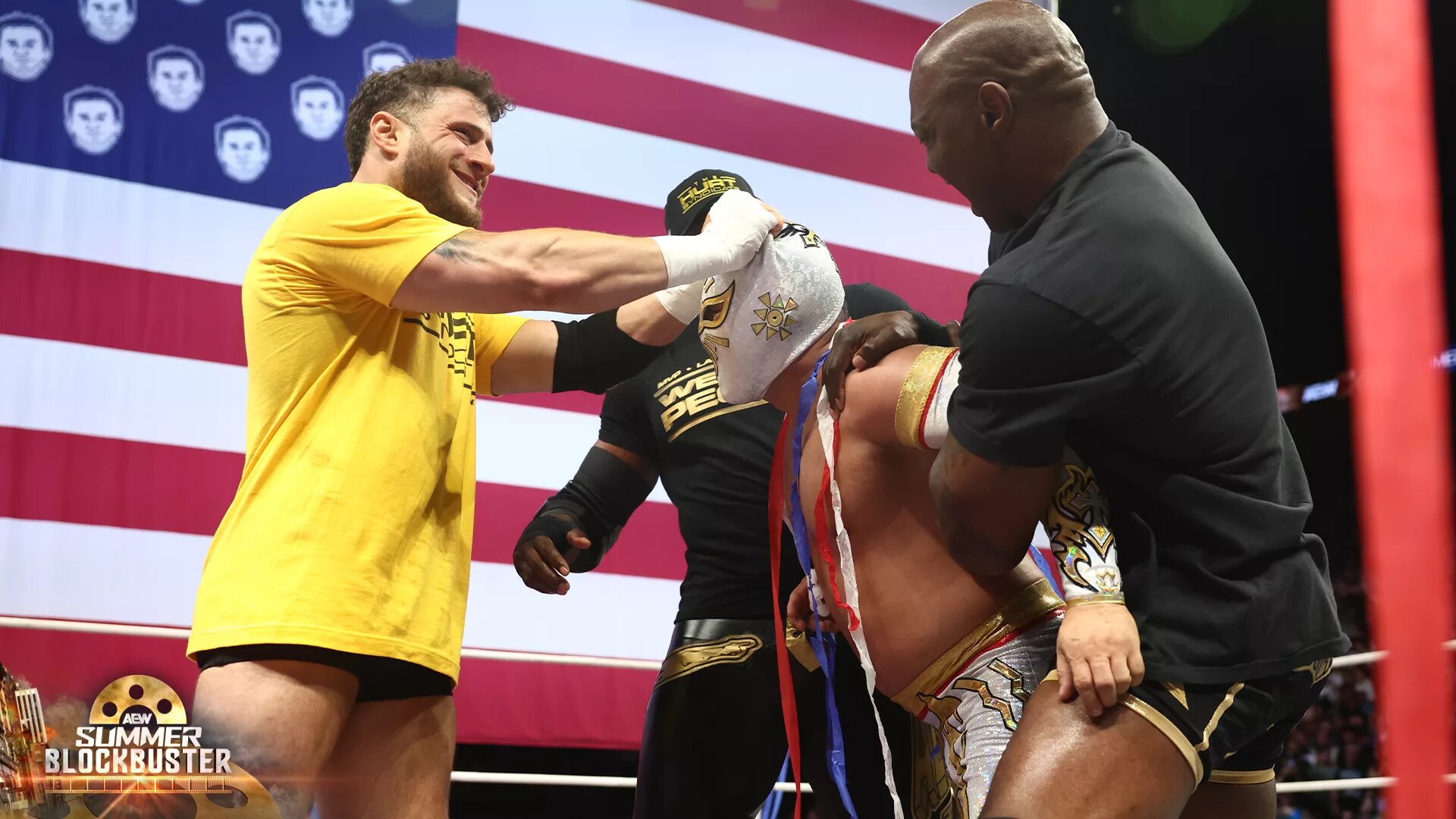
Since day one, AEW has been synonymous with freedom. At AEW’s first PPV, Double or Nothing, a 21-year-old kid with a few years of experience prepares to go out in front of 10,000 fans. The instructions are simple. Cut a promo on a wrestling great, take a beating from the company’s future headliner. Before going out, he asked what he was supposed to do.
MJF was told that he knows what to do.
“That’s when I realized what AEW was going to be like… they brought me in as fodder. Tough luck. But they also gave me a chance to make my own luck… they threw me into the deep end, floaties off, and said sink or swim. Get over with our fans or don’t. And I’ll take that any day compared to the other way it’s been done in our business, historically, which is: they place you gently in the shallow end, floaties on, no actually you can’t take them off (it’s a rule)… Trust me, though, AEW isn’t for everyone. “Sink or swim” cuts both ways like a motherf*cker.” MJF, The Players’ Tribune.
Although WWE’s reputation for micromanaging has shed, the gears and mechanisms of Vince McMahon’s Sports Entertainment remain unchanged. There is more freedom, but a team of writers and producers provides guidance, safety nets, and restrictions. This suits some but not all. Like any workplace environment, philosophy creates culture.
Freedom is a slippery rope. One that creative minds can utilize in many interesting or unique ways. However, those lacking experience, skills, and confidence can find it overwhelming. Failing can make oneself look silly or tied in knots. Over time, it’s easy to switch between all these possibilities. Even AEW’s best have at times failed to consistently meet its…
High Standard
Wrestling is already a high-stakes, high-risk business. The “Elite” style emphasises the individual’s abilities over the company’s production values or booking tropes. It’s a ring-oriented form of storytelling. A future-driven hybrid infusing PWG chaos with the historic wrestling tradition as the story engine. Not the cinema that happens to be in a wrestling promotion.
It’s a no-holds-barred sugar rush with wrestlers trying to wow and elicit emotion. At its best, there are layers and nuance in their characters’ moves, words, and actions.
That puts the pressure on the wrestlers as artists rather than the company/booking to protect them. Nevertheless, it’s what generates “The Feeling”. Both AEW and we, as its fans, take the concept of “Elite” seriously.
Yet it’s not fully sustainable, but then, nothing is in wrestling. AEW’s faster, sometimes ADHD-like pace means that in six years, a lot has evolved. Hangman Adam Page as a character and wrestler perhaps best reflects AEW’s philosophical turbulence and the need to adapt.
When wrestlers don’t fit or want to conform to the philosophy, it’s painfully obvious. Eventually, Cody Rhodes disconnected with the audience by trying to be too traditional and ignoring the audience’s desires. Mercedes Mone’s start suffered because the CEO spoke and presented herself as if she were still in WWE. In AEW, that feels fake.
Wrestlers with “buzz” came to AEW from WWE. They failed to align themselves with AEW’s philosophy and culture. Whether due to misaligned expectations or other reasons. Reports of former WWE wrestlers refusing to lose created a disconnect between them, AEW, and fans. That inability to adapt, like Swerve Strickland, “Timeless” Toni Storm, and others, cost them. Losing correctly in AEW often elevates the loser who chooses to maximize their minutes.
Cuts Both Ways
The style makes it hard to protect wrestlers for long because everything evolves so rapidly. Fans see through the booking. Hook remains in the same protective flight pattern as Jade Cargill did, creating character stagnation and audience disinterest.
Other times, even AEW’s best are allowed to fail or make missteps. Last year, Jeff Jarrett made fans want The Last Outlaw to have a run at the AEW World Championship. Then this year, he cut a tone-deaf, misogynist promo.
His fault, but some would blame the company. Even stalwarts like MJF have cut themselves with the sword. The Devil’s AEW World Championship reign saw MJF take a necessary risk that went too far beyond fans’ wants.
In a company where high risks can bring high rewards, sometimes the falls are going to be great, but comebacks are part of the cycle of wrestling. In AEW, the revolutions and turnover are perhaps faster in rhythm and pace than in WWE.
Yet ultimately, WWE experiences nothing different with booking bombing and wrestlers going hot and cold. The difference is the balance of autonomy and power.
AEW Isn’t Elitist, but It’s Not for Everyone
Unique, often self-created characters alongside great wrestling make stars. Minute maximisers are frequently rewarded. It’s why AEW, at times, has felt meritocratic. Ricky Saints, then Starks, did not fumble.
Starks made the FTW Championship a necktie instead of a noose. Smaller wrestlers elsewhere might not have the options. Wrestlers like Darby Allin and Orange Cassidy were given room to carve their niches.
Those outsiders who embraced the philosophy, even those who didn’t meet fan expectations, still found their place on the card.
Saraya’s comeback saw her find a niche as a midcard heel/mouthpiece, helping to facilitate others, like Harley Cameron, who always maximized her minutes. Ricochet’s prominence comes from his character work, amplifying rather than compensating for his wrestling IQ.
It’s imperfect and plenty of wrestlers need/ed more or something different. More structure and security. A different balance between autonomy and guidance, or something else. And that’s valid and fair. We’re lucky there’s more than one philosophy.
More From LWOS Pro Wrestling
Header photo – AEW – Stay tuned to the Last Word on Pro Wrestling for more AEW and other stories from around the world of wrestling, as they develop. You can always count on LWOPW to be on top of the major news in the wrestling world. As well as to provide you with analysis, previews, videos, interviews, and editorials on the wrestling world. You can catch AEW Dynamite on Wednesday nights at 8 PM ET on TBS. AEW Collision airs Saturday at 8 pm Eastern on TNT. More AEW content is available on their YouTube channel.