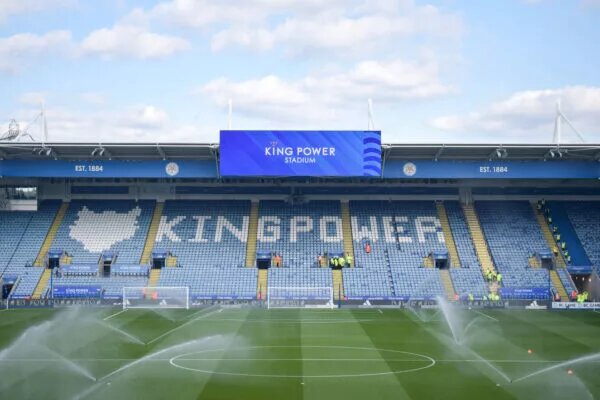


Following a dismal Premier League campaign under Ruud Van Nistelrooy, Leicester City now reside in the Championship. Former QPR manager Marti Cifuentes has most recently taken the hot seat after two successful seasons in the second tier. After Enzo Maresca’s possession-based style led the Foxes back to the top flight, will Cifuentes’ tactics be enough to emulate the success two years on?
How Marti Cifuentes Will Improve Leicester City
Background:
Despite being 43 years old, Cifuentes has a vast amount of experience as a coach. He earned his first coaching role at age 20 and has since consistently worked within the game in many different countries. This level of experience, whilst still being just 43, is unheard of and is a testament to his character as he has worked tremendously hard to get to this point.
Read More: Leicester City Announce New Manager
The Catalan-born coach sees Johan Cruyff as an inspiration, especially because the Dutchman managed Barcelona’s Dream Team when he was just a teenager. When talking to Coaches Voice, he stated: “I felt the joy of that Cruyff way of playing. It moved me”. As a result, it comes as no surprise that Cruyff is a great influence on his tactics, as he was a huge proponent of positional play and a winning mentality.
Coaching History:
Aside from this, as a coach, he has worked all across Europe for many clubs. Time at the Millwall and Ajax academies was an early part of his development, and may be evidence towards how he will utilise the Foxes academy. Following on from this, he took jobs in Spain before moving to Scandinavia to further his career.
A season with Sandjeford saw him lead them to relegation, but then immediately bounce back and earn promotion. Then, after a year in Denmark, he found himself in Sweden with Hammarby IF. In his first season with the club, he led them to a third-place finish and even earned qualification to Europe. A significant point to remember in this stint is his willingness to utilise young players, as suggested by the average of the squad being as low as 22.2, which is the fourth lowest in the Allsvenskan ever.
Cifuentes’ tenure at Loftus Road soon came, and it once again wouldn’t disappoint. He replaced Gareth Ainsworth, who played a completely different style of football, and left the club in 23rd place with just two wins from 14. Despite this, he would manage to keep the Hoops in the second tier. A 4-0 victory against Leeds to hand Leicester the title simultaneously secured survival with a game to go.
Despite minimal backing, he was able to guide his side to a 15th-place finish and build upon those foundations.
Marti Cifuentes’ Tactics:
As mentioned previously, Cruyff has a major influence on Cifuentes, and this is even more evident through his tactics. He plays a possession-based brand of football, with the idea of being in control and dominant. This dynamic style has followed the manager everywhere as he has implemented it in numerous ways. For example, at QPR, he took over from Ainsworth and made them more progressive through short passing plays.
Read More: What We Learnt from Leicester City’s Pre-Season Clash vs Peterborough United
Eventually, QPR were averaging 75 more short passes and ten fewer long passes per 90 than under Ainsworth. Similarly, at Hammarby, he increased their average possession totals to 56.3% from 51.1% in the previous season.
Whilst this principle is integral to his team, he also shows flexibility as not all his players will suit his style. Cifuentes, when discussing this, said: “First of all, I think that tactics is about the players and in that sense I always try to adapt to the skills of the players I have.”
In Possession:
In terms of formations, a 4-3-3 is ideal, with major importance on the full-backs. Their role is flexible and mainly changes based on how the opponents press. In some instances, a full-back may invert into the double pivot, whilst the other makes a back three. Other times, both full-backs remain narrow in build-up to create a 2-3-5.
Centrally, midfielders are also key. A number six and asymmetric number eights (one deep, one high) make up the midfield and are provided freedom. Sometimes they can find themselves in wide areas, towards the ‘base’, where they can look to break lines. This is key in the side’s ambitions to progress quickly and vertically.
Dictating the game from here is also significant for the strong-to-weak principle that Cifuentes uses. This is the idea to overload one side of the pitch and then accelerate into the other side. Midfielders shifting the ball side to side and dictating the tempo is key to how well this process can function.
Furthermore, the Spaniard also utilises side rotations to advance his side. These wide triangles form between the full-back, attacking midfielder and winger, and allow for even more freedom when trying to break through the press. This is a further similarity to Cruyff as it establishes the importance of triangles and rotations.
Read More: Top Five Most Expensive Leicester City Midfielders of All Time As Foxes Hope for Midfield Resurgence
Wingers create full width as they hug the touchline and excel one versus one against their full-back. This is another component of the system as they look to maximise width and stretch the pitch as much as possible. As for strikers in possession, they can play a role in creating chances as there is an expectation for them to pin defenders and allow for space in behind. Moreover, they may drop in between the lines to add an option, centrally.
The adaptability and freedom when in possession have been a major reason for QPR’s improvement in the past few seasons. Cifuentes’ tweaks during games, depending on how the side they are facing defends, are also important. One example is the use of third-man runs in the 4-0 win over Leeds, as it helped the Hoops play through the aggressive press.
Out Of Possession:
When looking at out of possession, his sides have also greatly improved. During the 23/24 season, QPR managed to keep 11 clean sheets during his tenure, despite keeping just two under Ainsworth.
The use of a mid-block has been a factor in this improvement, especially as it minimises gaps between the lines. The high press has also been effective during his career in coaching. At Hammarby, his side was even able to accumulate 389 high regains.
Read More: New Reports Suggest Leicester City Turmoil That Led To Relegation
A strong rest defence is a further reason for these defensive numbers, as his side doesn’t want to be vulnerable in transition. He uses the plus one rule to ensure they won’t be at a disadvantage when defending a counterattack.
How Cifuentes Could Suit Leicester City
Rob Tanner revealed just last month that the owner, Khun Top, is in favour of a coach who plays a system similar to Maresca. Therefore, it comes as no surprise that the Spaniard has arrived to take the club back to the top flight.
As mentioned previously, his time at Ajax and influence from Cruyff’s Barcelona are clearly significant. This is because both clubs have relied on the academy throughout their history. Therefore, these influences could be crucial for the upcoming season as the likes of Jeremy Monga, Louis Page, and Olabade Aluko were in fine form in the recent pre-season friendly.
Read More: Five Leicester City Academy Graduates Who Played for England
The patterns learnt under Maresca will be in free flow and will be key to how this side functions in the first few games. Even when Steve Cooper reverted to these tactics in a 3-1 loss versus Nottingham Forest, players like Harry Winks attributed their goal and dominance on the ball to the tactics from the Championship-winning season. Winks even said after the game that “the first half we were excellent, we were back to where we were.” A move back to this style is likely to be popular among the players, especially due to their admiration for Maresca.