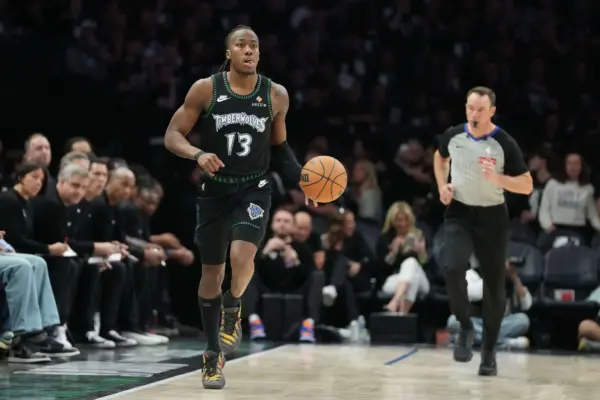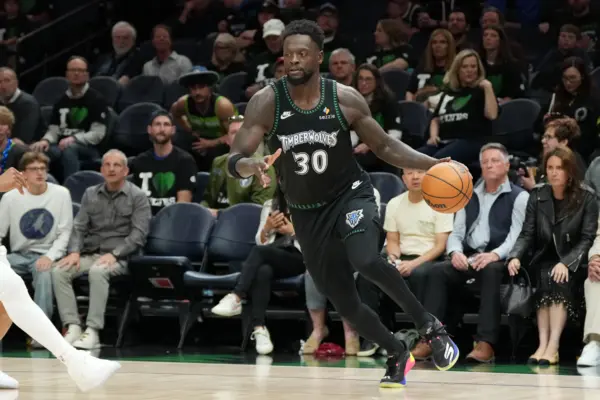


The Minnesota Timberwolves entered the offseason needing to sort through major decisions around Julius Randle, Ayo Dosunmu and Anthony Edwards. Monday’s three-team trade did not solve everything, but it gave the front office more room to shape the rest of the summer.
Timberwolves Trade Julius Randle, Move Down In Draft To Open Cap Flexibility
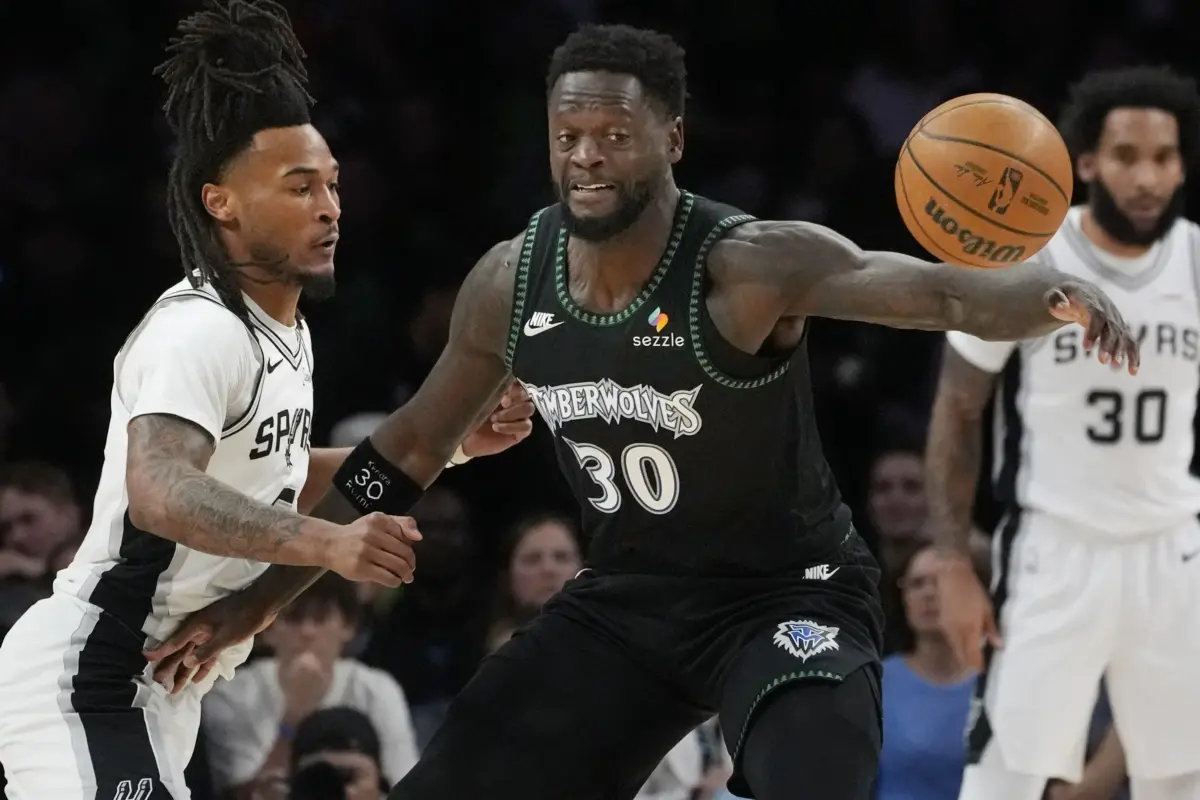
Timberwolves Send Julius Randle To Brooklyn Nets
The Timberwolves are moving on from Randle and using the deal to create more room for the rest of their offseason.
ESPN’s Shams Charania reported that Minnesota is sending Randle and the No. 28 pick in the NBA draft to the Brooklyn Nets in a three-team trade involving the Chicago Bulls. Charania added that the Timberwolves will receive Brooklyn’s No. 33 pick, while the Nets are taking on Randle’s contract and Chicago is using cap space to land center Nic Claxton.
Charania also laid out the most important Minnesota angle. The Timberwolves free up significant salary tied to the final two years of Randle’s deal, giving them more flexibility to retain Dosunmu and use roster-building exceptions.
That is what makes this more than a draft-night trade. Minnesota did not just slide down five spots from No. 28 to No. 33. It used one of its biggest contracts to reshape the rest of the offseason around Edwards and a roster that still needs more work.
Why Moving Julius Randle Matters More
The easiest way to look at this trade is as a pick swap attached to a veteran contract. Minnesota clearly saw it differently.
Randle is still a productive player. He averaged 21.1 points, 6.7 rebounds and 5.0 assists last season, giving the Timberwolves another scorer and a secondary creator next to Edwards. But he also carried one of the most important salary slots on the roster, especially for a team trying to keep Dosunmu, maintain flexibility and avoid boxing itself into a tighter cap corner.
That is the real cost-benefit calculation here. Minnesota gave up a first-round pick and dropped to No. 33, but it also moved off the remaining two years of Randle’s contract. For a team already dealing with an expensive roster, that matters more than the difference between the last five picks of the first round and the early second round.
It also changes the context of the Timberwolves’ biggest summer. The front office no longer has to treat every next move with Randle’s salary still sitting on the books.
The Deal Creates a Cleaner Path To Keep Ayo Dosunmu
The clearest short-term effect of this move is what it does for Minnesota’s financial picture around Dosunmu.
The Timberwolves had already signaled how badly they wanted to keep him. Dosunmu’s reported five-year, $112 million contract showed Minnesota views him as part of its core around Edwards, not as a short-term trade deadline success story. Moving Randle now makes it easier to support that decision.
It also gives the Timberwolves more room to use the exceptions that still matter later in the offseason. According to ESPN’s Bobby Marks, Minnesota now projects to have the $15.1 million non-taxpayer midlevel exception, the $5.5 million biannual exception and a $33.3 million trade exception created by the move.
That is why this trade connects so directly to the recent Dosunmu deal cap conversation. Minnesota’s summer was already going to be shaped by the first apron and by the cost of keeping its own players. This move does not erase those issues, but it gives the Timberwolves a cleaner way to manage them.
What Julius Randle’s Exit Means For The Roster
The basketball side of the trade matters too, even if the cap side is the bigger story.
Randle gave Minnesota another proven scorer, but he also represented a difficult fit question that the Timberwolves never fully escaped. The Wolves have spent the last two years trying to build around Edwards with a roster that still leaned heavily on veterans who needed touches, money, and offensive responsibility. Moving Randle is a sign that Minnesota may be ready to simplify that equation.
That could mean a bigger offensive role for Naz Reid. It could also mean the Timberwolves are trying to build a cleaner offense around Edwards, one with fewer competing priorities and more room for younger guards to handle the ball. Minnesota still has work to do before that vision is complete, and it must prove it can fix the offensive problem that followed it throughout the season.
But the direction of the trade is clear. The Timberwolves gave up a better draft slot and a decorated veteran to buy room for the rest of the summer. That alone says plenty about how they view the next stage of building around Edwards.
Editor’s note: To make the trade legal, the Bulls sent Mo Gueye to the Timberwolves late last night. Gueye appeared in just two games this past season for the Bulls and is on a $2.4 million non-guaranteed deal.
Bruce Kluckhohn, Imagn Images via Reuters Connect