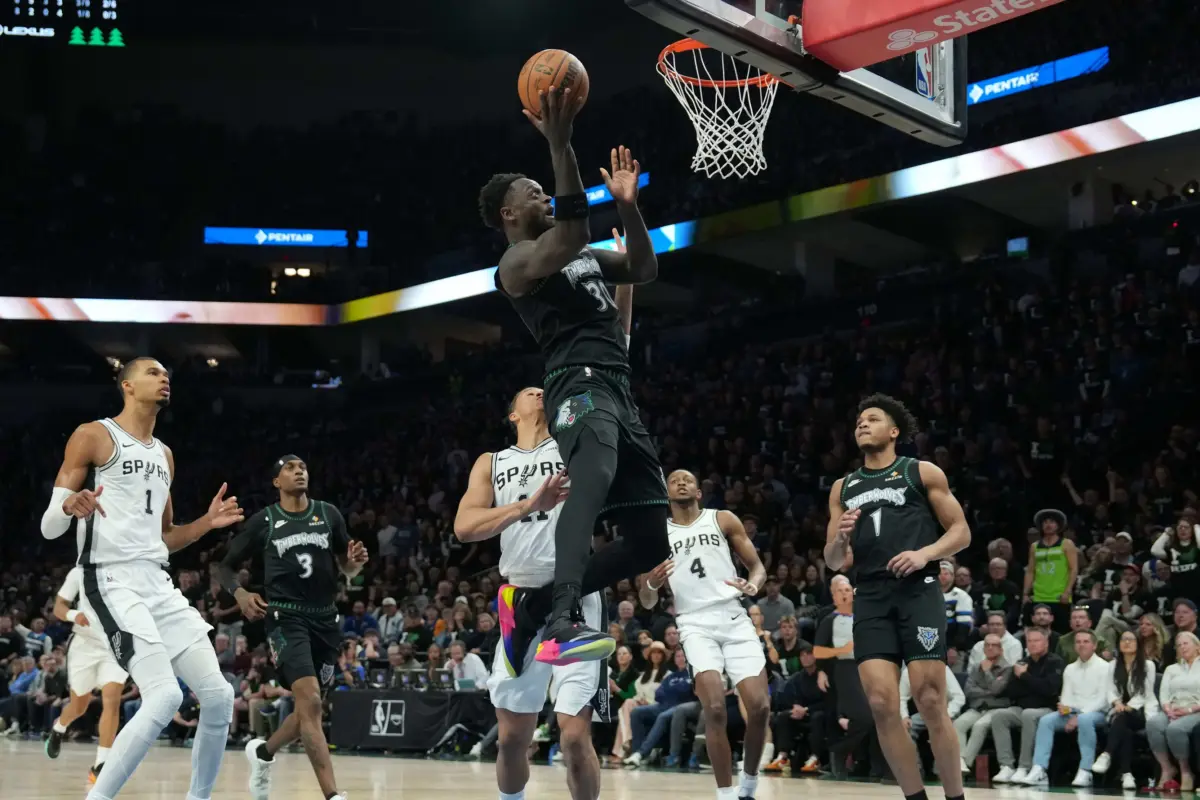

The Minnesota Timberwolves’ own offseason messaging is quietly revealing which players the team views as the long-term core. Julius Randle is not one of them. That distinction belongs to Anthony Edwards and a group of younger teammates whose names keep coming up in every conversation about the Wolves’ future.
The question is not whether Randle struggled, but whether the organization’s stated priorities still include him.
How Does Julius Randle Fit as Timberwolves Build Around Anthony Edwards?
Minnesota Enters the Offseason With Major Decisions Ahead
The San Antonio Spurs defeated the Timberwolves in the second round of the playoffs. On May 19, Tim Connelly, the team’s president of basketball operations, spoke to reporters. He emphasized, “We’re going to try to be as aggressive as possible.”
He also said the team was “not good enough right now.” No decision this summer carries more weight than Randle’s. Connelly sidestepped questions about whether Randle still fits the long-term plan.
Tim Connelly’s Sub-26 Comment Shifted the Focus
At that same press conference, Connelly praised Minnesota’s “sub-26 core.” The players naturally included in that discussion are Edwards, Jaden McDaniels, Naz Reid, Rob Dillingham, Terrence Shannon Jr., and Joan Beringer. Randle turned 31 in November. He is not in that age group.
Connelly did not say Randle is not part of the future. That would be false. What he said is that the organization’s confidence lies in its youngest players. Connelly specifically cited internal development as a critical factor, telling reporters, “We think we have a couple of guys whose roles will be much bigger next year.”
Those comments naturally shift attention toward the younger foundation and raise questions about how veteran pieces fit that timeline.
Naz Reid’s Rise Makes the Timeline Gap Obvious
Reid is viewed within the organization as part of the core moving forward. A few years ago, he was a rotational luxury. Now, he is a necessity. The 26-year-old fits Edwards’ timeline, continues improving and is under long-term control after signing a five-year, $125 million contract last summer.
Reid’s importance was further underscored by his own exit interview, where he pointed to “moodiness” as the gap between Minnesota and the league’s best.
“I think we have more than enough talent,” Reid added. I think we have more than enough guys bringing it to the table and can compete at a high level, but just being less moody.”
Reid’s stability gives Minnesota a foundational frontcourt piece that aligns with its stated timeline. That directly affects how the front office evaluates other positions.
Julius Randle’s Playoff Numbers Tell an Uncomfortable Story
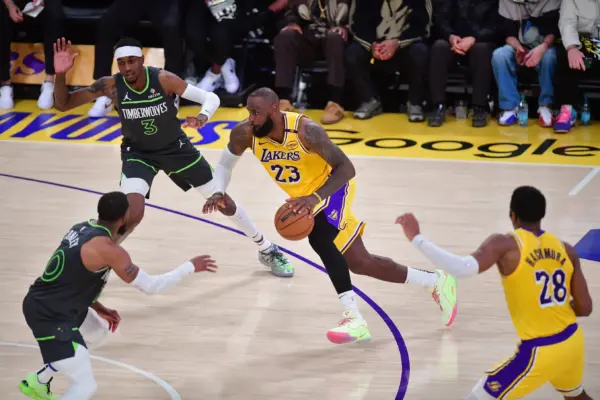
Randle averaged 16.0 points, 7.5 rebounds, and 2.8 assists across 12 playoff games while shooting 39.0 percent from the field, per StatMuse. In the six-game series against San Antonio, he shot 34.2 percent. His plus-minus across the four losses to the Spurs was -93, according to MPR News. Those are not role-player numbers on a contender’s second option.
The main problem is the offensive fit. Minnesota’s scoring slowed down when Randle controlled the ball as the main playmaker. Head coach Chris Finch admitted this after the team was eliminated. He focused on the future instead of the veteran player. Finch praised the team’s “young core around Anthony, Jaden, and Naz.” His choice of those three names is notable, as Randle’s was not among them.
The Salary Sheet Forces a Choice
Edwards, Rudy Gobert, Randle, McDaniels, and Reid occupy significant payroll portions. Edwards is owed $48.9 million next season, Gobert $36.5 million, and Randle $33.3 million, according to Spotrac. Minnesota operates near the second apron. Connelly acknowledged the difficulty, saying, “Where it becomes more problematic is your inability to deal-make when you get to the second apron.”
Championship teams must eventually choose their priorities, and Minnesota is approaching that moment. Keeping every expensive veteran while improving the roster is impossible under the second apron’s rules. Moving Randle’s contract will likely require adding a draft pick or a young player, making the decision even harder.
The Case for Keeping Julius Randle is Not Zero
Randle averaged 21.1 points, 6.7 rebounds, and 5.0 assists while shooting 48.1 percent during the regular season, establishing himself as an efficient scorer. His salary also remains on a reasonable contract relative to the rising cap. Connelly pushed back on pinning the Spurs playoff loss on one player, stating, “We don’t win because of one player, lose because of one player.”
While that stance is fair, Connelly did not commit to Randle’s long-term future in Minnesota, especially following a disappointing postseason that concluded with a 3-point performance in Game 6. The front office’s readiness to be “aggressive” and its emphasis on a sub-26 core point toward prioritizing a different timeline. The case for keeping Randle depends entirely on whether his fit improves, which three playoff runs have not demonstrated.
The Direction of the Conversation is the Clue
The clue isn’t one quote, rumor or single bad game. It’s the overarching direction of offseason conversations. Connelly praised the sub-26 core, and Finch name-dropped Edwards, McDaniels and Reid. With the salary structure forcing hard choices, and Randle’s playoff struggles reopening fit questions, a departure is becoming likely.
The front office has not publicly indicated Randle is on his way out. But as the roster’s long-term priorities come sharply into focus, the team’s trajectory centers on Edwards and a younger supporting core. Whether that timeline includes Randle is the biggest question hanging over Minnesota this summer.
© Jesse Johnson-Imagn Images