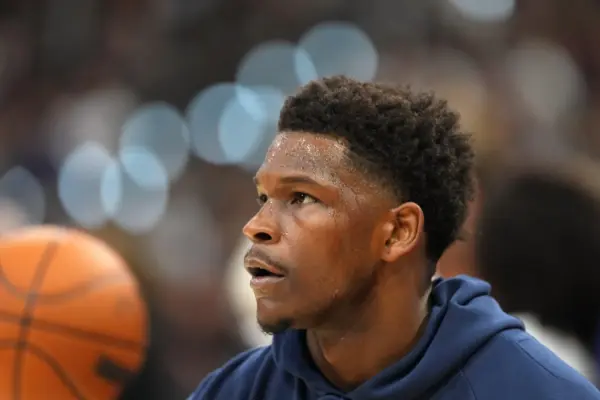


Anthony Edwards has spent the last few years changing expectations in Minnesota. What once looked like a rebuilding project has become a team expected to compete deep into the playoffs every season. That change matters because success creates new demands.
Recent reports suggesting Edwards wants roster upgrades are not the real story. The bigger issue is why those concerns may exist in the first place.
Anthony Edwards’ Frustration Points to a Bigger Timberwolves Problem
Minnesota’s front office deserves credit for helping build a contender around Edwards. The Timberwolves moved from a franchise searching for direction to one regularly discussed among the Western Conference’s top teams. That progress helped turn Edwards into the face of the organization. It also raised the standard for what counts as success.
Expectations Have Changed Around Anthony Edwards
A few years ago, reaching the playoffs represented meaningful progress. Now, the conversation is about competing for championships. Edwards has developed into one of the league’s most important young stars, and players at that level naturally raise expectations for everyone around them. With the Timberwolves firmly committed to building around Edwards, every key roster player faces greater scrutiny than ever before.
This roster shift changes everything for a superstar who refuses to waste time on a rebuild. They judge a front office by whether the supporting cast can survive deep playoff runs. When the bench crumbles under pressure, star frustration inevitably boils over.
According to NBA insider Brian Windhorst, Edwards has been pushing Minnesota’s front office to improve the roster and has questions about the team’s long-term direction. The concern is not simply about adding talent. It is about whether the organization is doing enough to maximize a championship window that is already open.
“Going forward after this series, the Minnesota Timberwolves future is in question. Somewhat because of what Ant feels about the roster”
– Brian Windhorst pic.twitter.com/1KMHDvmeO7
— Heat Central (@HeatCulture13) June 5, 2026
That context changes the discussion. Reports about Edwards’ frustration are not just reactions to one playoff loss. They reflect a growing expectation that Minnesota should be operating with greater urgency now that it has a superstar capable of leading a title contender.
Anthony Edwards Faces Familiar Depth Issues
One of the Timberwolves’ biggest concerns is what happens around Edwards when games become tougher. They have often entered critical stretches needing more reliable production from the supporting cast to lighten the pressure on their franchise star.
That problem becomes more noticeable in the postseason. Playoff opponents spend the entire series attacking weaknesses and forcing role players to take on larger responsibilities. As a result, teams with dependable depth usually survive longer than teams relying heavily on one or two stars.
The 2025 Western Conference Finals against the Oklahoma City Thunder exposed those exact issues. Minnesota struggled to generate consistent offense whenever Edwards was off the floor, and the lack of reliable secondary production became difficult to ignore as the series progressed.
The main goal is not about signing another superstar. It is about building a deep team so that injuries, fouls or bad shooting nights do not force Edwards to do everything alone. Great teams do not need perfect situations to win. They survive because good bench players step up when things go wrong.
The Front Office Cannot Keep Waiting
This is where criticism of the front office becomes fair. Minnesota has had enough postseason evidence to identify the weaknesses holding the team back. The organization knows Edwards is entering the prime of his career, and that the Western Conference continues to get deeper every season.
Waiting creates its own risks. Every year without meaningful roster improvement is another year of placing a heavier burden on the franchise player. Eventually, frustration stops being about one season and starts becoming about a pattern.
Smart organizations address those concerns before they become larger problems. The Denver Nuggets, for example, strengthened their championship core by adding complementary role players who fit around Nikola Jokic rather than chasing another star.
That does not mean making a reckless trade. It means identifying players who can strengthen the rotation, improve lineup flexibility, and provide consistent production. Championship teams are usually built through several smart moves rather than a single dramatic one.
What Minnesota Should Do Next
The Timberwolves should approach this offseason with a clear objective. Their goal should not be chasing another superstar. It should be making life easier for Edwards across an 82-game season and a long playoff run.
That approach would strengthen the roster without disrupting the team’s foundation. More importantly, it would address the concern hidden beneath the recent reports. Edwards is not asking for attention; he is asking for a better chance to win.
That is why the recent frustration matters. The report itself may disappear from the news cycle within days, but the issue behind it will remain. Minnesota has already found its franchise cornerstone. The next challenge is building enough depth around him to keep its championship window open, a goal that should sit at the center of the Timberwolves’ recovery plan heading into next season.
© Ron Chenoy-Imagn Images