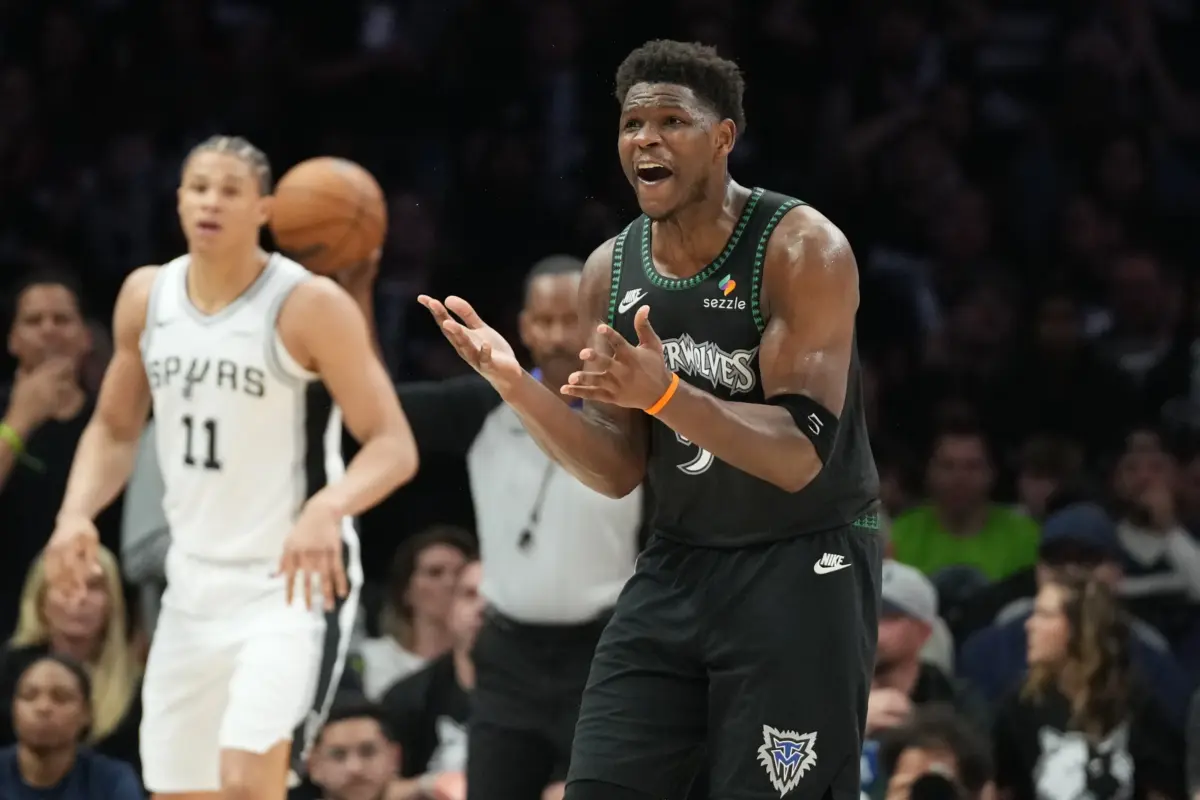

Over the past decade, the NBA has turned the power forward into one of its most versatile positions. Teams draft for it, trade for it, and build entire offensive and defensive systems around players who can defend multiple spots and create offense.
Minnesota just traded two of them in the same summer and does not appear interested in replacing either one. The front office did not forget how to build a roster during its biggest summer. They just decided that an old rule no longer applies.
Minnesota Makes a Bigger Bet Than LeBron as Anthony Edwards Brushes Off Rumors
Anthony Edwards Rejects LeBron Trade Speculation
The noise around Minnesota this week centered on LeBron James and whether the Timberwolves had a real shot at landing him. Shams Charania listed Minnesota among five teams in the running, but Anthony Edwards was asked at Fanatics Fest in New York and dismissed the idea without hesitation. “I have nothing to say about it because I seen his top three teams and we not in it,” he told ESPN’s Kevin Negandhi. The LeBron speculation briefly dominated the conversation, but Minnesota’s bigger offseason question has always been how it plans to replace nearly all of its production at power forward.
Chris Finch Leaves the Spot Empty
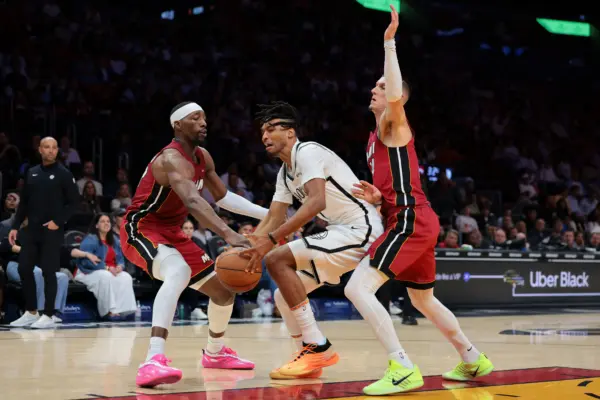
The Timberwolves traded Julius Randle to Brooklyn and dealt Naz Reid to Charlotte for LaMelo Ball, reshaping their entire frontcourt in a single offseason. The only move to address the gap at power forward was signing Trey Lyles to a veteran minimum contract after he spent last season playing in Spain.
The obvious fix was to slide Jaden McDaniels into the role, but Finch rejected that idea during a conversation with the Minnesota Star Tribune. “I don’t immediately envision Jaden just moving over and playing the four,” he said. “I don’t necessarily, in my mind’s eye, see that as a starting lineup with him there.”
Instead of identifying a new starting power forward, Finch pointed to Terrence Shannon Jr., Jaylen Clark, and Josh Green as players who could collectively absorb those minutes, even if none profile as a traditional four. He raised the possibility of rotating the starter at that position based on each night’s opponent. “Maybe we lean into our creativity,” he said, “and every night we start somebody different at the quote-unquote four.”
Jaden McDaniels Guards the Best Player
McDaniels is 6 feet 9 inches tall and has the build to compete with most power forwards. In today’s NBA, players often focus on their defensive roles rather than just their positions. The player who defends the opposing team’s main scorer can really shape how a team lines up on the court.
McDaniels is Minnesota’s best perimeter defender, and his worth comes from checking the opponent’s most dangerous guard or wing on any night. Shifting him to the four would cost the Wolves their most versatile perimeter defender simply to preserve a traditional lineup structure.
Minnesota’s defense works because McDaniels can follow elite wings across positions while Rudy Gobert protects the paint. Moving McDaniels inside more often could reduce that defensive flexibility and force other defenders into tougher perimeter assignments. Still, the Wolves are betting this versatility matters more than size over an 82-game season despite their incomplete offense.
Josh Green Becomes the Deadline Answer
Every experiment needs a reliable escape hatch, and Minnesota has one sitting on its payroll. Green carries an expiring contract worth $14.7 million this season, a figure that becomes more appealing to rival front offices each week.
If the positionless strategy doesn’t work–causing the Wolves to be outmuscled on rebounds or leading to a messy rotation by January–then that contract becomes the team’s most valuable asset.
Teams are always looking for expiring salary to facilitate trades, and a deal of that size gives Minnesota the room to acquire a conventional power forward before the playoffs begin. Tim Connelly suggested the solution might already be on the roster, but a smart executive never removes his own safety net.
Finch thinks the answer might already be on the team. If Minnesota can play good defense, rebound well, and score enough points without using a traditional power forward, this decision could change their lineup. If that doesn’t work, Green’s contract gives the front office a solid option to fill the position before the trade deadline.
Photo Credit: Jesse Johnson, Imagn Images via Reuters Connect