
The 2026 MLB Season Is Already Building Toward a Pitching-Driven Trade Deadline
As the 2026 MLB season develops, one trend is becoming impossible to ignore: starting pitching will once again dominate the trade deadline market.
Contenders across both leagues are already dealing with rotation instability, early-season injuries, and depth concerns that tend to escalate as the summer progresses. With few true frontline starters expected to be available, the cost for pitching help is likely to rise quickly once July arrives.
At the center of that market are three pitchers who represent three very different trade archetypes:
Each brings a distinct level of value, control, and availability that will shape how the 2026 deadline unfolds.
Sandy Alcantara: The Franchise-Altering Ace Every Contender Will Monitor

Sandy Alcantara remains the premier potential trade chip in baseball when discussing impact at the top of the market.
A former Cy Young winner and one of the most physically dominant starters in the game when healthy, Alcantara represents the rare pitcher capable of instantly reshaping a postseason rotation. His combination of power, durability, and proven high-leverage experience makes him the type of arm front offices pursue aggressively when October contention is realistic.
Why he could be available:
- Miami’s long-term roster flexibility always keeps star players in conversation
- A significant prospect return would be difficult to ignore if the season trends downward
- True frontline starters are rarely available at the deadline
Why it is not guaranteed:
- He is not a pure rental and carries meaningful team control
- Miami typically only moves elite talent in clear sell situations
Outlook:
If the Marlins fall out of contention, Alcantara would immediately become the most impactful pitcher available at the 2026 trade deadline.
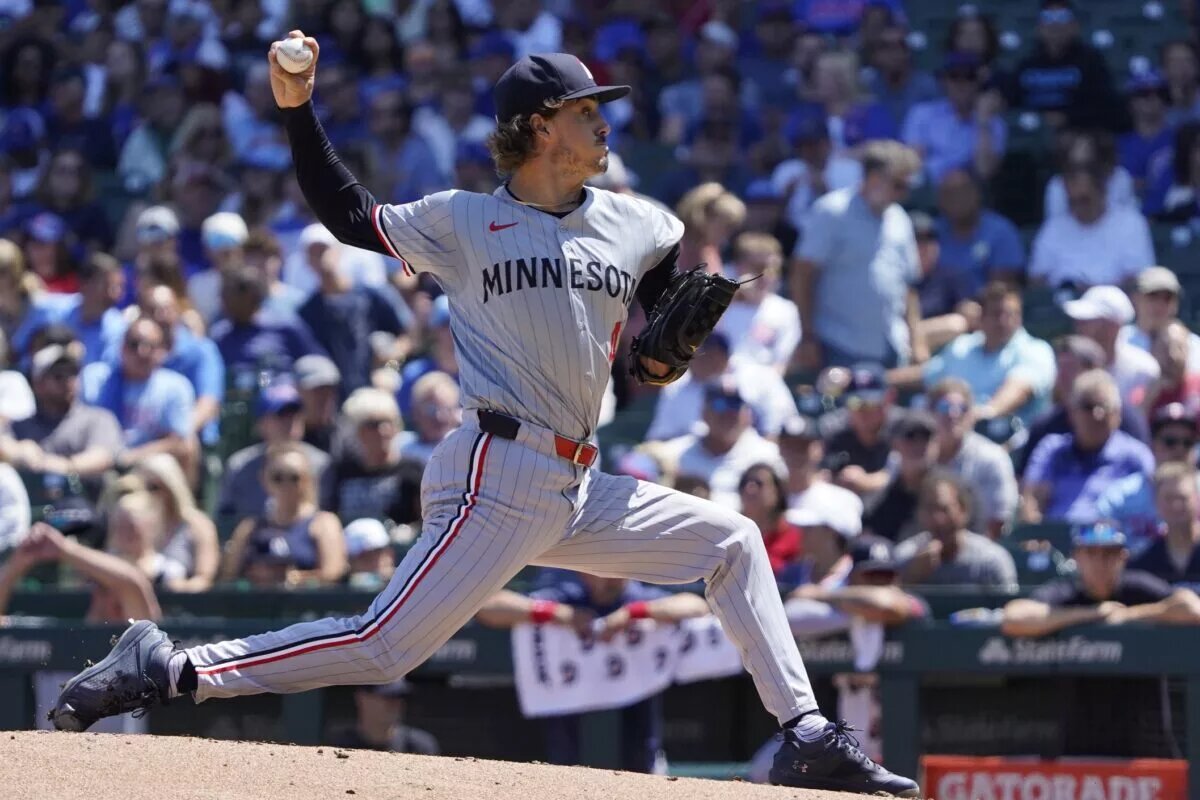
Joe Ryan: The Most Logical High-End Trade Target in Baseball
Joe Ryan profiles as the most realistic combination of talent, control, and availability among all potential starting pitchers on the market.
Ryan offers exactly what contending teams prioritize at the deadline: consistency, efficiency, and reliability in a playoff rotation. With multiple years of team control remaining, he also represents more than a short-term rental, increasing his value significantly.
Why he stands out:
- Strong strike-throwing profile that plays in postseason environments
- Affordable long-term control relative to production
- Continued development upside as a mid-rotation or better starter
Why he could be moved:
- Minnesota’s standing in the AL Central or Wild Card race will determine direction
- Strong trade markets often push teams to capitalize on controllable assets
- The Twins have shown willingness in recent years to adjust roster direction midstream
Outlook:
Ryan is one of the most realistic “available but expensive” starters in baseball and would command a strong prospect package if Minnesota decides to pivot.
Luis Severino: A Contract-Controlled Wild Card in Oakland’s Rotation

Luis Severino enters 2026 in a far different trade category than typical deadline arms.
Now in the second year of a three-year deal with the Oakland Athletics, Severino is no longer a short-term rental or straightforward deadline flip. Instead, he is a contract-controlled veteran whose trade availability depends heavily on team performance and organizational direction.
Why he remains on the radar:
- Oakland could shift direction if the season falls out of reach early
- Veteran starters with postseason experience always draw interest
- Strong performance could elevate his value in a potential move
Why he is not a typical deadline candidate:
- He is under team control beyond 2026
- Oakland is not required to move him midseason
- The A’s are more likely to evaluate timing based on value maximization
Outlook:
Severino is best viewed as a situational trade candidate, with stronger likelihood of movement either in a late-season pivot or offseason scenario rather than a guaranteed midseason deal.
The modern MLB trade deadline consistently follows a predictable pattern: contenders pay a premium for pitching depth, and available starters become increasingly valuable as July approaches.
Final Outlook: Starting Pitching Will Once Again Define the Trade Deadline
As the 2026 season progresses, pitching scarcity and competitive balance will continue to push front offices toward aggressive midseason decisions.
Each of these three pitchers represents a different version of the same reality:
- A potential ace who can change a playoff race
- A controllable starter who stabilizes a rotation long-term
- A veteran arm whose availability depends on team direction
By the time the trade deadline arrives, at least one of these names is likely to become a central figure in a deal that reshapes the postseason landscape.