
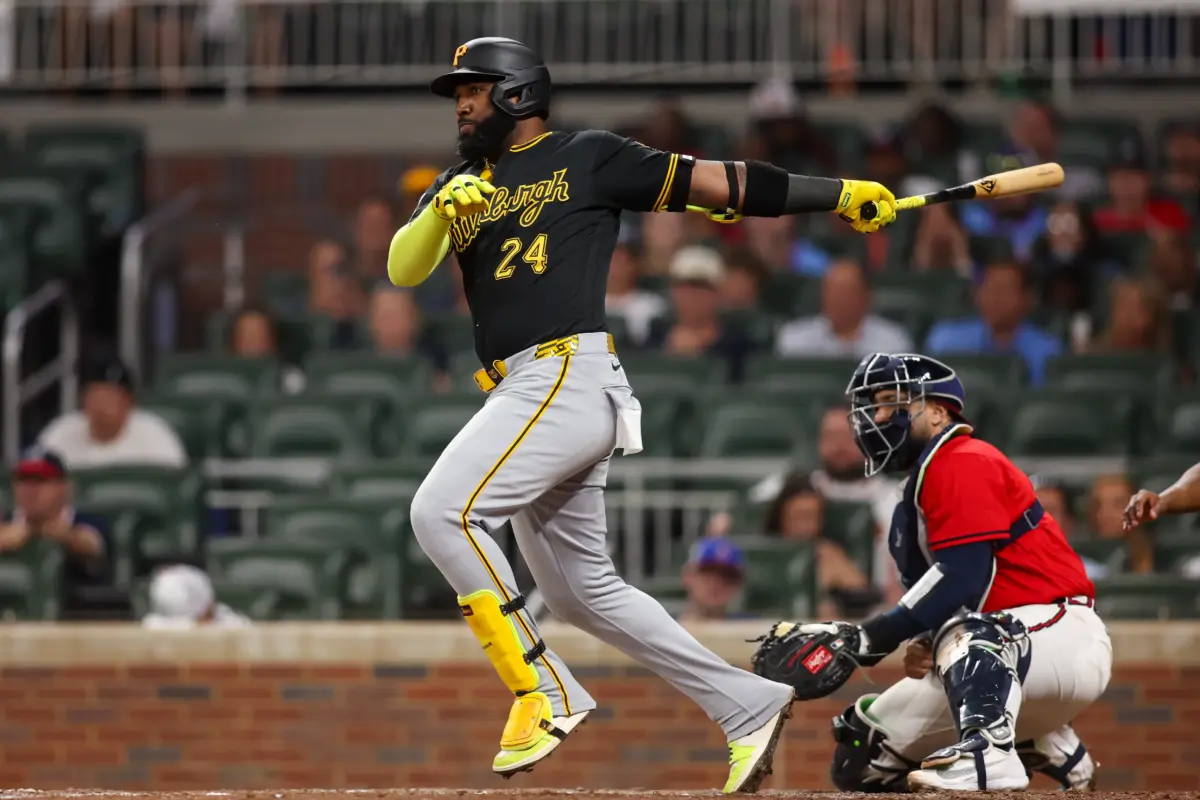

Pirates bench bat plans at the trade deadline cannot be separated from the decision the organization has delayed on Marcell Ozuna.
Pittsburgh enters the final week before the deadline at 54-52, only one game outside a National League Wild Card position and carrying a plus-40 run differential. The Pirates have done enough to justify buying, but the margin between reaching the postseason and falling short remains small enough that they cannot carry roster spots based on salary, reputation or what a player was expected to provide in February.
The Pirates need another dependable hitter for their bench. They also need to acknowledge that Ozuna’s contract has become a sunk cost rather than a reason to keep placing him in the lineup.
Pirates Have Decision to Make With Ozuna
Pirates Bench Bat Need Is About Flexibility
Pittsburgh does not necessarily need to acquire another everyday hitter. The core of the lineup has been productive enough to keep the team in the race, especially with Ryan O’Hearn, Bryan Reynolds, Esmerlyn Valdez and Brandon Lowe capable of occupying prominent spots.
The bench is where the roster remains vulnerable. Pittsburgh needs a hitter who can enter against a difficult left-handed reliever, start occasionally at first base or in a corner-outfield position and give manager Don Kelly a legitimate alternative when one of the regulars needs a day off. Defensive competence and some baserunning value would make the addition even more useful.
That type of player would also become more important when Oneil Cruz returns from his fractured left hand. Cruz, Reynolds and O’Hearn could rotate through the designated-hitter spot, allowing Pittsburgh to protect players physically without sacrificing offense or forcing an inflexible full-time DH into the lineup.
The Pirates should be shopping for a versatile role player, not another hitter whose value disappears when he is not batting.
Ozuna’s Production No Longer Justifies His Role
Ozuna was signed to provide power in the middle of the order. Instead, he has batted .205 with a .290 on-base percentage and .333 slugging percentage through 65 games. His eight home runs and 28 RBI do not compensate for the lack of contact, defensive value or baserunning contribution attached to his roster spot.
The team results with Ozuna are even more difficult to ignore. Pittsburgh is 27-40 in games in which he has been in the lineup. With the Pirates sitting at 54-52 overall, that means they have gone 27-12 in their other games. That split does not prove Ozuna caused every loss, but it reflects how much better the roster has functioned when other players have received those plate appearances.
Questions about Ozuna’s declining offensive output are not new. His struggles have lasted too long to dismiss as a cold opening month, and the argument that the Pirates could not keep giving him an extended leash has become stronger as the deadline approaches.
Ozuna cannot play the field. He does not provide speed off the bench. His value depends almost entirely on hitting for power, and he has not done that consistently enough to justify preventing Pittsburgh from building a more flexible roster.
Pirates Must Handle Ozuna’s Contract Realistically
The Pirates signed Ozuna to a one-year, $12 million guarantee that includes a $16 million mutual option for 2027 and a $1.5 million buyout. His 2026 salary is $10.5 million, with the buyout accounting for the remainder of the guaranteed value.
Moving on is not as simple as releasing him and redirecting the entire contract toward a reliever. Unless another club assumes part of the remaining money in a trade, Pittsburgh will still owe the guaranteed salary. Designating Ozuna for assignment would open a roster spot, but it would not automatically create matching payroll space.
The first option should be a trade. Pittsburgh should be willing to pay most of the remaining salary and accept a minimal return if another club believes Ozuna could help as a part-time DH or bench power bat. Even modest salary relief would create additional room for a bullpen acquisition while removing a player whose role no longer fits the roster.
Finding that trade partner will be difficult. Ozuna’s performance, age and inability to play defense significantly limit his market. The Pirates may have to choose between keeping an unproductive player or paying him not to occupy a roster spot.
They should choose the second option if necessary.
The remaining money is already committed. Continuing to start Ozuna will not recover it. The only relevant question is whether the Pirates are better with him on the active roster than they would be with a different hitter, and the answer has become increasingly clear.
Tyler Callihan Is a Roster Lever, Not the Main Problem
Pittsburgh must be prepared to remove struggling players from the bottom of the roster, but Tyler Callihan should not be inaccurately presented as one of the club’s least productive hitters.
Callihan has batted .261 with a .350 on-base percentage and .478 slugging percentage this season. He has also provided defensive flexibility, appearing at multiple infield and outfield positions while continuing his effort to become capable of playing anywhere on the diamond. Those results are based on a limited sample, but they do not describe a player who has clearly failed.
His place on the roster should not be guaranteed, either. Callihan has Minor League options remaining, giving Pittsburgh the ability to send him to Indianapolis if the deadline produces a more established bench hitter or if his production declines. The Pirates acquired him partly because his left-handed bat and positional flexibility could fill several depth roles, but optionable players naturally become part of roster-crunch decisions.
The organization should evaluate Callihan against the player it could acquire, not against Ozuna. One is a 26-year-old utility option who can be moved between the majors and Triple-A. The other is a 35-year-old full-time DH with guaranteed money and no defensive flexibility.
Pittsburgh can improve the bench without discarding useful depth simply to create the appearance of change. Its first move should be removing the roster’s least functional fit.
The Right Addition Would Improve More Than the Bench
A legitimate bench bat would give Kelly options that the current roster does not consistently provide. The Pirates could pinch-hit without immediately weakening the defense, rest a regular without creating an obvious hole and build different lineups against right- and left-handed pitching.
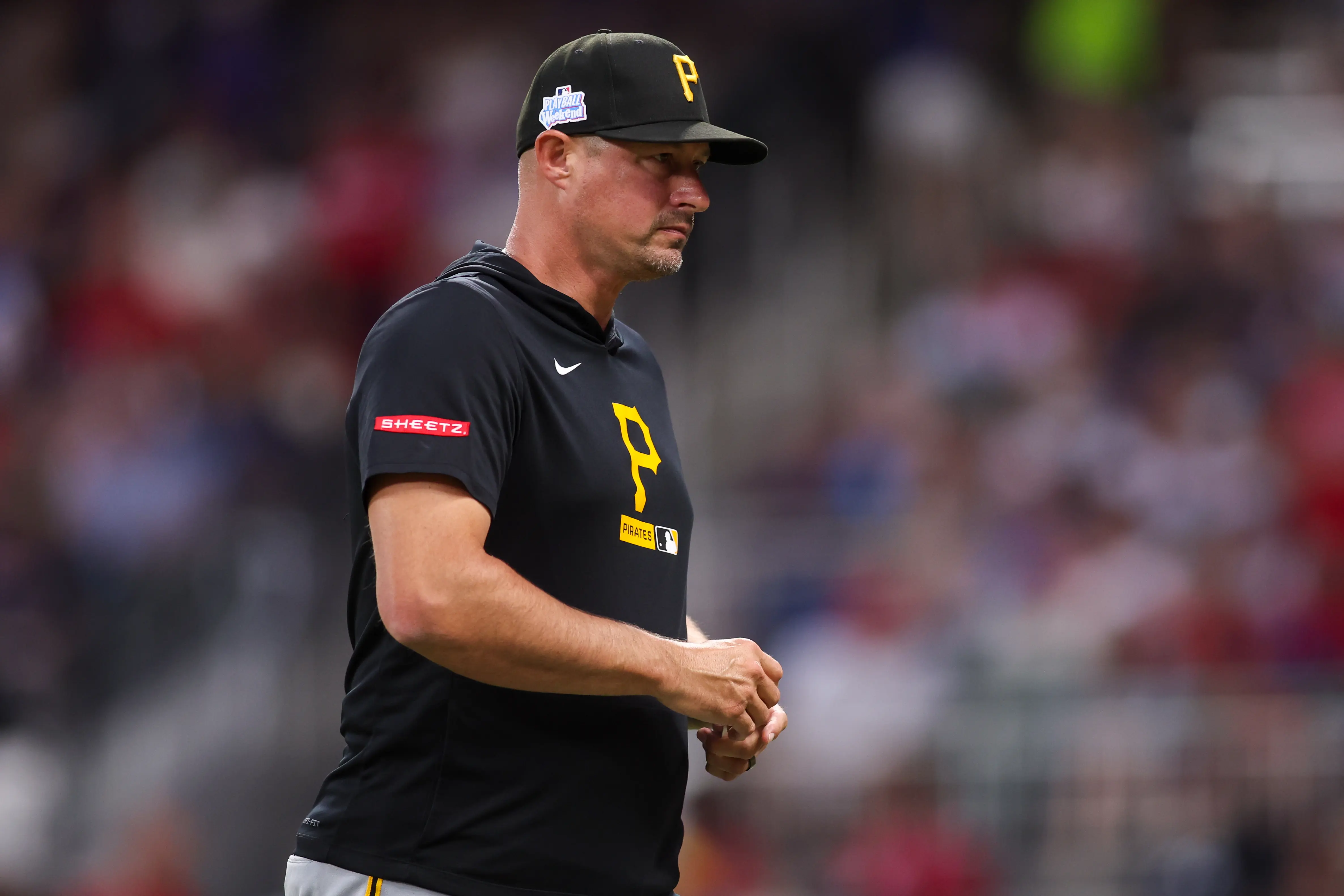
A right-handed hitter who handles lefties would be particularly valuable. O’Hearn and Lowe are left-handed, while Cruz will return from a hand injury that may require occasional protection from difficult matchups. A hitter capable of covering first base and both corner-outfield spots would allow Kelly to move players through the DH position without sacrificing the lineup’s structure.
The Pirates do not need to spend premium prospect capital on that role. Bench bats are frequently available for lower-level prospects, cash considerations or players facing a roster squeeze elsewhere. The front office should prioritize current fit, defensive versatility and a repeatable platoon skill rather than chasing name recognition.
Pittsburgh already took one low-cost approach by acquiring former top prospect Robert Hassell III. That type of developmental addition can help the organization, but it does not replace an established major-league hitter who can be trusted during an August or September postseason race.
Pirates Cannot Use Ozuna as a Payroll Excuse
The bullpen remains Pittsburgh’s biggest deadline need. The club still lacks enough dependable right-handed relief, and the Pirates cannot ignore their late-inning weakness merely because the offense has improved.
MLB’s deadline overview noted that Pittsburgh could attempt to create payroll room by moving Ozuna or another hitter while pursuing relief help. That is a reasonable goal, but the Pirates cannot make improving the bullpen entirely conditional on another team rescuing them from a poor contract.
If a club assumes part of Ozuna’s salary, Pittsburgh should redirect that money toward a reliever. If no market develops, ownership should still authorize the bullpen addition. The Pirates cannot waste a postseason opportunity because an offseason signing did not work and the remaining money makes the front office uncomfortable.
The bench acquisition should be relatively inexpensive. The bullpen move may require a more meaningful financial and prospect commitment. Pittsburgh has the ability to address both, especially if it stops using Ozuna’s contract as a reason to preserve an ineffective roster arrangement.
Pittsburgh Must Make Three Connected Moves
The deadline plan should be direct. The Pirates should first explore every possible Ozuna trade, even if completing one requires paying most of his remaining salary. If no partner emerges, they should designate him for assignment and accept the financial loss.
Pittsburgh should then acquire a versatile bench hitter who can handle left-handed pitching and play more than one position. Callihan can remain as useful depth or be optioned if the roster requires it, but his current performance does not make him the obvious player to discard.
The final step is adding the high-leverage reliever the bullpen still lacks. Any salary relief created by an Ozuna trade should help, but the absence of a trade cannot become an excuse for leaving the relief corps unfinished.
The Pirates bench bat search is not only about adding another hitter. It is about building a roster that gives Kelly more choices, removes a player whose contract has outweighed his production and supports a team sitting within one game of October baseball.
Ozuna was supposed to improve the Pirates’ lineup. At this point, moving on from him may be the clearest way to improve the team.
Main Photo: Brett Davis- Imagn Images