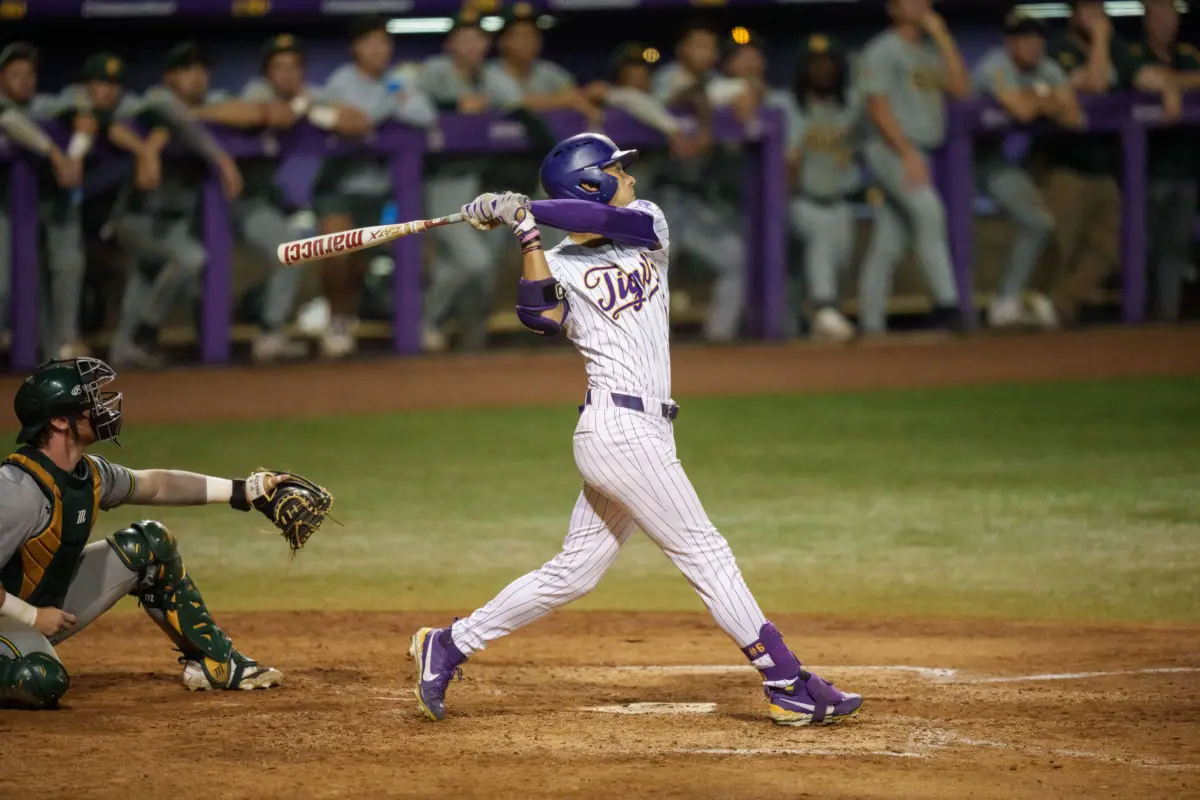

The Pittsburgh Pirates had 21 picks in this year’s 2026 MLB amateur draft. They started the draft off with the fifth overall pick and ended the draft with the 588th pick in the 20th round. They took an interesting approach to both early and late selections. So let’s go through and do a recap of some of the things that stood out in the 2026 Pirates draft class.
The Pirates Draft Class of 2026
Early Round, Low-Risk Picks
The Pirates took a low-risk approach in their early-round selections. During day one of the draft, they selected Derek Curiel out of Louisiana State University, high school shortstop Aiden Ruiz, Auburn University infielder Chris Rembert, University of North Carolina right-hander Jason DeCaro, and another high school position player in outfielder Andruw Giles. All of their day one picks follow a similar high-floor/low-ceiling type projection, and took a mix of college players and high school prospects.
With the 5th pick in the 2026 Draft, the @Pirates select @LSUbaseball outfielder Derek Curiel, No. 12 on the Top 250 Draft prospects list.
Follow live: https://t.co/XWNTXiKgPC pic.twitter.com/WiaXTEULtH
— MLB Draft (@MLBDraft) July 11, 2026
Curiel is an above-average runner and a good defensive outfielder. He also has shown good bat-to-ball skills, but his lack of projectable power limits his overall potential. Ruiz is an outstanding defensive infielder and runs well, but has little power. Rembert has a similar projection to Curiel. MLB Pipeline stated DeCaro is a “durable, high-floor starter” in its write-up about the right-hander. Giles doesn’t have one tool that looks below average, but doesn’t have one carrying tool either.
Higher-Ceiling, Day 2 Picks
The Pirates started off day two with more higher-floor/lower-ceiling types with NC State lefty Ryan Marohn in the fifth round, and Alabama right-hander Tyler Fay in the sixth round. They then started to turn their attention to higher floor-type prospects in the middle rounds. Their first high-floor day two pick was right-hander Alex Overbay. Son of former Pirates first baseman Lyle Overbay, Alex is a hard-throwing hurler out of Arizona State. He sits in the mid-to-upper 90s with his fastball and throws both a sweeper and a cutter. There’s no question Overbay has the stuff to be an effective arm in the future, but he needs to sharpen his control.
The Pirates selected Arizona State right-hander Alex Overbay with the No. 228 pick in the eighth round. Overbay was ranked No. 419 by Baseball America.
The 6-foot-3, 220-pound righty transferred from UNLV to Arizona State for his draft season and works with a fastball that sits… pic.twitter.com/8iM8KhILCy
— 𝐍𝐒𝟗 (@NorthShoreNine) July 12, 2026
After the Pirates selected Overbay in the eighth round, they took Tre Phelps in the ninth round. A consensus top 130 draft prospect, Phelps is a slugging corner player from the University of Georgia. He has shown no problems taking the ball deep, but needs to improve his swing decisions. Phelps will also have to find a defensive home, as he does not project as an above-average glove. Still, the offensive upside gives him plenty of potential.
The Bucs took their first high school pitcher in the 11th round, Spencer Evans. Evans is a 6’3”, 190 lb lefty who already sits in the mid-90s with his fastball. His slider also has above-average potential, and his change-up is trending in the right direction. However, like many young, hard-throwing pitchers, his command will need to improve.
The Pirates took another high school pitcher three picks later, Damarcus Rideout-Carter. Baseball America believes Rideout-Carter has the potential to sit in the mid-90s in the future. He currently comes in around the low-90s, but is still just 18 years old, and has projectability left. Rideout-Carter will mix in both a sweeper and a changeup.
High-Risk Late Round Selections
The Pirates took some big swings late in the draft and selected much higher-risk players. In the 16th round, they took Grant Govel from USC. Govel has plus control over his entire arsenal, which includes a fastball, curveball, slider, changeup, and cutter. He sits 91-93 MPH, but his extension off the mound and 20-21 inches of induced vertical break make it play up. There is potential for him to reach back for more velocity more frequently as well.
The biggest risk, at least in terms of signability, that the Pirates took in the draft was Malachi Washington. Pittsburgh took the high school outfielder in the 18th round, even though he was a consensus top 120 draft prospect. Washington is a highly athletic outfielder with a plus arm and above-average power potential, but needs to improve in the plate discipline department. However, it seems the Pirates won’t get a chance to help Washington do that themselves, at least not this year. A recent post made by Washington looks like he will fulfill his commitment to LSU.
Even the Pirates’ 20th-round pick has some potential worth mentioning. Dakota Stone is a 6-foot, 209 lb lefty from the University of North Florida. Stone finished out his senior season with a 2.85 ERA and an 18.4% K-BB%. Stone walked a fair share of opponents with an 11.4% BB%. However, he throws mid-90s from a low arm slot.
The Pirates closed out their 2026 draft by selecting North Florida left-hander Dakota Stone with the No. 588 pick in the 20th round.
Stone went 7-3 with a 2.85 ERA and 102 strikeouts across 79 innings last season. pic.twitter.com/zYSikwp3pi
— 𝐍𝐒𝟗 (@NorthShoreNine) July 12, 2026
The Last Word
The 2026 Pirates draft class was certainly interesting. They took high-floor players early, then took high-ceiling players later in the draft, and finished off the draft by taking some big swings at players with a ton of potential. It is a departure from their last few drafts, where they went for the highest-ceiling players early on in the draft, like Konnor Griffin and Seth Hernandez, going as their first-round picks. We’ll see how this draft class plays out over the next few seasons.
Main Photo Credit: © Matthew Hinton-Imagn Images