

Center field has long been considered baseball’s premier defensive position. Players in the middle of the outfield are expected to cover enormous amounts of ground while also providing offensive production, speed, leadership, and durability. Because of those demanding expectations, the position has produced some of the greatest players in baseball history.
It has also produced some of the Hall of Fame’s most puzzling omissions.
One of the most interesting benchmarks when evaluating overlooked center fielders is Hall of Famer Lloyd Waner. The longtime Pittsburgh Pirates star was inducted by the Veterans Committee in 1967 after a career built on consistency, contact hitting, and longevity rather than power or overwhelming statistical dominance.
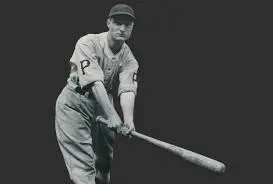
Waner finished his career with:
- 2,459 hits
- .316 batting average
- 27 home runs
- 598 RBIs
- 24.1 WAR
- 18 seasons
His induction demonstrates that Hall of Fame voters have historically valued more than just home runs and MVP awards. If Lloyd Waner belongs in Cooperstown, several center fielders with stronger statistical résumés deserve renewed consideration.
Here are five center fielders whose Hall of Fame cases warrant another serious look.
1. Kirby Puckett
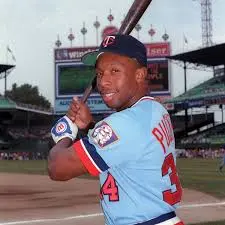
Kirby Puckett remains one of the most beloved players of the modern era, yet his Hall of Fame résumé is unique because his career ended prematurely due to glaucoma.
The longtime Minnesota Twins superstar accomplished more in 12 seasons than many players do in 20.
Career highlights:
- 2,304 hits
- .318 batting average
- 207 home runs
- 1,085 RBIs
- 10 All-Star selections
- 6 Gold Gloves
- 6 Silver Sluggers
- 2 World Series championships
- 1985 AL Rookie of the Year
Compared to Lloyd Waner, Puckett was superior in virtually every aspect of the game outside of career longevity. He possessed more power, better defense, greater postseason success, and one of the greatest championship moments in baseball history with his legendary Game 6 home run in the 1991 World Series.
His election to Cooperstown was well deserved, and his career serves as an example of how peak greatness can outweigh shortened longevity.
2. Jim Edmonds
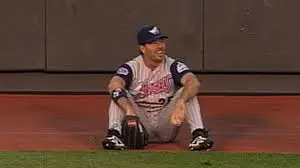
Jim Edmonds may be the most underrated defensive center fielder of the past 40 years.
The former California Angels and St. Louis Cardinals star combined highlight-reel defense with middle-of-the-order power throughout an outstanding 17-year career.
Career highlights:
- 393 home runs
- 1,949 hits
- .284 batting average
- 1,199 RBIs
- 8 Gold Gloves
- 4 All-Star selections
- 60.4 WAR
- World Series champion
Edmonds was one of the finest defensive center fielders baseball has ever seen, routinely making spectacular catches while also producing elite offensive numbers.
Compared to Waner, Edmonds accumulated more than twice the WAR while providing exponentially greater power and defensive value. Modern analytics strongly support his Cooperstown candidacy.
3. Fred Lynn
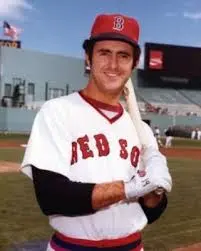
Few players have ever entered Major League Baseball with the immediate impact of Fred Lynn.
The Boston Red Sox legend remains the only player in MLB history to win Rookie of the Year and MVP in the same season.
Career highlights:
- 2,015 hits
- 306 home runs
- .283 batting average
- 1,111 RBIs
- 9 All-Star selections
- 4 Gold Gloves
- AL MVP
- Rookie of the Year
- 50.2 WAR
Lynn was one of baseball’s premier two-way center fielders throughout the late 1970s and early 1980s before injuries limited his ability to accumulate larger career totals.
Compared to Waner, Lynn offered dramatically greater peak value, significantly more power, superior defense, and far more accolades. His shortened prime has unfairly overshadowed what was one of baseball’s most dominant stretches.
4. Kenny Lofton
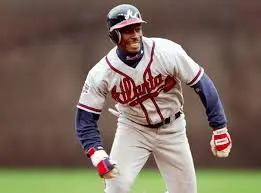
Kenny Lofton owns one of the strongest Hall of Fame cases among players not currently in Cooperstown.
The longtime Cleveland Indians star helped redefine the leadoff hitter during the 1990s by combining elite speed, Gold Glove defense, and consistent offensive production.
Career highlights:
- 2,428 hits
- 622 stolen bases
- .299 batting average
- 68.4 WAR
- 6 All-Star selections
- 4 Gold Gloves
Lofton reached the postseason 11 times and was one of the defining players of Cleveland’s powerhouse teams during the 1990s.
Compared to Waner, Lofton surpassed him in nearly every measurable category while adding elite baserunning and defensive excellence. Many historians consider his falling off the BBWAA ballot after one year to be one of the greatest mistakes in modern Hall of Fame voting.
5. Dale Murphy
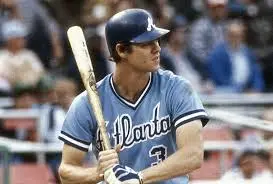
Although many fans remember Dale Murphy primarily as a right fielder later in his career, the back-to-back National League MVP spent the majority of his prime as an outstanding center fielder.
The Atlanta Braves icon became one of baseball’s faces during the 1980s through his remarkable combination of power, defense, leadership, and sportsmanship.
Career highlights:
- 2,111 hits
- 398 home runs
- 1,266 RBIs
- 7 Gold Gloves
- 5 Silver Sluggers
- 7 All-Star selections
- 2 NL MVP Awards
- 46.5 WAR
Murphy’s peak was among the best in baseball, as he dominated the National League during the early and mid-1980s while becoming one of the sport’s most respected ambassadors.
Compared to Waner, Murphy offered vastly greater offensive production, defensive accolades, and individual awards. His Hall of Fame candidacy continues to gain support as voters increasingly recognize elite peak performance.
Why Center Field Hall Debates Continue to Evolve
Center field has always required players to excel in nearly every aspect of the game. Great center fielders combine speed, defense, leadership, offensive production, and durability in ways few other positions demand.
Lloyd Waner’s induction demonstrated that consistency and career value can earn Cooperstown recognition, even without overwhelming power numbers.
When measured against that benchmark, Jim Edmonds, Fred Lynn, Kenny Lofton, and Dale Murphy all present Hall of Fame cases that compare favorably—and in many respects surpass—Waner’s résumé. Kirby Puckett is already enshrined and serves as another example of how peak greatness and complete value can define a Hall of Fame career despite a shortened tenure.
Whether through the Veterans Committee or the Contemporary Baseball Era Committee, Edmonds, Lynn, Lofton, and Murphy deserve renewed Hall of Fame consideration. As baseball continues to reevaluate greatness through both traditional accomplishments and advanced analytics, the center field position remains one of Cooperstown’s richest sources of overlooked candidates.