

Left field has always been one of baseball’s most offense-driven positions, but Hall of Fame voting for left fielders has never been entirely straightforward. Some players built Cooperstown-worthy résumés through overwhelming power, while others combined consistency, run production, longevity, and historical impact in ways that were often overlooked by voters.
That has left several highly accomplished left fielders outside the Hall of Fame despite careers that compare favorably to inducted players.
The position has also become uniquely complicated because so many historically great left fielders carry reputational baggage tied to scandals, gambling controversies, steroids, or difficult relationships with voters. Players such as Barry Bonds, Manny Ramirez, Pete Rose, Albert Belle, Ryan Braun, and Shoeless Joe Jackson are often at the center of heated Cooperstown debates for reasons extending beyond statistics alone.
Because of those complicated discussions, this article instead focuses on overlooked left fielders whose Hall of Fame cases receive far less national attention despite extremely strong résumés.
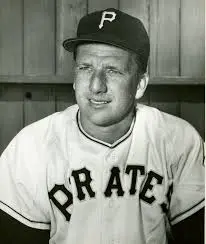
One of the most fascinating Hall of Fame benchmarks for left field debates remains Ralph Kiner. The former Pittsburgh Pirates slugger was inducted into Cooperstown in 1975 despite a relatively short career because voters recognized his dominant offensive peak.
Kiner finished with:
- 369 home runs
- 930 RBIs
- .279 batting average
- 7 straight NL home run titles
- 48.1 WAR
His election helped establish that peak dominance and offensive impact can outweigh traditional longevity benchmarks, especially for corner outfielders.
That same Hall of Fame logic should reopen discussions for several overlooked left fielders whose careers deserve another serious Cooperstown evaluation.
Here are five left fielders whose Hall of Fame cases deserve reconsideration.
1. Sherry Magee
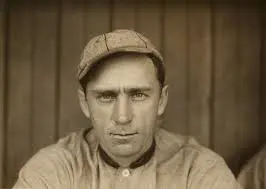
Sherry Magee remains one of the most overlooked stars of the Dead Ball Era.
The longtime Philadelphia Phillies standout was one of baseball’s most complete offensive players during the early 1900s, combining average, speed, power-for-era production, and run creation at an elite level.
Magee finished with:
- 2,169 hits
- .291 batting average
- 441 stolen bases
- 1,176 RBIs
- 59.0 WAR
During his prime, Magee was frequently considered one of the National League’s most dangerous hitters and one of baseball’s biggest stars.
Compared to Ralph Kiner, Magee lacked the overwhelming home run totals but offered far more all-around value and longevity. Modern analytics have dramatically strengthened his Cooperstown case, particularly as historians continue reevaluating Dead Ball Era stars.
2. Bob Johnson
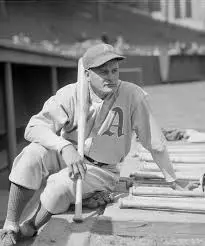
Bob Johnson may quietly own one of the most underrated offensive résumés in baseball history.
The longtime Philadelphia Athletics and Boston Red Sox star produced elite offensive numbers despite playing much of his career on struggling teams that limited his national recognition.
Johnson finished with:
- 2,051 hits
- 288 home runs
- 1,283 RBIs
- .296 batting average
- .393 OBP
- 55.9 WAR
For seven consecutive seasons, Johnson drove in at least 100 runs and consistently ranked among the American League’s most productive hitters.
Compared to Kiner, Johnson offered more complete offensive value, greater longevity, and stronger on-base skills. His lack of postseason exposure and quieter historical profile likely hurt his original Hall candidacy, but modern analytical evaluations strongly support his Cooperstown case.
3. Bobby Veach
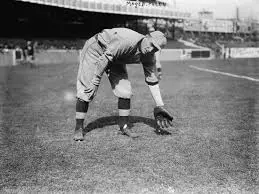
Bobby Veach has become one of the most compelling forgotten candidates from baseball’s early generations.
The former Detroit Tigers standout starred alongside Ty Cobb during the 1910s and early 1920s while quietly building an outstanding offensive résumé.
Veach finished with:
- 2,063 hits
- .310 batting average
- 1,174 RBIs
- 64.8 WAR
At his peak, Veach was one of baseball’s premier run producers and one of the American League’s most consistent hitters. His ability to combine contact hitting, gap power, and durability made him enormously valuable during the Dead Ball and early Live Ball transition eras.
Compared to Kiner, Veach offered significantly more longevity and complete offensive value, even if he lacked the same home run dominance. His advanced metrics compare favorably with numerous Hall of Fame outfielders already inducted.
4. Lance Berkman
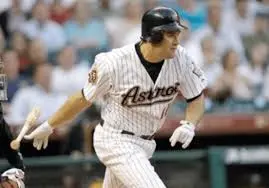
Lance Berkman was one of the most complete switch-hitters of the modern era and one of baseball’s most dangerous postseason hitters during the 2000s.
The former Houston Astros star finished with:
- 366 home runs
- 1,234 RBIs
- .293 batting average
- .406 OBP
- .943 OPS
- 6 All-Star appearances
- World Series championship
At his peak, Berkman was one of baseball’s elite offensive players regardless of position. His plate discipline, switch-hitting ability, postseason heroics, and advanced metrics have made his Hall of Fame case increasingly attractive over time.
Compared to Kiner, Berkman offered superior on-base ability and greater overall offensive versatility while producing nearly identical home run totals. As Hall voters increasingly embrace advanced offensive metrics like OPS and OBP, Berkman’s candidacy deserves much more serious consideration.
5. Luis Gonzalez
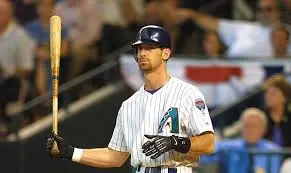
Luis Gonzalez is often remembered primarily for one swing — his iconic World Series-winning hit against the Yankees in 2001 — but his overall career deserves far more appreciation.
The longtime Arizona Diamondbacks star quietly compiled:
- 2,591 hits
- 354 home runs
- 1,439 RBIs
- 5 All-Star appearances
- World Series championship
Gonzalez also produced one of the greatest offensive seasons of the early 2000s when he hit 57 home runs in 2001.
Compared to Kiner, Gonzalez offered significantly more longevity, durability, and total offensive production. While questions surrounding the offensive environment of the era complicated his candidacy, his overall résumé remains much stronger than many fans remember.
His postseason legacy and historical importance to the Diamondbacks franchise only strengthen his Cooperstown argument.
Why Left Field Hall Debates Are Evolving
Left fielders have historically been judged heavily by offensive numbers, but modern Hall discussions increasingly appreciate complete offensive value, advanced analytics, postseason impact, and peak dominance.
Ralph Kiner’s induction helped establish that greatness does not always require overwhelming longevity if a player’s offensive impact was extraordinary enough.
That same philosophy should reopen Hall of Fame discussions for Sherry Magee, Bob Johnson, Bobby Veach, Lance Berkman, and Luis Gonzalez.
Whether through the Veterans Committee or the Contemporary Baseball Era Committee, all five deserve another serious Cooperstown conversation as Hall of Fame standards continue evolving across generations.