
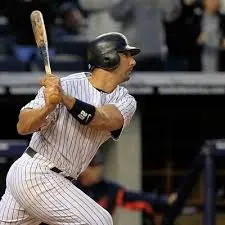

Catcher has always been one of baseball’s most demanding and complicated Hall of Fame positions. Unlike almost every other spot on the diamond, catchers are often evaluated through leadership, game management, durability, and era impact just as much as traditional offensive production.
That complexity has left several outstanding catchers outside Cooperstown despite careers that compare favorably to players already inducted.
One of the most interesting Hall of Fame benchmarks for catcher debates remains Roger Bresnahan. The former New York Giants star was inducted into the National Baseball Hall of Fame and Museum by the Veterans Committee in 1945 after building a reputation as one of baseball’s great innovators and leaders behind the plate.
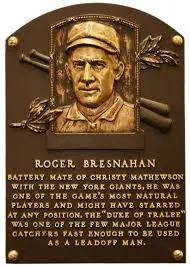
Bresnahan finished with:
- 1,466 hits
- .279 batting average
- 252 stolen bases
- 35.0 WAR
- multiple pennant-winning teams
His Hall of Fame election helped establish that greatness at catcher can come in many forms beyond massive offensive numbers.
That same Hall of Fame logic should reopen Cooperstown discussions for several overlooked modern-era catchers whose complete value deserves far more recognition.
Here are five catchers whose Hall of Fame cases deserve serious reevaluation.
1. Thurman Munson
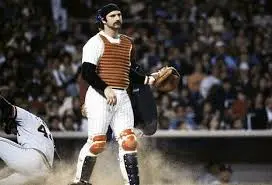
Few Hall of Fame debates in baseball history carry as much emotion and historical weight as Thurman Munson’s.
The legendary New York Yankees captain was one of baseball’s defining stars during the 1970s before his tragic death in a plane crash at age 32 cut short what appeared to be a clear Cooperstown trajectory.
Munson finished with:
- 1,558 hits
- .292 batting average
- 113 home runs
- 701 RBIs
- 46.1 WAR
- 7 All-Star appearances
- 3 Gold Gloves
- 1970 Rookie of the Year
- 1976 AL MVP
- 2 World Series championships
Compared to Roger Bresnahan, Munson’s résumé is significantly stronger statistically while carrying enormous leadership and cultural impact. He was widely viewed as the emotional heartbeat of the Yankees dynasty years during the late 1970s.
Many baseball historians believe Munson would already be in Cooperstown had his career not ended so suddenly. His omission remains one of the most debated Veterans Committee topics in baseball history.
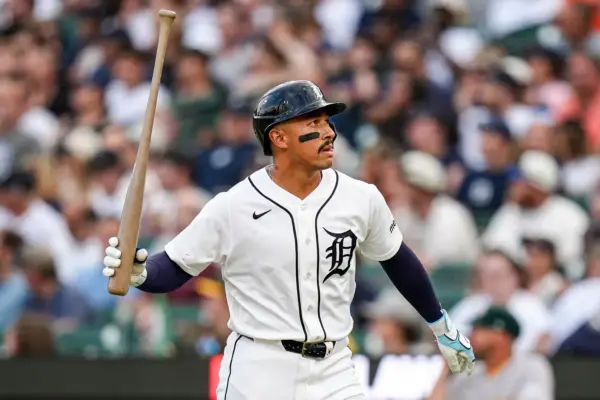
2. Victor Martinez
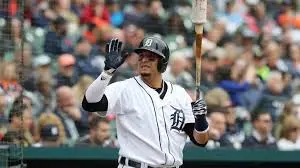
Victor Martinez may be one of the most overlooked switch-hitters of the modern era.
Although he eventually spent significant time at designated hitter and first base, Martinez built much of his value as an elite offensive catcher during a period where offense behind the plate was extremely rare.
The former Cleveland Indians and Detroit Tigers star finished with:
- 2,153 hits
- 246 home runs
- .295 batting average
- .360 OBP
- 5 All-Star appearances
- Silver Slugger Awards
At his peak, Martinez was one of baseball’s toughest outs and one of the premier contact hitters in the sport regardless of position.
Compared to Bresnahan, Martinez offered far greater offensive production, though his candidacy becomes complicated because he did not remain a full-time catcher throughout his career. Still, his offensive excellence at such a demanding position deserves more Hall discussion than it currently receives.
3. Lance Parrish
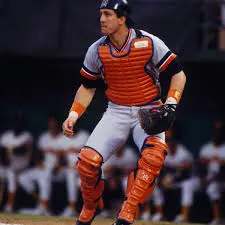
Lance Parrish quietly built one of the most complete catcher résumés of the 1980s.
The longtime Detroit Tigers standout combined power, durability, leadership, and strong defense during one of baseball’s most competitive eras for catchers.
Parrish finished with:
- 324 home runs
- 1,070 RBIs
- 8 All-Star appearances
- 3 Gold Gloves
- 1984 World Series championship
For years, Parrish was viewed as one of the premier power-hitting catchers in baseball while also handling pitching staffs at a high level defensively.
Compared to Bresnahan, Parrish brought substantially more offensive power while maintaining strong defensive credentials. His candidacy has often been overshadowed by bigger-name catchers from nearby eras, but his overall résumé deserves much more serious Cooperstown consideration.
4. Jorge Posada
Jorge Posada’s Hall of Fame case has gained momentum in recent years as modern analytics increasingly appreciate offensive production from catchers.
The core member of the late-1990s and early-2000s New York Yankees dynasty finished with:
- 275 home runs
- 1,065 RBIs
- .273 batting average
- .374 OBP
- 5 All-Star appearances
- 5 World Series championships
- 42.7 WAR
Posada was one of the most productive offensive catchers of his generation and a central leader on one of baseball’s greatest dynasties.
Compared to Bresnahan, Posada’s offensive production is significantly greater, particularly in power and on-base percentage. While critics have debated his defense throughout the years, his overall value behind the plate during a championship era remains difficult to ignore.
As Hall voters continue evolving how they evaluate offense from catchers, Posada’s candidacy becomes increasingly compelling.
5. Bill Freehan
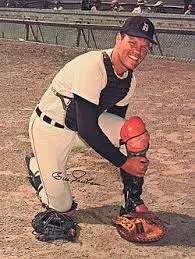
Bill Freehan may be one of the most underrated defensive catchers in modern baseball history.
The longtime Detroit Tigers star anchored Detroit behind the plate for more than a decade while providing leadership, durability, and strong offensive value during the 1960s and 1970s.
Freehan finished with:
- 1,591 hits
- 200 home runs
- 11 All-Star appearances
- 5 Gold Gloves
- 1968 World Series championship
- 44.8 WAR
At his peak, Freehan was consistently viewed as one of baseball’s premier catchers and often competed directly against Johnny Bench during the golden era of the position.
Compared to Bresnahan, Freehan offered superior defensive accolades, more power, and greater overall value. Modern analytical evaluations have strengthened his Cooperstown case considerably in recent years.
Why Catcher Hall Debates Are Different
Catchers are uniquely difficult to evaluate historically because so much of their value goes beyond traditional statistics. Leadership, pitcher relationships, durability, defensive responsibilities, and game management all shape Hall of Fame conversations behind the plate.
Roger Bresnahan’s induction helped establish that Hall of Fame catchers do not need overwhelming offensive totals if their overall impact on the game was substantial.
That same Hall of Fame philosophy should reopen Cooperstown discussions for Thurman Munson, Victor Martinez, Lance Parrish, Jorge Posada, and Bill Freehan.
Whether through the Veterans Committee or the Contemporary Baseball Era Committee, all five deserve serious Hall of Fame reevaluation as baseball continues evolving how greatness behind the plate is measured.