

For most of the 2026 season, the Atlanta Braves offense has been exactly what a contender’s offense should be: deep, irritating to pitch against, and capable of turning one mistake into a big inning. One bat cools off; another one turns into a sprinkler spraying doubles all over the yard. One star has a quiet series, another ambushes a mistake and turns the scoreboard into bad news for foes.
Lately, though, that machine has started making some ugly noises under the hood, like a rickety jalopy that should probably be sold for scrap metal. Admittedly, the Braves are still in an enviable position. They entered Thursday with one of the best records in baseball at 37-19, and a lineup that still ranks among the league’s better offensive groups. Atlanta’s season-long numbers remain perfectly respectable, including a .258 team average, .323 on-base percentage, .428 slugging percentage, and 74 home runs through 56 games. That is not a broken offense. That is a dangerous offense, having a bad week. Still, bad weeks matter when they start clustering around injuries and slumps from important bats.
Braves Offense Had a Quiet Week
(Note: all stats entering Thursday, May 28)
The most obvious recent issue is simple: Atlanta has stopped scoring. Over their last five games entering Thursday, the Braves hit just .186/.259/.256 with a .515 OPS, scoring 13 total runs while hitting only two home runs. Even that undersells the weirdness a bit, because seven of those runs came in one win over the Boston Red Sox. In the other four games, Atlanta scored five, zero, one, and zero runs. Tough stuff.
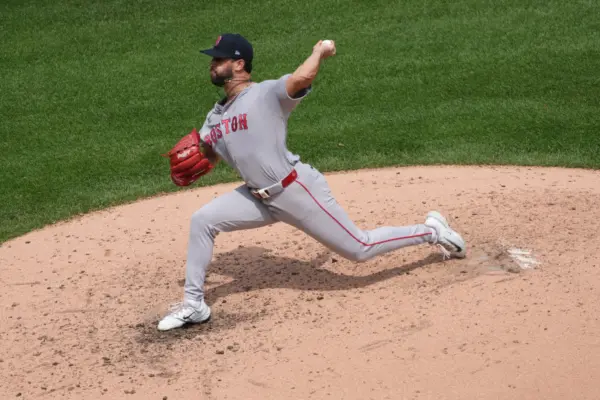
Wednesday’s 8-0 loss to the Red Sox made the quiet stretch feel a little less like a blip and a little more like something worth monitoring. The Braves managed only five hits and went hitless in eight chances with runners in scoring position. It also marked the third time in five games that Atlanta scored one run or fewer. For a team that spent the first part of the season making massive blowouts feel routine, that is jarring.
Struggling Stars
The timing is hard to ignore because MVP candidate Drake Baldwin is no longer sitting in the middle of this thing, making life miserable for pitchers. Baldwin was placed on the 10-day injured list with a right oblique strain after an MRI revealed a Grade 1 strain. Before the injury, he had been one of Atlanta’s most important hitters, leading all big-league catchers with 13 home runs. Walt Weiss did not exactly hide the size of the loss either, calling Baldwin “arguably our best hitter” while acknowledging how much the Braves were losing.
That does not mean Baldwin’s absence single-handedly caused the cold stretch. Baseball is rarely that tidy, and pretending otherwise would be lazy. The Braves actually scored eight, nine, and nine runs in the first three games after Baldwin landed on the IL. The problem is what has happened since then.
Without Baldwin’s left-handed thump, his on-base presence, and his general habit of turning at-bats into hard contact with consequences, Atlanta has less insulation when the bigger names go quiet. And right now, two of those bigger names are very quiet.
Despite his consecutive games streak continuing unabated, Matt Olson’s recent slash line is the clearest indicator of some troubling offensive trends for Atlanta. Over his last seven games, Olson is hitting .103/.188/.241 with one home run and three RBI. Stretch it to 15 games, and it does not get much prettier: .158/.238/.246 with one homer. For a player who still leads the team with 15 home runs and 44 RBI, this is probably more of a slump than a collapse. Olson has earned the benefit of the doubt many times over. But when the Braves are already missing Baldwin, Olson going cold removes one of the lineup’s great stabilizers.
Matt Olson goes deep for the 15th time this season to tie the game!
He had been 9 for his last 55 (.164 AVG) at the plate 😳 pic.twitter.com/JMqFKfInSM
— Just Baseball (@JustBB_Media) May 27, 2026
Ozzie Albies is in a slightly different kind of funk. His last seven games are not catastrophic on the surface, as he is hitting .250 with a .323 OBP. The problem is the complete absence of impact. Albies has no home runs, one RBI, and a .250 slugging percentage over that span. Over his last 15 games, the line drops to .161/.250/.161 with zero homers and just two RBI. That is not just a cold spell. That is a switch-hitting second baseman temporarily misplacing all of the extra-base damage that makes him such a dangerous part of the order. While Albies is known for being streaky, this cold spell couldn’t have come at a worse time.
That is where the Baldwin injury matters most. A deep lineup can absorb a slumping Olson. It can absorb a powerless Albies stretch. It can even survive a couple of flat nights. What gets dicier is when all of those things happen at the same time, and one of the players who had been papering over the lineup’s weaknesses is watching glumly from the dugout.
The Last Word
The Braves do not need to panic. That would be ridiculous in late May for a serious contender with this much offensive heat under the surface. However, they do need Olson to start driving the ball again, Albies to rediscover some punch, and the bottom half of the order to avoid no-showing every night (though Dominic Smith has been a revelation). Baldwin’s injury did not break the Braves’ offense, but it did remove one of the bats that made the whole thing feel eminently sturdy.
For now, Atlanta’s lineup is not in crisis. It is just wavering a little. And without Baldwin, those cold nights feel a lot colder – despite temperatures reaching their typical thermometer-smashing standards across summer in the South.
Main Photo Credit: Brett Davis-Imagn Images