

There’s a new blueprint emerging across Major League Baseball—and it’s being executed to perfection by teams that have to be smarter than everyone else.
The Detroit Tigers, Pittsburgh Pirates, and Milwaukee Brewers aren’t waiting for superstardom anymore. They’re investing in it early—and betting big.
With massive extensions handed out to Kevin McGonigle, Konnor Griffin, and Cooper Pratt, we’re seeing a clear shift in how smart organizations are building long-term contenders.
Let’s break down each deal—and why this strategy is becoming the future of baseball.
Kevin McGonigle: Detroit’s $150 Million Cornerstone

The Tigers made a statement by locking up McGonigle to an 8-year, $150 million extension (up to $160M with incentives) that runs through 2034.
At just 21 years old, McGonigle is already producing at the big-league level, hitting over .300 early in his rookie season while showing elite plate discipline and advanced hitting ability.
This deal buys out:
- All arbitration years
- Multiple free-agent seasons
- His entire prime
It also includes a signing bonus and escalating salaries, giving Detroit cost certainty while securing a potential All-Star through his age-30 season.
For a franchise that has struggled with consistency, this isn’t just a contract—it’s a foundation.
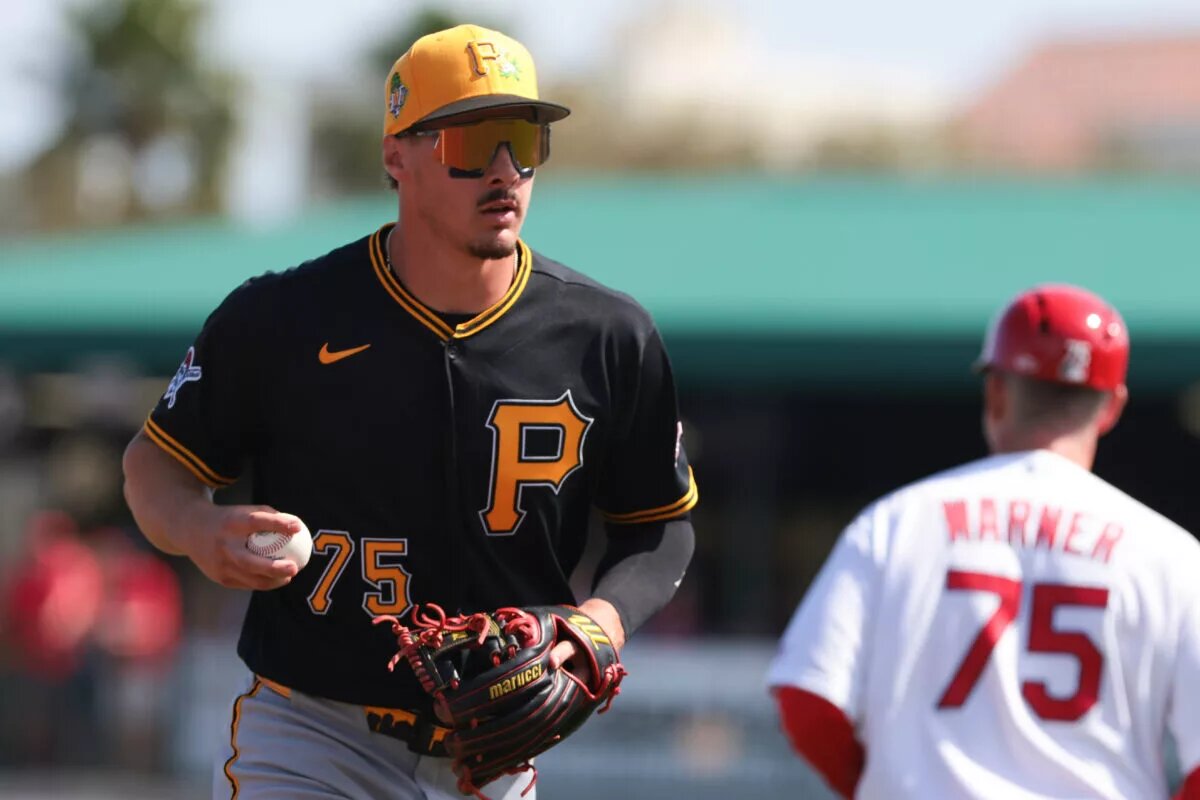
Konnor Griffin: Pirates Go All-In on a 19-Year-Old Superstar
If McGonigle’s deal was bold, the Pirates took it even further.
They signed Griffin—baseball’s top prospect—to a 9-year, $140 million deal (up to $150M) after just days in the majors.
Let that sink in:
A teenager.
Five MLB games.
Franchise-record contract.
Griffin, the No. 9 pick in the 2024 draft, skyrocketed through the minors, hitting .333 with power and speed before debuting in 2026.
Why did Pittsburgh do it?
Because they believe he’s not just a star—but the face of the franchise.
This deal:
- Is the largest in Pirates history
- Locks him in through 2034
- Still allows free agency at age 28
For a small-market team that historically hesitates to spend, this signals a complete philosophical shift: build around elite youth, and don’t let them leave.
Cooper Pratt: Milwaukee’s Pre-MLB Gamble

Then there’s the Brewers—who may have made the boldest move of all.
Milwaukee signed Pratt to an 8-year, $50.75 million extension—before he even reached the majors.
At the time of the deal:
- Pratt had just 3 games at Triple-A or higher
- He wasn’t a top-10 prospect
- He hadn’t debuted in MLB
And yet, the Brewers still committed long-term.
Why?
Because they believe in:
- His elite defense at shortstop
- His projectable bat
- Their player development system
The contract also includes club options that could extend it into the mid-2030s, giving Milwaukee maximum flexibility and upside.
This is small-market strategy at its purest: identify your guy early—and secure him before the price explodes.
Why This Strategy Works
All three of these deals share a common theme: buying certainty before the chaos of stardom.
For smaller-market teams, this is critical.
Instead of:
- Losing stars in free agency
- Trading them before they get expensive
- Or overpaying later
They’re doing the opposite—locking in value before it peaks.
The Benefits:
- Cost control: Predictable payroll for years
- Long-term windows: Build around a stable core
- Player trust: Show belief early, build loyalty
The Risk:
- Prospects can fail
- Injuries can derail careers
But here’s the reality: for teams like Detroit, Pittsburgh, and Milwaukee, the greater risk is waiting.
A Blueprint the Entire League Should Follow
What we’re witnessing isn’t just a trend—it’s a competitive evolution.
The Tigers now have a cornerstone in McGonigle.
The Pirates have a potential superstar in Griffin.
The Brewers are betting on Pratt before the world catches up.
And if even two of these deals hit?
These teams won’t just compete—they’ll contend for years.
In a league still dominated by big payrolls, this is how smaller teams fight back.
Not with bigger spending—but with smarter timing.
The Last Word

If you’re a mid-market MLB team looking for sustained success, the formula is no longer a secret.
Find your star early.
Believe in him sooner than everyone else.
And lock him up before the price becomes impossible.