

Standing approximately 20 feet tall, weighing five tons, and constructed from heavy steel mesh chain-link, the Hell in a Cell cage is one of the most imposing structures in WWE. Often referred to as “The Devil’s Playground,” and for good reason, the legacy of the enclosed battleground is only part of what makes this type of match so iconic.
The brutality and no-holds-barred atmosphere are often used to end intense, long-running feuds definitively and have included some of the most legendary moments in WWE history. Recent years have seen WWE pivot away from this format, but 2026 needs to be the year Hell in a Cell makes its return. Let’s examine why the current landscape is perfectly primed for a revival of the steel, blood, and high-stakes drama that only this type of match can combine.
The Hell in a Cell concept was first introduced by Jim Cornette in 1997, a creation that WWE credits as being inspired by the 1983 Last Battle of Atlanta bout in Georgia Championship Wrestling.
What Makes Hell in a Cell Different
The difference between a Steel Cage match and Hell in a Cell is that a Steel Cage match sees the structure enclose only the ring, with no roof, and the way to win is by escaping. In a Hell in a Cell bout, the structure is much taller, features a roof, and covers the entire ring and part of the ringside. The only way to achieve victory is by submission or pinfall.
Due to the brutality of the match, Hell in a Cell bouts are used as the “final destination” for the most intense rivalries. Throughout WWE history, there have been a number of legendary feuds that have ended involving “The Demonic Structure.”
Triple H and Batista would battle it out at Vengeance in 2005. SummerSlam in 2008 saw The Undertaker and Edge clash. Brock Lesnar and The Undertaker met in 2015 at the Hell in a Cell PPV, while Seth Rollins and Edge squared off at Crown Jewel in 2021.
Fans were immediately enamored by this type of stipulated bout due to its brutality and the enclosed battlefield that limits the wrestlers from easily stepping outside the unforgiving steel structure.
The Matches That Defined a Generation
The first Hell in a Cell match was the culmination of the feud between The Undertaker and Shawn Michaels and took place on October 5, 1997, at Bad Blood. It was during this matchup that Kane made his debut, ripping the locked door off its hinges and proceeding to attack “The Dead Man.”
A year later, The Undertaker took on Mankind at King of the Ring, and the crowd was witness to one of the most shocking and iconic Hell in a Cell bouts of all time. The match started outside the steel structure, and only two minutes into the bout, with the two fighting back and forth on top of the cage, Undertaker threw Mankind off the roof and onto an announce table.
After being tended to by medics and placed on a stretcher, Mankind got up and climbed back onto the roof of the structure, where Undertaker chokeslammed him a short while later through the structure and onto the ring below, leaving fans stunned by what they had just witnessed.

Overexposure and the Decline of the Cell
Due to the overwhelming success of Hell in a Cell matches, WWE used this format 14 times between 1999 and 2008. During the PPV era from 2009 to 2022, WWE turned to this brutal stipulation format 35 times, largely due in part to the introduction of the Hell in a Cell PPV in 2009. During this annual PPV, all matches took place inside the steel battleground, which began to draw criticism as well as cheers after the matches increased in frequency.
Instead of being reserved for the most extreme circumstances to end feuds that had reached a point that no other match seemed able to, there were legitimate concerns raised that the content had become predictable, diluted, and overused.
In response, WWE made the decision to discontinue the PLE in 2022, returning to holding the event in only the rarest of circumstances, instead of forcing competitors into an annual obligation. “Hell in a Cell shouldn’t be a date on a calendar,” WWE’s Chief Content Officer, Triple H, stated, “it should be the only way left to settle a score.”
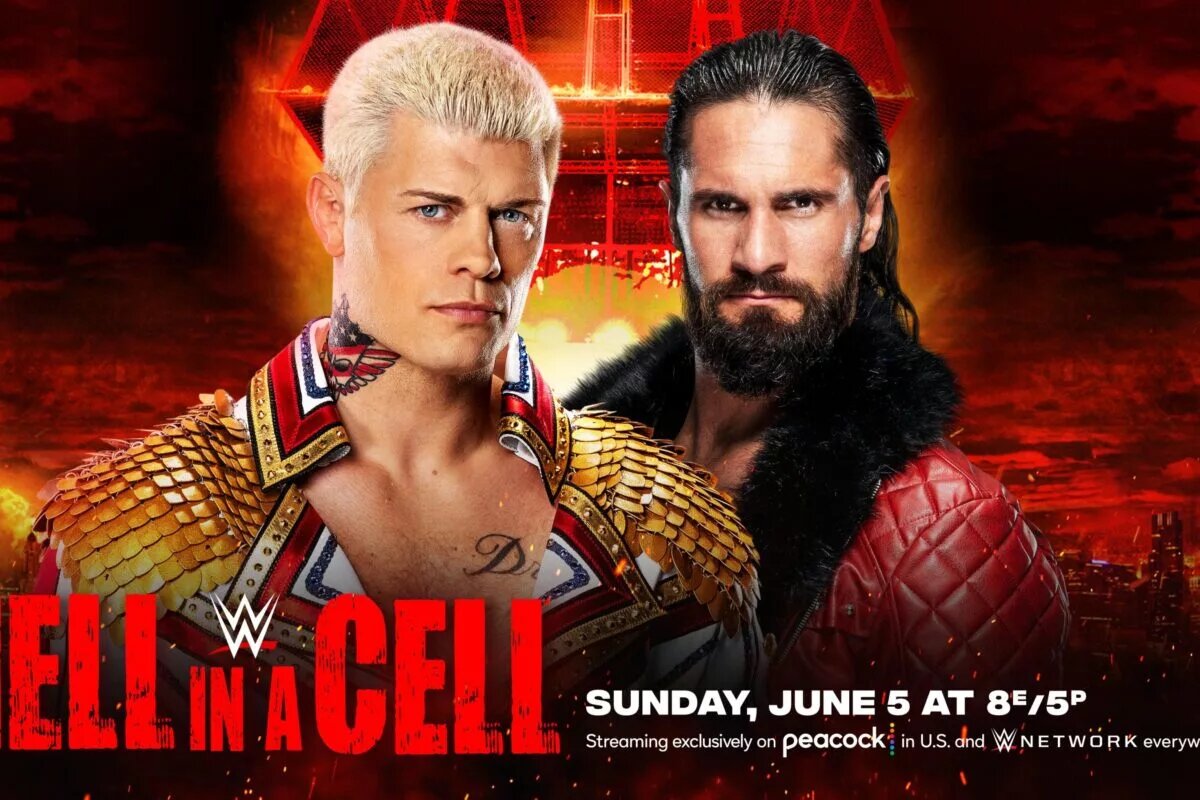
Since deciding to disband the Hell in a Cell PLE, there have been only three matches that have taken place using the steel battleground: Cody Rhodes vs. Seth Rollins in 2022, Edge vs. Finn Balor in 2023, and in 2024, CM Punk and Drew McIntyre squared off.
For the first time since 2001, WWE didn’t have a Hell in a Cell match take place throughout the entire 2025 calendar year. Removing the annual Hell in a Cell PLE was the right move, as WWE has restored the aura of the structure. Fans are no longer seeing it as an annual date on a calendar, but as a rare and dangerous conclusion to a blood feud.
The reputation of the “Devil’s Playground” has been restored, and it can once again be used as the career-altering attraction it was always intended to be.
A Restored Aura: Hell in a Cell In 2026
It is important that in 2026, WWE doesn’t make the same mistake again by bringing back a Hell in a Cell bout during this year. In order for this to happen, WWE needs to ensure that storylines are carefully crafted and stoked, bringing a feud to a state that requires the level of intensity that only the steel battleground can provide to put an end to the rivalry.
As CM Punk famously stated prior to the last Hell in a Cell he was a part of in 2024, “I want to bring it back to what it’s supposed to be. I don’t want to have a Cell that needs a match – I want to have a match that needs a Cell.”
In 2026, having superstars settle their differences and putting an end to things inside of Hell in a Cell would bring monumental excitement not just for the fans, but especially for the wrestlers. Storylines in 2025 were criticized as being predictable and underwhelming, with few new rivalries initiated.
With the right talent and storytelling, a Hell in a Cell bout would be a powerful tool for the ultimate conclusion, a “be-all-end-all” explosive end to a rivalry that simmered and then built to a crescendo, and fans are ready for it.
Imagine if this year produced a matchup like Cody Rhodes and Randy Orton. The best feuds require a mix of intense, long-running personal animosity as well as the physical capability the structure demands. The two have a deep history going back to 2008, where Rhodes was a sidekick to Orton in The Legacy faction, in a similar way that Robin is to Batman.
This slow-burning story would have Rhodes as the face of the company, pitted against his former mentor, Orton, who is nearing the end of his career and wants to prove he is still the Apex Predator.
Orton has faced off inside the Cell 8 times and is a master at using it as a means of torture. Rhodes also has a history inside the steel structure, with his most recent bout inside settling his long rivalry with Seth Rollins. On June 5, 2022, the two would meet in what transpired to become one of the most impressive acts of toughness in WWE history.
Days before the match, Rhodes suffered a torn pectoral tendon, which separated from the bone. Against all odds, Rhodes competed in the match, the deep purple bruise that covered the entire right side of his chest a badge displaying his tenacity and toughness. Despite being able to use one arm, Rhodes found a way to win the match.
Seeing Rhodes and Orton settling their differences and putting an end to things inside of Hell in a Cell would not only bring monumental excitement for fans, but would be a break in the familiar trajectory of Rhodes vs. Roman Reigns that WWE seems to fall back on consistently.
Ultimately, Hell in a Cell shouldn’t just be treated as just a match type, but as a historic milestone for superstars in their careers. 2025 had glimpses of moments of brutality throughout the year, but the missing piece to the puzzle was involving the iconic structure that fans love, and that many missed throughout all of last year.
By bringing it back in 2026, not as a scheduled stop on the calendar, but as the final solution to WWE’s most bitter rivalries, the company can restore the prestige this structure deserves.
More From LWOS Pro Wrestling
Header photo – WWE – Stay tuned to the Last Word on Pro Wrestling for more on 3 Stages of Hell and other stories from around the world of wrestling, as they develop. You can always count on LWOPW to be on top of the significant news in the wrestling world, as well as to provide you with analysis, previews, videos, interviews, and editorials on the wrestling world.
You can check out WWE programming on Netflix (Raw), USA Network (SmackDown), The CW (NXT), Tubi (WWE Evolve), A&E (WWE Superstar Sunday – Rivals, WWE LFG, and Greatest Moments), and Peacock (WWE Main Event, as well as archives and premium live event streaming). Follow WWE on social media to relive top moments and matches on YouTube, and catch fast-paced action on X (WWE Speed).