


Once upon a time, loyalty to the WWE brand would be enough to secure tenured wrestlers’ longstanding positions in the company. But things have changed. Since 2019, a shift has occurred in the pro wrestling industry, one that has initiated many changes in how WWE contracts function.
As a result, names who would’ve been considered “lifers” have since left for other pastures. A new trend arose: the update of the typical WWE contract restructuring, signifying a change in how wrestlers can earn their keep.
On May 2, 2026, Xavier Woods and Kofi Kingston of New Day opted out of the restructuring and will become free agents on July 31. After 19 years, Dublin, Ireland’s Sheamus, joined them in not updating his contract. The message is clear: a changing of the guard. In my opinion, the effects of changes to how the current-day WWE contract works will reverberate throughout the pro wrestling industry. It exists as another crack in an already faulty foundation.
I’m concerned about the industry’s ecosystem, as there’s an entire jungle bursting at the seams with talent. Ideally, collaboration between companies could help enrich the wider net, but since the United States’ capitalistic economy requires competition to flourish, business will be business. And so, the WWE contract restructuring will continue.
The Argument in Favor of WWE Contracts Restructuring
Before I get into the meat-and-potatoes of my takes, I want to address a side of the topic I don’t necessarily agree with. It’s important to take note of this instance.
According to Dave Meltzer of the Wrestling Observer Radio, these decisions boil down to WWE’s perception. If you’re a big star? You’re golden. If you’re unpopular or on the downslide of your career, it’s time to discuss your WWE contract. Much like the NFL and other sports, WWE is prioritizing its already less-paid juniors while taking advantage of the ones that drive business.

For example, Roman Reigns, Cody Rhodes, CM Punk, and Rhea Ripley are the biggest beneficiaries, as they’re already at the top and are paid the larger sums.
They’re icons, people whom the company can readily keep plastered on advertisements. Then there are the merch-movers like Rey Mysterio, Danhausen, Jey Uso, and Joe Hendry. The over-the-top world with the perfect blend of just the right amounts of athleticism and charisma can take one to great heights.
Sheamus sits at 48 years old, his popularity waning, and is encumbered with injuries. Which is baffling, as he saw a career renaissance in 2023 during his feud with Intercontinental Champion Gunther amid a historical title reign. WWE dropped the ball with Sheamus at this juncture to an embarrassing degree, highlighting how safe they keep playing things, to their detriment.
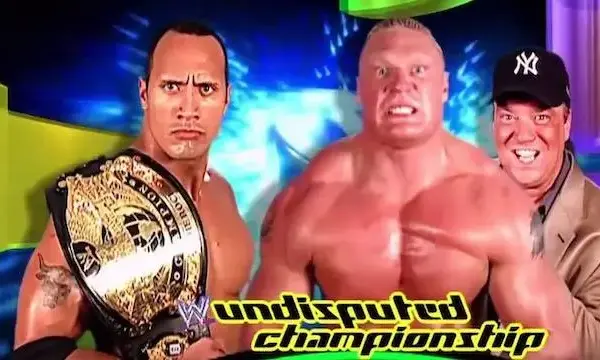
But that dwindling of star power is why someone like Sheamus fell down the card and received the restructured offer, whereas CM Punk, at 47, sports an equally spotty recent injury record since his 2021 return to pro wrestling. And it’s why CM Punk became the Undisputed WWE Champion on the July 6, 2026 episode of Monday Night Raw, when he defeated Sami Zayn.
There’s a level of legend that talents like Punk, Roman Reigns, Randy Orton, and Cody Rhodes achieve. They’re untouchable and kept at the top for the lofty price they command. While Sami Zayn is still high on WWE’s totem pole, he’s not someone the company sees as a main guy.
Historically, that has never been clearer on the main roster. Aside from holding the title in the first place, the closest he’s been to sniffing the top spot was his inclusion during the height of the Bloodline angle in the early 2020s. Due to WWE’s archaic views on what a top star should look like, their bias inevitably wins out.
WWE is the monolith of conditioning fans. Thus, the myth of CM Punk eclipsed the heart of Sheamus’s fighting spirit. Fans of WWE will find that unless their favorites are the Tribal Chief, American Nightmare, the Voice of the Voiceless, or merch-movers, their favorites may be in jeopardy.
Reasons Why the WWE Contracts Restructuring Won’t Work
With the aforementioned argument, it’s difficult to dispute the restructuring. In the short-term, it’s smart, business-wise. However, business decisions, especially in our time, tend not to prioritize the long-term. This is particularly and quickly relevant, with WWE looking to re-sign past talents like Enzo & Cass, as well as Baron Corbin.
Appealing to 2016 WWE nostalgia acts with men either approaching or who are fresh into their 40s will elicit a pop from select fans wearing rose-tinted glasses. But this won’t be sustained if the company continues with this mindset.
Moreover, the talents will see the message of this. Loyalty cannot be relied upon anymore, and that trust remains a two-way street. Considering how WWE tries to counter promotions it perceives as competition, such as AEW, this can only come back to bite them.
Of course, WWE has the fattest stacks of dollar bills. I’m talking Scrooge McDuck levels of cash. Their money has money. And to be fair, talents like New Day and Sheamus aren’t in any need to set up a GoFundMe to get by.
Let’s come back to Sami Zayn’s title loss to CM Punk on July 6. This wasn’t a long title reign, to put it mildly. Only 9 days separated him from his win and his loss. That June 27 win against Cody Rhodes at WWE Night of Champions 2026 was but a mere transitional change.
This follows a trend in Zayn’s main roster career. He’s been treated as a mid-carder with occasional forays into the main event picture or tag team runs. It may take quite a bit of time and fan conditioning, but I think Zayn is vulnerable to a WWE contract restructuring (if he hasn’t already been approached for it).
Releasing or fumbling wrestlers with an undeniable connection with audiences is a daunting risk. Yet, wrestlers are always subject to booker bias. Most of the time, a wrestler’s popularity or success hinges on the bookers. Fans are conditioned not to get invested, and wrestlers are given little room or chance to stand out.
I believe there is some hope, however. Just because WWE doesn’t see something in a talent doesn’t mean another company will follow suit. In AEW, Tommaso Ciampa immediately became a bigger star than he was in WWE, as did Jon Moxley, arguably.
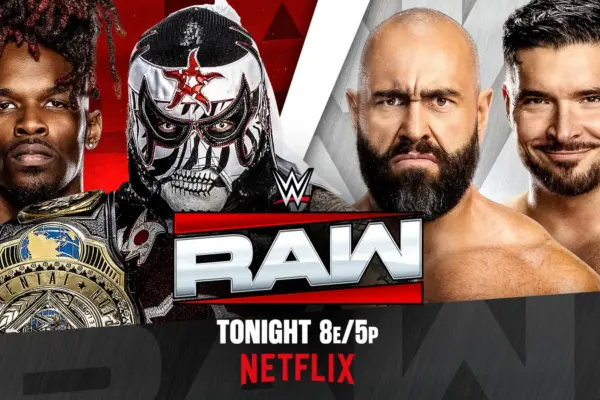
The inverse is true, too: AEW didn’t succeed with Danhausen and couldn’t give Penta the steam he could have used, but WWE has morphed the former into a merchandising machine and the latter into the WWE Intercontinental Champion. Beauty, as they say, is in the eye of the beholder.
WWE Contracts Restructuring and Eventual Impact on the Industry
Depending on a star’s life situation, could they afford a pay cut courtesy of a WWE contract restructuring? They, not the fans, the journalists, nor the company, have to consider this. For those who have more years left in the tank and more behind-the-scenes experience, like the veterans of WWE, that could be their greatest asset.
Companies like AEW might not need them to make them more profitable, but the name value can help. Plus, it allows the old guard to share insight on how to make the industry more navigable and fair for young, hungry talents.
At the same time, signing up every new available talent has exposed a persistent issue that continues to plague the industry. There’s a frighteningly large amount of talent working across two major United States promotions, and often, they’re not featured. If they are, they’re enhancement talent or confined to far less popular programs like Ring of Honor TV or WWE Main Event.
As the TKO-owned entity continues to release talent or part ways with them from their WWE contract, and the independent scene bursts at the seams with viral wrestlers, WWE and AEW will grow fat, unable to utilize the full breadth of their rosters.
AEW can’t take everyone. TNA doesn’t have the financial means right now to support these migrating performers, especially those with the cost of tenured talent. Unless Tony Khan can move ROH to national television or a more popular streaming service, there’s no place. Unless TNA increases in business or accidentally makes consistently good decisions, there’s no place.
Restructuring a WWE contract is putting a bucket under the leak, rather than fixing the plumbing that causes it entirely. Of course, WWE isn’t concerned with that. The industry can rot so long as business is good. Like any company, the main focus will be and should be on their bottom line, the almighty dollar.
What is so unfortunate about these WWE contract restructurings is that they paint an image of instability for those whose creative plans, or lack thereof, can lead to less money or walking away. There, the independent scene may be a haven to continue one’s wrestling trade while figuring things out.
Others have said it, I’ve said it, and I’ll say it again: the North American pro wrestling scene needs another major United States promotion. Only then can the population of wrestling stars sustain a mainstream promotion.