
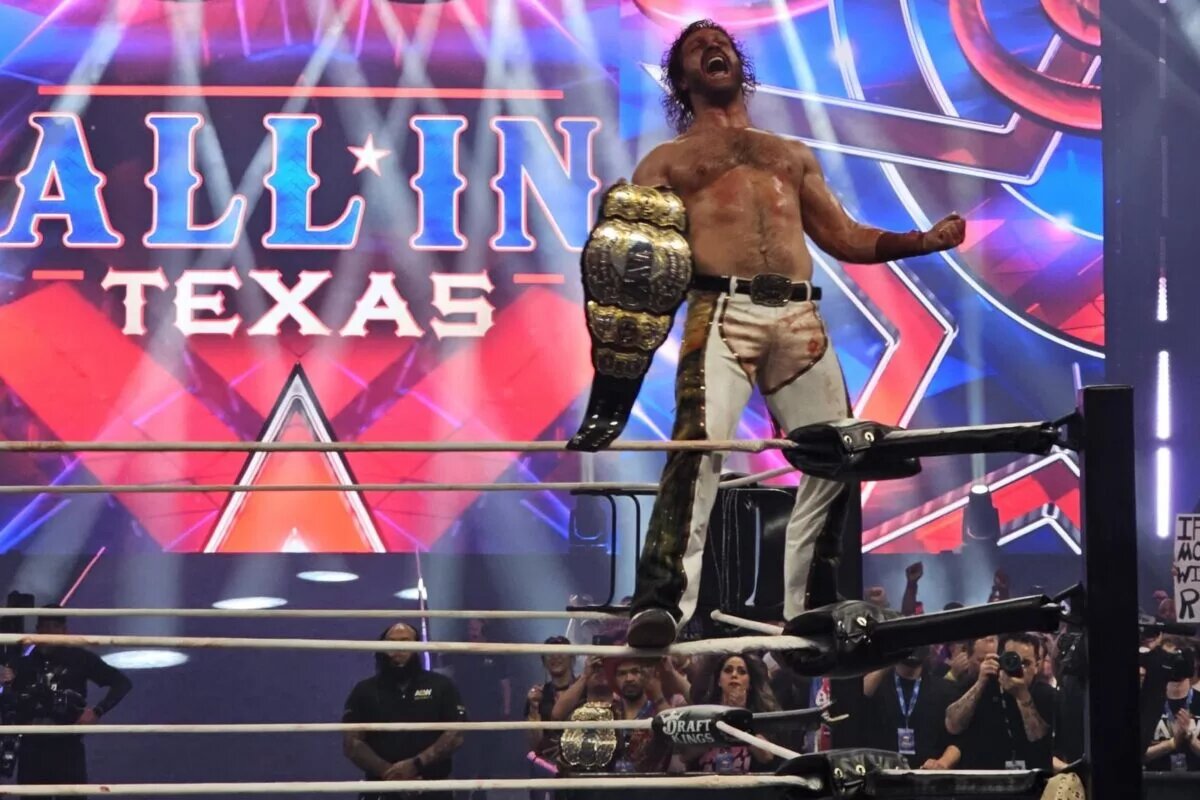

One of the more persistent critiques of All Elite Wrestling is that its storytelling can feel understated. Character shifts are not always announced. Motivations are not always spelled out. Changes often occur gradually rather than through dramatic, highly produced moments.
Yet this restraint is not accidental. Subtle character continuity has become one of AEW’s most consistent creative strengths, allowing wrestlers to evolve without sacrificing narrative logic or audience trust. Rather than relying on frequent reinvention, AEW treats character development as cumulative, shaped by wins, losses, and long-term consequences.
Continuity as a Structural Choice
From its earliest days, AEW established a framework where history matters. Wrestlers are not presented as blank slates entering new storylines. Previous rivalries, alliances, and failures quietly inform present behavior.
This approach contrasts sharply with models that prioritize constant refresh cycles. In AEW, characters change because circumstances change. Losses harden personalities. Success breeds confidence or arrogance. Relationships fracture over time rather than exploding without warning.
The result is a product that rewards attentive viewership and reinforces internal logic.
Jon Moxley and the Evolution of Controlled Chaos
Jon Moxley provides one of the clearest examples of AEW’s continuity-based storytelling. His character has remained consistent since the company’s inception, defined by aggression, unpredictability, and emotional intensity.
What has changed is the context. Early Moxley was positioned as an uncontrollable force disrupting the system. Over time, repeated wars, leadership responsibilities, and physical wear shifted his role. He became less of a lone disruptor and more of a central pillar within AEW’s identity.
Importantly, this shift was never framed as a transformation. There was no reset, no reintroduction. Moxley’s evolution occurred through accumulated experience, allowing his current role to feel earned rather than imposed.
Hangman Page and Long-Term Emotional Continuity
Hangman Adam Page represents perhaps AEW’s most celebrated example of long-term character continuity. His journey from confident prospect to anxious outsider to world champion unfolded over several years.
What made the story effective was consistency. Page’s self-doubt did not disappear after a single victory. His relationships with The Elite evolved naturally, shaped by miscommunication, betrayal, and reconciliation. Even after winning the AEW World Championship, Page’s demeanor reflected growth rather than complete resolution.
AEW resisted the temptation to reinvent Page once he reached the top. Instead, his character carried emotional continuity forward, reinforcing the idea that success does not erase personal struggle.
Samoa Joe and the Power of Historical Credibility
Samoa Joe’s AEW run demonstrates how continuity can extend beyond a single promotion. Rather than reintroducing Joe as a new character, AEW leaned into his established legacy from Ring of Honor, TNA, and WWE.
Joe arrived with credibility intact. His aggression, confidence, and physical dominance required no explanation. AEW trusted its audience to understand who Joe is and why he matters.
By avoiding a dramatic relaunch, AEW allowed Joe to integrate seamlessly into the roster. His dominance felt logical, not manufactured, because it aligned with a character identity built over decades.
Orange Cassidy and Gradual Character Expansion
Orange Cassidy’s evolution highlights AEW’s ability to deepen a character without abandoning its foundation. Initially presented as a novelty with minimal effort, Cassidy gradually revealed increased intensity when pushed beyond his limits.

This shift did not contradict his original persona. Instead, it expanded it. Cassidy still operates on his own terms, but repeated challenges forced him to demonstrate resilience and competitiveness.
AEW allowed this progression to occur through matches rather than declarations. Cassidy’s character became more dimensional while remaining recognizably himself.
Learning From Industry Precedent
Wrestling history offers numerous examples of what happens when continuity is ignored. WCW frequently altered characters without narrative justification, eroding audience investment. TNA Wrestling often reset momentum through abrupt creative shifts, undermining long-term storytelling.
AEW’s restraint appears informed by these lessons. By allowing characters to evolve rather than reset, the promotion preserves narrative credibility even when creative direction changes.
Subtlety as a Long-Term Asset
Subtle character continuity rarely produces immediate shock value. It does not rely on constant turns or dramatic rebranding. Instead, it strengthens the overall storytelling ecosystem.
AEW’s approach allows flexibility without contradiction. Wrestlers can change roles organically because their motivations have been consistently established. When major moments occur, they feel grounded rather than abrupt.
AEW’s commitment to subtle character continuity is one of its most undervalued creative strengths. By prioritizing accumulation over reinvention, the promotion builds characters that feel authentic and durable.
In an industry often driven by spectacle and short-term reaction, AEW’s reliance on continuity represents a deliberate creative choice. Over time, that choice has helped establish a product where character evolution feels logical, earned, and sustainable.
More From LWOS Pro Wrestling
Header photo – WikiMedia Creative Commons – Stay tuned to the Last Word on Pro Wrestling for more on the this and other stories from around the world of wrestling, as they develop. You can always count on LWOPW to be on top of the major news in the wrestling world. As well as to provide you with analysis, previews, videos, interviews, and editorials on the wrestling world. You can catch AEW Dynamite on Wednesday nights at 8 PM ET on TBS. AEW Collision airs Saturday at 8 pm Eastern on TNT. More AEW content is available on their YouTube channel.