
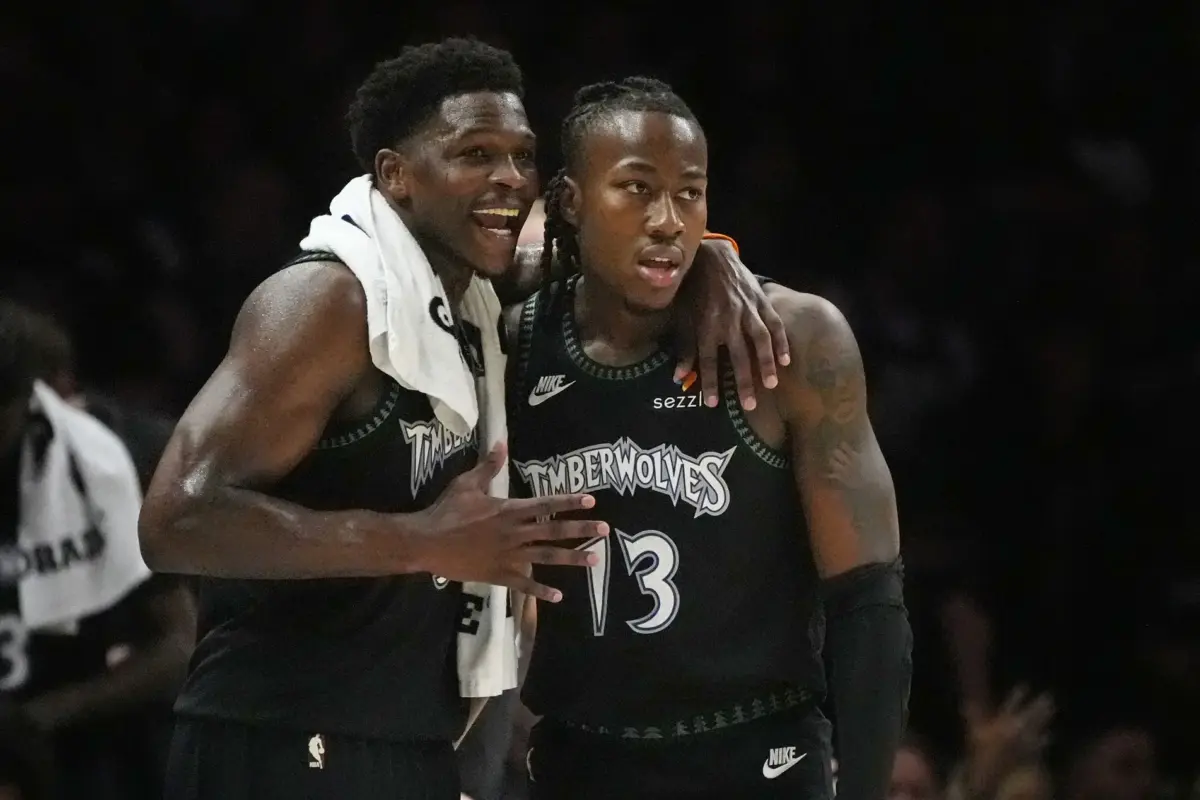

The Minnesota Timberwolves did not spend this offseason looking for a minor adjustment. They spent it searching for a real offensive change around Anthony Edwards, and they found one in LaMelo Ball.
Minnesota acquired Ball and Josh Green from the Charlotte Hornets in a blockbuster trade that sent Naz Reid, a 2033 unprotected first-round pick, three first-round swaps and three second-round picks to Charlotte. The move ends weeks of point guard speculation in Minnesota, but it also answers a bigger question. The Timberwolves have finally given Edwards the kind of full-time playmaking partner he has not had during his rise into franchise-star territory.
LaMelo Ball Gives Anthony Edwards Offensive Help He Needed
The deal is easy to understand from Minnesota’s side because it attacks the clearest weakness on the roster. Edwards has become one of the league’s best scorers, but the Timberwolves have still leaned on him to create too much of their offense from the top of the floor.
Edwards has had to score, initiate sets, break down traps and rescue late possessions, often within the same game. Ball should change that workload immediately.
LaMelo Ball is a Perfect Fit for Anthony Edwards
Minnesota has had solid guards around Edwards before, but it has not had a true long-term creator who can organize the offense at Ball’s level. That is the biggest reason this trade matters.
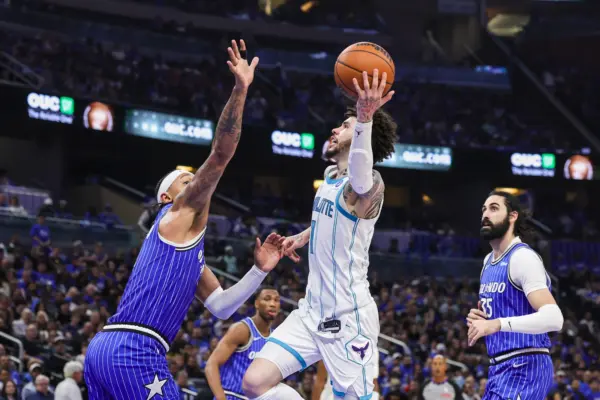
Ball averaged 20.1 points, 7.1 assists and 4.8 rebounds last season while playing 72 games for Charlotte. He is one of the league’s better live-dribble passers, one of its most aggressive transition creators, and a guard who can throw defenses off balance before a possession settles into half-court basketball. That is the type of skill set Minnesota has lacked when opponents load up on Edwards. It’s also the kind of help that could ease his offensive burden.
The simplest version of the fit is this. Ball can start possessions, so Edwards does not have to start every one of them himself.
That should matter in both the regular season and the playoffs. Minnesota’s offense has too often slipped into stretches where Edwards is forced to beat a set defense with difficult shot creation late in the clock, a problem that has been part of the bigger issue hanging over Minnesota’s offense. Ball gives the Timberwolves another player who can push tempo, collapse the first line of defense and create easier looks before the possession becomes a grind. Instead of carrying every possession as the organizer, Edwards can spend more time attacking bent defenses and working as a scorer first.
Minnesota’s Offense Gets Faster, Less Predictable
Ball’s impact goes beyond assist totals; he changes the pace and shape of possessions. Minnesota has often been at its best when Edwards gets downhill in space, but too many possessions start slowly and end with Edwards trying to create something difficult. Ball changes that. He pushes the ball naturally, throws hit-ahead passes in transition, and makes quick reads before the defense gets set.
That gives head coach Chris Finch another offensive engine that can consistently initiate actions and keep the defense reacting, rather than dictating the flow. If Ball settles into this role, the Timberwolves will become harder to load up against.
Defenses will still build game plans around Edwards, but they can no longer treat him as the only true perimeter creator on the floor. That alone lightens the strain on Minnesota’s offense, preventing issues that limited the Wolves in big moments.
Naz Reid’s Departure Is the Price of This Bet
The excitement of the trade is clear, but it comes at a high cost. Naz Reid was an important player, having averaged 13.6 points and 6.2 rebounds this season. He was a skilled big man who could score, stretch the floor and change the game’s momentum. His ability to play both center and power forward gave Minnesota valuable lineup flexibility, which they now need to replace.
This departure fundamentally alters Minnesota’s roster balance. While better equipped to manufacture offense around Edwards, the Timberwolves are simultaneously much thinner in the frontcourt. Consequently, the team is now heavily dependent on Ball delivering the exact playmaking punch that justified paying such a steep price.
New Defensive Test for Edwards
There is real risk here. Ball has missed time previously, and defense is not his calling card. Minnesota is betting that the offensive upside next to Edwards is worth the cost of the asset and the defensive questions.
This trade represents a major philosophical shift. The Timberwolves prioritized offensive creation and versatility over maintaining their previous roster balance. They already knew Edwards could carry the scoring load. Now, they must prove they can build an offense that asks less of him on every possession without taking the ball out of his hands when it matters. Ball gives them the best chance to answer that question, but Minnesota must now prove the gamble was worth it.
© Bruce Kluckhohn-Imagn Images