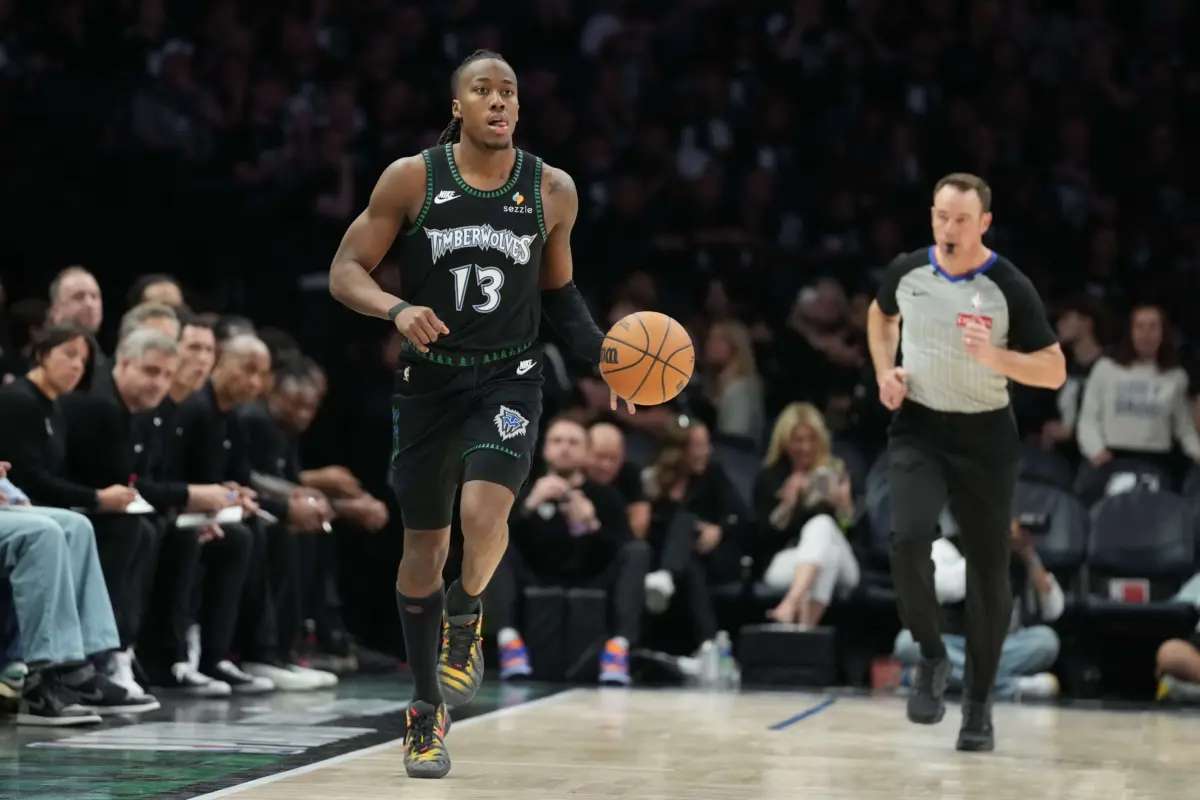

The Minnesota Timberwolves will spend this offseason dealing with louder questions than Ayo Dosunmu’s free agency. Julius Randle’s future, Rudy Gobert’s role and the search for more offense all matter more on the surface. But roster building is often about identifying problems that can quietly become crises by January.
For Minnesota, that problem sits in the backcourt, and it is exactly why getting Dosunmu right this summer matters more than it first appears. If the Wolves misread this decision, they risk creating the same kind of backcourt problem that could follow them well beyond October.
Why the Timberwolves Cannot Afford to Get Ayo Dosunmu’s Decision Wrong This Summer
Guard Shortage Empowers Ayo Dosunmu Now
When the Wolves acquired Dosunmu in February, the move looked like a sensible depth move. He could defend, handle the ball in stretches, and give Chris Finch another playable guard behind the main rotation.
That framing no longer works. Minnesota’s guard room is now older, thinner and much less stable than a contender should be comfortable with entering a season that is supposed to matter.
Donte DiVincenzo’s Injury Changed the Equation
The biggest shift came with Donte DiVincenzo’s torn Achilles. It did not just remove a useful rotation player. It took away one of Minnesota’s few perimeter guards who could defend, shoot and keep the offense connected without needing the ball all the time. More importantly, it created a timeline problem that the Wolves cannot solve by simply hoping for a clean recovery.
Achilles injuries are brutal for guards because so much of their value comes from burst, balance, and quick directional changes. Even if DiVincenzo returns next season, there is no guarantee he looks like himself right away. Minnesota cannot build its backcourt plan around the most optimistic version of that recovery. That uncertainty is what pushes Dosunmu from “nice depth piece” into “player you probably cannot afford to lose.”
If DiVincenzo were healthy, the Wolves could treat Dosunmu as a useful free agent they would like to keep at the right number. That is no longer the case.
Mike Conley’s Age Leaves Minnesota Exposed
The other issue is simpler and just as important. Mike Conley can still settle the offense, organize possessions, and bring the kind of calm a playoff team needs. But he turns 39 before next season, and Minnesota has to plan accordingly. That means lighter minutes, more maintenance, and fewer assumptions that he can carry the full burden of point guard play from October through April.
That is where Dosunmu becomes a practical value rather than a theoretical one. He is younger, more athletic, and better equipped to absorb regular-season wear. He is not a pure organizer like Conley, but he can survive on the ball, get downhill, defend at the point of attack, and keep the pace from dying. For a team already dealing with one aging guard and one injured guard, that matters a lot.
If Dosunmu leaves, the Wolves would be asking a fragile backcourt to hold together under pressure. They would be betting on Conley’s durability at 39 while also hoping DiVincenzo’s recovery moves quickly enough to stabilize the rotation. That is not how serious teams protect themselves.
Minnesota Still Needs Another Playable Guard
The Wolves’ half-court offense remains another reason this decision matters. Too often, possessions still tilt heavily toward Anthony Edwards, creating late-clock situations because Minnesota does not have enough secondary guards who can attack a gap, make the next read, and keep the offense flowing, which is a major part of the bigger Timberwolves problem he has been carrying.
Dosunmu is not some magic fix for all of that. He is not a star creator, and Minnesota still needs more clarity on offense overall. But that is not the standard here. The real question is whether he helps reduce one of the roster’s obvious pressure points. He does.
He can play on or off the ball, defend either guard spot, and function without needing the offense built around him. On a roster where Edwards already carries so much creation responsibility, that kind of flexibility matters. It becomes even more important because Minnesota lacks an easy replacement if Dosunmu walks.
This Is a Front-Office Test, Not Just a Depth Decision
The Wolves are not operating with unlimited financial freedom, which makes this a real front-office decision. Keeping Dosunmu will cost money. But Minnesota also has its Bird rights, which give it more flexibility than it would have trying to replace him on the open market during what already looks like the franchise’s biggest summer of the Edwards era.
That does not mean the Wolves should overpay blindly. It does mean they have a clean opportunity to keep a 26-year-old guard who fits a real need on a roster with obvious backcourt instability. Letting him leave would be about more than just losing a decent rotation player. It would be about creating another hole in the one area of the roster that already feels too vulnerable.
Minnesota can survive paying for a good rotation guard more easily than it can survive creating another roster hole around Edwards. The Wolves have bigger names to sort through this summer. But if they misread Dosunmu’s importance, they could create a roster problem that follows them all season.
Jesse Johnson, Imagn Images via Reuters Connect