
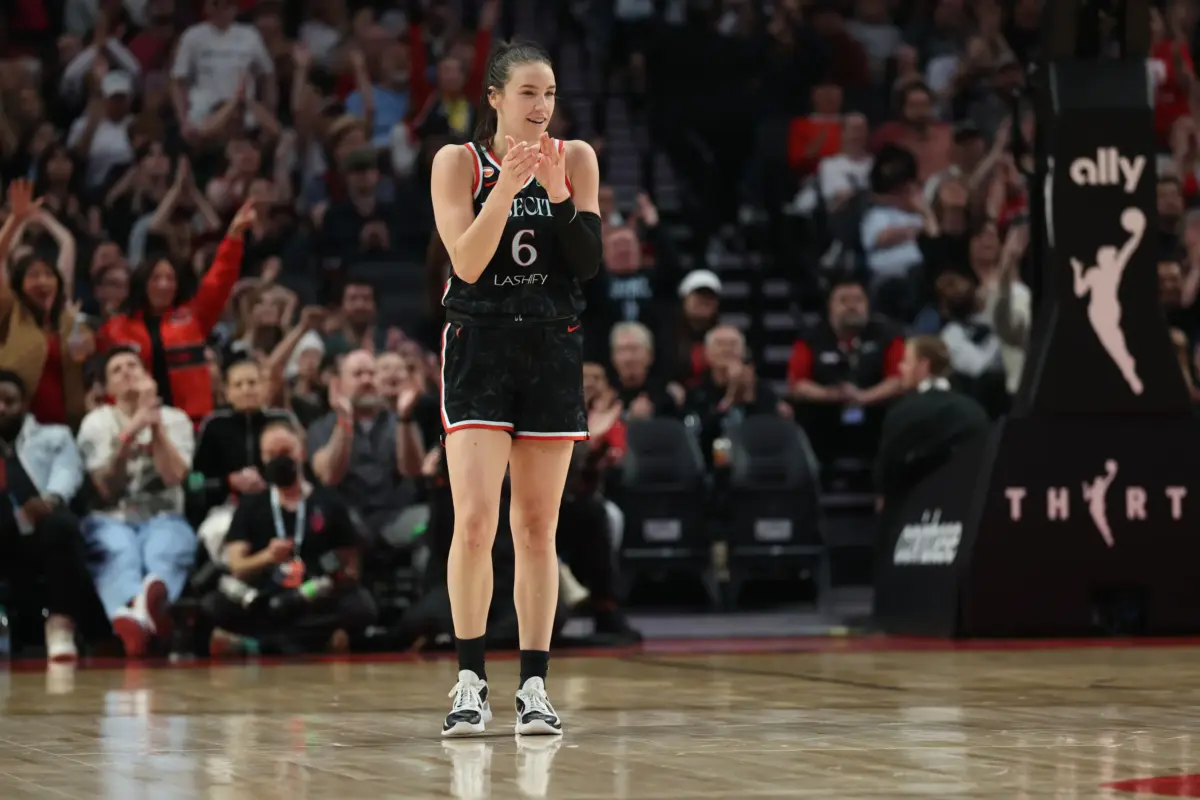
Friday evening WNBA action, and we will see the Phoenix Mercury grapple with the Portland Fire at the Moda Center in Portland, Oregon. The Mercury are off a 72-68 road win over Seattle to move to 3-8 on the year. Portland is off a 95-77 loss at Golden State, but they are still 6-5 in their inaugural season. This is the first-ever meeting between these teams.
Mercury vs Fire: Prediction, Preview, Odds
Current Odds
Portland -3; Over/ Under 163.5
Phoenix Mercury
Phoenix enters this matchup looking to build on a 72–68 road win over Seattle, a much‑needed result that snapped a six‑game slide. The Mercury shot just 38 percent from the field and 14 percent from three, but they won with defense, rebounding, and timely scoring from Kahleah Copper and Natasha Mack. Phoenix sits at 3–8 and averages 82.0 points per game while shooting 41.2 percent from the floor. Their defense has struggled, allowing 86.1 points per game and 46.2 percent shooting, but the effort in Seattle showed improvement. The Mercury will need that same intensity to slow a Portland team that plays well at home.
Offensively, Phoenix leans on Copper at 18.2 points per game, though she’s shooting just 33 percent from the field and 20 percent from deep. Alyssa Thomas adds 15.0 points, 7.0 rebounds, and 7.5 assists per game, giving the Mercury a steady interior presence and a strong playmaking engine. Jovana Nogic has been a needed spark from the perimeter, hitting 50 percent from three on 4.9 attempts per game. Mack has been a major bright spot, averaging 9.8 points and 8.6 rebounds while shooting an elite 71.9 percent. Phoenix needs cleaner shooting and fewer turnovers to keep pace with Portland’s offense.
Defensively, Phoenix must tighten its perimeter coverage. Opponents are hitting 38.4 percent from three and scoring 31.3 field goals per game, both bottom‑tier marks. The Mercury allow 34.5 rebounds per game and struggle with second‑chance points, an issue that nearly cost them in Seattle. Mack’s rim protection and Thomas’ rebounding will be crucial against Portland’s frontcourt. Phoenix also needs better transition defense, as they’ve allowed too many easy runouts during their losing streak. Limiting fouls will matter as well, since opponents are shooting nearly 79 percent at the line.
The keys for Phoenix are straightforward: control the glass, get efficient scoring from Copper, and let Thomas dictate tempo. Nogic’s shooting could swing the game if she finds an early rhythm. Mack must continue her strong interior play, especially against Portland’s physical forwards. If Phoenix keeps turnovers down and forces Portland into contested jumpers, they can stay within striking distance. The Mercury finally has momentum after the Seattle win, and carrying that defensive focus into Portland gives them a real chance to grab another road victory.
Portland Fire
Portland returns home after a 95–77 loss at Golden State, a game where defensive breakdowns and poor rebounding created too many easy looks. The Fire still sit at 6–5 in their first season, an impressive start built on efficient shooting and balanced scoring. Portland averages 83.0 points per game while shooting 45.7 percent from the field and 35.1 percent from three. Their offense ranks in the top six in several categories, but they allow 86.0 points per game and 46.0 percent shooting. The Fire must tighten their rotations and limit second‑chance points to avoid another slow start.
Bridget Carleton is 2nd in scoring with 14.7 points per game while hitting 37.9 percent from deep. Carla Leite leads the team with 15.2 points and 5.2 assists per game, giving the Fire a strong creator who attacks off the dribble. Emily Engstler contributes 9.7 points and 4.3 rebounds with improved perimeter shooting. Megan Gustafson has been a solid force inside, averaging 10.6 points on 62.2 percent shooting. Portland’s offense works best when Carleton and Leite create early rhythm and the supporting cast spaces the floor.
Defensively, Portland must address issues that showed up in the Golden State loss. Opponents shoot 55.3 percent on twos and grab 31.7 rebounds per game, both problem areas for a team that plays small at times. The Fire also allows 22.0 assists per game, which reflects slow closeouts and late help rotations. Engstler and Carleton must set the tone on the perimeter, while Gustafson and Nyadiew Puoch need to protect the paint without fouling. Portland’s defense has been inconsistent, but it improves when they communicate and limit transition chances.
The keys for Portland are clear: win the rebounding battle, control Phoenix’s drives, and keep turnovers manageable. Leite must push tempo without forcing plays, and Carleton needs to find early scoring to stretch the Mercury defense. Gustafson’s efficiency could be a major factor against Phoenix’s interior rotation. If Portland moves the ball, hits open threes, and avoids long scoring droughts, they can bounce back at home and stay above .500 in their debut season.
Predictions
Portland -3 fits the flow of this matchup because the gap in form between these teams has widened over the past two weeks. Phoenix continues to struggle with consistency, and their offense has rarely traveled well during this stretch. Portland, meanwhile, has played with confidence and pace, and their recent wins have shown a team comfortable dictating tempo for long stretches. The home crowd has also given them a noticeable lift, especially in tight moments. With Portland trending upward and Phoenix still searching for stability, the matchup leans toward the home side, creating separation and covering the short number.
The Over 163.5 also matches the way this game should unfold. Portland has pushed tempo in most of its recent wins, and its spacing has created cleaner looks earlier in possessions. Phoenix, despite its struggles, still plays fast enough to generate scoring bursts, and its defensive lapses often lead to quick points the other way. Both teams have shown a willingness to shoot early in the clock, and neither has consistently slowed games down when trailing. With pace likely elevated and both offenses capable of streaky runs, the total has room to climb.
The combination of Portland’s momentum and Phoenix’s tendency to get pulled into faster games makes the side‑and‑total pairing work well together. Portland should control tempo, and Phoenix’s defensive issues often lead to extended scoring stretches. If the game opens up early, both teams will lean into transition chances and quicker possessions. That style favors Portland on the spread and pushes the scoring toward the Over, creating a natural alignment between both plays.
Final Predictions: Portland -3 & Over 163.5
Featured Image: Jaime Valdez-Imagn Images