

The Miami Heat enter the 2026 NBA Draft in a familiar position: competitive enough to contend, but still missing key pieces needed to close the gap with the league’s elite. The front office, led by team president Pat Riley, faces a clear challenge: balancing immediate competitiveness with long-term roster growth in a rapidly evolving NBA.
Miami’s approach has never been about chasing flash. The organization prioritizes fit, defensive reliability, and developmental upside. That philosophy has produced valuable rotation players, but it has also left the Heat without the top-end offensive creation needed to consistently compete at the highest level.
In today’s NBA, that gap is harder to ignore. Sustained contention requires both internal development and continuous roster upgrades. The 2026 NBA Draft will not define Miami’s future, but it will reveal how they plan to build it.
Miami Heat 2026 NBA Draft: Examining Strategy and Team Needs
How the 2026 NBA Draft Fits Into the Modern NBA Landscape
Miami has long built its identity around development, discipline, and identifying undervalued talent, consistently finding production outside the lottery. That philosophy hasn’t changed, but the league around it has.
Contenders like the Boston Celtics, Denver Nuggets, and Oklahoma City Thunder pair internal development with constant roster upgrades through the draft, trades, or both. Sustained success now requires continuous talent addition.
For Miami, that raises the stakes. Every pick must either contribute within the system or increase long-term roster value.
What Miami Actually Needs From the Draft
The draft likely will not solve everything at once, but adding even one impactful creator or high-upside talent could meaningfully shift Miami’s long-term outlook, all while giving the franchise a potential cornerstone to develop over time.
Before identifying prospects, it’s important to define what the Heat are missing. Miami’s needs center on shot creation, wing versatility, shooting depth, and adding a high-end offensive engine to elevate playoff scoring. Here’s a breakdown of those four areas:
1. Shot creation beyond the primary options
Miami still struggles to generate consistent offense when possessions break down. A guard or wing who can self-create without relying on structure is a priority.
2. Wing size and versatility
Modern playoff basketball demands defenders who can switch across positions while still spacing the floor.
3. Reliable shooting depth
Perimeter inconsistency has repeatedly shown up in high-pressure postseason series.
4. A player with star factor
At the core of Miami’s identity is All-Star center and team captain Bam Adebayo, an elite two-way center who anchors the defense and facilitates the offense. The roster still lacks a high-level perimeter scorer who can consistently create offense and bend defenses in late-game playoff settings. The ideal addition is a co-star who can ease that burden when games slow down.
While not every pick becomes a star, the Heat need at least one high-upside developmental swing with the potential to grow into a top-scoring option. In the playoffs, that level of creation becomes essential when defenses tighten, and possessions become harder to generate.
Prospect Archetypes That Fit the Heat’s System
Rather than targeting specific names too early in the cycle, Miami’s draft strategy typically involves drafting players by archetype.
Two-Way Wings
Defensive versatility, high motor, and developing offensive skills sets define this group.
- Switchable defense across multiple positions
- High motor and discipline
- Discipline within team schemes
- Developing offensive skill sets
These players may not dominate statistically, but they consistently earn trust through effort, discipline, and adaptability. In Miami’s system, they often exceed expectations over time.
Combo Guards With Creation Ability
Miami has consistently prioritized secondary creators who can generate offense outside of structured sets.
- Shot creation off the dribble
- Pick-and-roll comfort
- Developing pull-up shooting
- Competitive effort on defense
The team doesn’t necessarily need a pure point guard, but rather someone who can manipulate a defense and create advantages.
Mobile Stretch Bigs
The Heat may consider frontcourt players who can protect the rim, move defensively, space the floor, and offer some level of shooting threat. These players add lineup flexibility and matchup coverage.
- Rim protection
- Ability to switch or play multiple coverages
- Pick-and-pop or floor-spacing potential
These prospects often take time to develop but can become valuable rotation anchors in playoff environments.
Draft vs Development: Miami’s Long-Term Balance
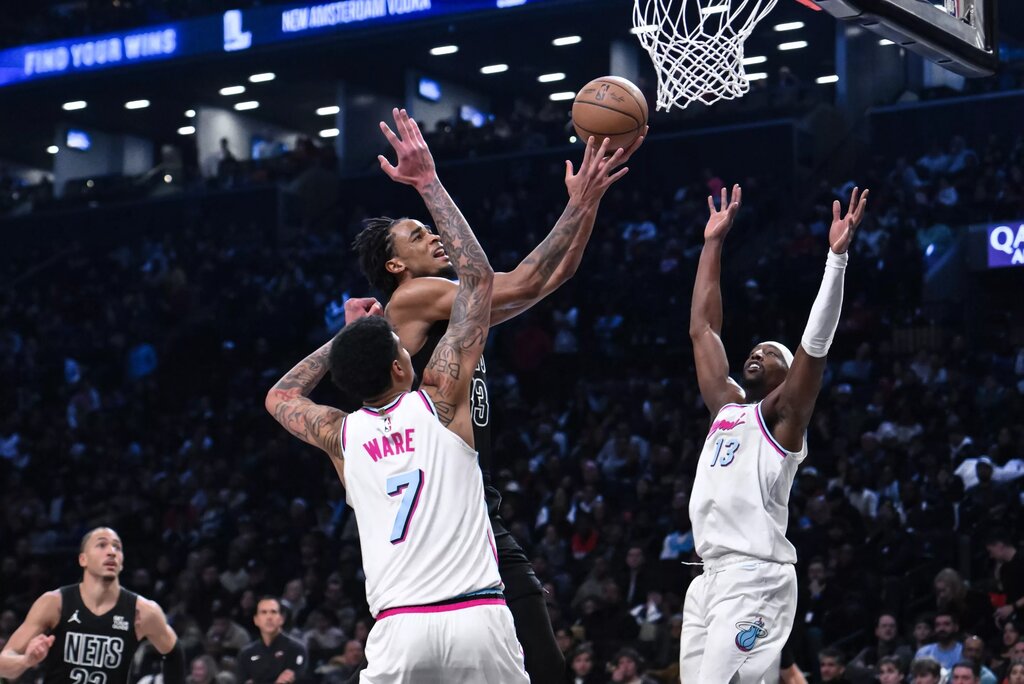
Miami’s development system is one of its greatest strengths, but it can create the impression that incremental improvement is enough. Because the Heat rarely draft high, fit has traditionally outweighed pure upside. That approach has worked, but even non-star picks must support top-end talent rather than replace it.
The Heat have turned mid-level picks into contributors, but that success can also mask the need for higher-end talent. After a mediocre 2025–26 season, Miami operates with a smaller margin for error, making every selection more important. Even modest contributors can improve long-term roster flexibility.
This is where Miami’s edge still matters. The ability to develop overlooked players remains a real advantage in:
- Filling rotation gaps
- Easing pressure on primary scorers
- Creating tradable assets
Development remains essential, but it must be paired with higher-level talent acquisition to stay in true contention. The Heat are not rebuilding, but missed opportunities now carry a greater cost.
Ultimately, the challenge is balance. In today’s NBA, depth alone is not enough for championship teams; it only works when it supports top-end talent. Miami must continue developing players while also maintaining a steady pipeline of higher-end talent to remain competitive at the highest level.
What the 2026 NBA Draft Reveals About Miami: Evolve or Stand Still
The 2026 Draft will not define Miami’s offseason, but it will clarify its direction. The Heat will likely continue targeting disciplined, defensive, system-ready players who fit their structure. That approach has worked, but it has also left them short of elite offensive firepower.
Today’s NBA rewards teams that pair internal development with consistent roster upgrades, using every avenue to strengthen their core. The draft remains one of the most reliable ways to do that. Who Miami selects will reveal whether they are evolving their roster-building approach or sticking with the same formula.
One thing is certain: running it back will not be enough to close the gap.
© Sam Navarro-Imagn Images