This week, the NBA will announce the winners for several of its most prestigious awards.
Before that, four Last Word on Sports authors will try to predict which of the league’s luminaries will be adding a trophy to their collection. Bearing that in mind, several NBA Award finalists have already been revealed. Even with a nudge in the right direction though, will any of our roundtable writers guess right?
LWOS Roundtable: Who’ll Take Home These NBA Awards?
NBA Rookie of the Year
Cooper Flagg, Dallas Mavericks
Harry Smith: Dallas Mavericks point-forward Cooper Flagg isn’t just the 2025-26 NBA Rookie of the Year; he’s arguably the rookie of the century. His historic season –which led to averages of 21.0 points, 6.7 rebounds, and 4.5 assists per game —stunned the league. He took the floor with a veteran presence and put NBA stalwarts on a leash.
Flagg’s intense defense is only complemented by his immense IQ. He reads opposition schemes like picture books. Among his fellow rookies, his points (1st), rebounds (3rd) and assists (2nd) averages are ranked top-three. He became the first teenager to breach 50 points in a single game, all while having three other performances north of 40 points. Flagg is also the first rookie since Michael Jordan to lead his team in points, rebounds and assist totals (the latter is shared with fellow rookie and teammate Ryan Nembhard). Achieving at this high a level, while being guarded by some of the fiercest defenders in the league as a first option, is absurd.
History must be recognized as it’s happening. This kid is different.
NBA Defensive Player of the Year
Victor Wembanyama, San Antonio Spurs
Quenton S. Albertie: There are several elite defenders scattered across the NBA, even in an era that clearly favors offensive talents. Out of those players, three have been selected as Defensive Player of the Year finalists for the 2025-26 season: San Antonio Spurs forward-center Victor Wembanyama, Detroit Pistons swingman Ausar Thompson and Oklahoma City Thunder forward-center Chet Holmgren. Truth be told though, even if the identity of that trio hadn’t been revealed, there’s really only one player that the award should go to.
While Thompson finished the season as the steals leader, and Holmgren anchored the league’s top defense, neither changes the game quite like Wembanyama at that end. A huge part of this is out of their control, with Wembanyama’s extraordinary length giving him a unique advantage. In fact, he’s led the league in blocks per game every season since being drafted.
However, Wembanyama’s height isn’t the only reason that he’s absurdly dominant at that end. He put in work to mirror the movement of would-be scorers on the perimeter and anticipate the timing of their attempts. He understands the importance of closing a defensive possession with a rebound. Perhaps just as importantly, he genuinely cares about making his presence felt defensively.
Saying Wembanyama’s generational is an undersell. What we’re witnessing is the beginning of a once-in-a-lifetime career.
NBA Sixth Man of the Year
Keldon Johnson, San Antonio Spurs
Daniel Benjamin: This season, Sixth Man of the Year is a three-player race between Denver Nuggets wing Tim Hardaway Jr., Miami Heat forward Jaime Jaquez Jr., and Spurs forward Keldon Johnson. Johnson is the prohibitive favorite and should win the John Havlicek Trophy, with Jaquez likely being second.
Johnson was highly efficient this season and is a major reason why the Spurs earned the second seed in the Western Conference. Known for being a physical scorer and solid rebounder, he averaged 13.2 points and 5.2 rebounds (1.7 offensive) in 2025-26. He reached double-figures in 58 of his appearances, topping the 20-point mark 13 times. He also produced five double-doubles. The seven-year veteran also made 1.2 threes a game while shooting a career-best 51.9% from the field 36.3% from the 3-point line.
Appearing in all 82 games, all off the bench, Johnson anchored a San Antonio second unit that ranked first in the NBA in field goal percent (49.6) and ninth in scoring (41.7 points per game). The Spurs outscored their opponents by 3.9 points when he was on the floor.
NBA Most Improved Player
Nickeil Alexander-Walker, Atlanta Hawks
Albertie: When Nickeil Alexander-Walker signed with the Atlanta Hawks, he probably didn’t know he was going to score this much.
In truth, his role change was initially borne out of simple necessity. For all of his defensive mastery, Dyson Daniels had regressed offensively. Trae Young not only couldn’t find the bottom of the net, he couldn’t stay off the injury report. This thrust Alexander-Walker into a volume scoring role and, for the first time in his career, he was consistently relied upon as the first or second scoring option. This in spite of the fact that Jalen Johnson became the face of the franchise after Young was traded to the Washington Wizards.
To be fair, his fellow MIP finalists had strong regular season campaigns as well. However, neither Pistons center Jalen Duren nor Portland Trail Blazers forward Deni Avdija doubled their previous season’s scoring average. Averaging 20.8 points per game in 2025-26, Alexander-Walker did that and more.
NBA Most Valuable Player
Shai Gilgeous-Alexander, Oklahoma City Thunder
Albertie: It’s a travesty, really. Somehow, Pistons point guard Cade Cunningham nor Boston Celtics wing Jaylen Brown were 2025-26 NBA MVP Award finalists. How often does a player that led his team to the best record in the conference not end up in the top-three in NBA MVP voting though? What about a star on a team that played 66 games without their ‘top dog’ but ended up second in their conference?
Clearly, NBA voters have made a merit-based award a popularity contest. Having Wembanyama and Denver Nuggets center Nikola Jokic among the finalists also lends credence to the belief that the voters have a Euro fetish. After all, Wembanyama came off the bench in nine games this season (and technically missed the 65-game cut). Despite finishing the season with a 12-game win streak, Jokic’s Nuggets finished the season behind Wembanyma’s Spurs and Shai Gilgeous-Alexander‘s Oklahoma City Thunder. How? Because Denver spent much of the season trying to catch up to the West’s true apex predator, similar to Luka Doncic and the Los Angeles Lakers.
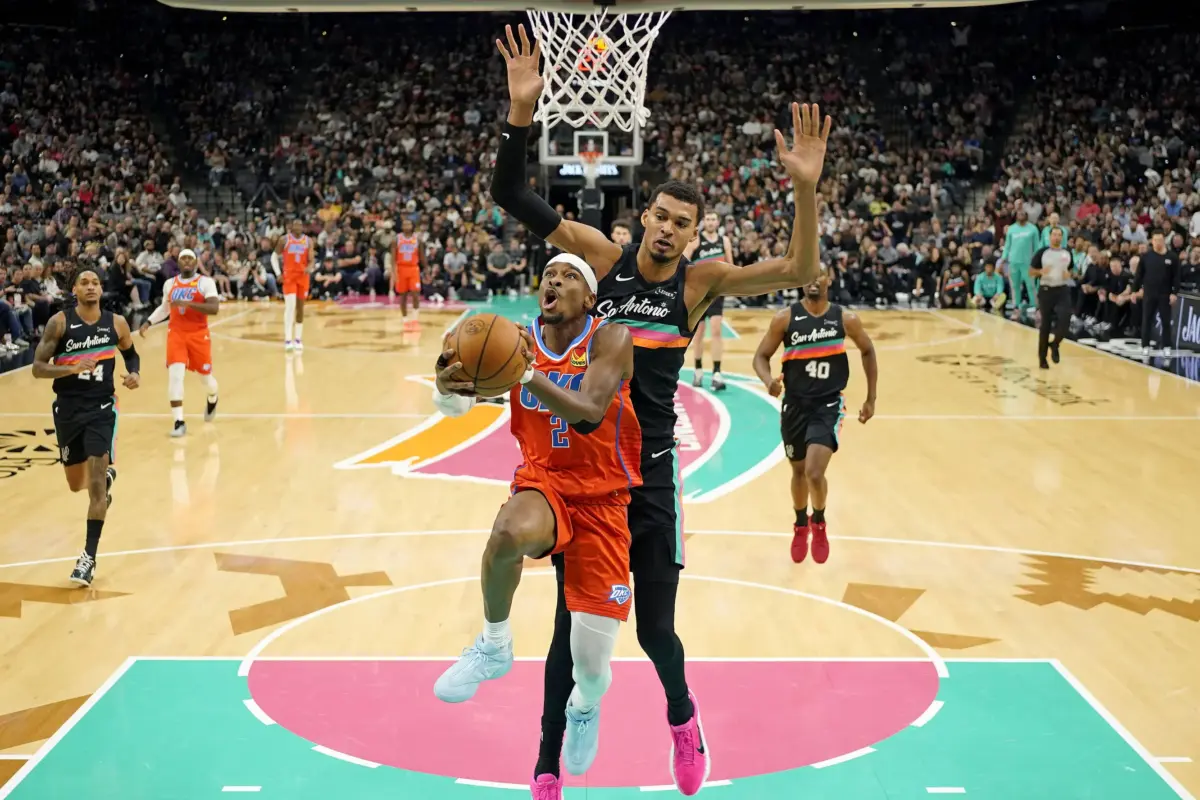
In any case, this award should belong to Gilgeous-Alexander. He led the Thunder to the best record (64-18) in the NBA. With OKC playing 31 starting lineups in 2025-26, he was the constant. So much so that he holds the league record for the most consecutive regular season games with 20+ points (140). Of course, he draws criticism as easily as shooting fouls, and the two aren’t unrelated. But as they say, ‘don’t hate the player, hate the game.’ This season, the 2024-25 NBA MVP averaged 31.1 points, 6.6 assists, 4.3 rebounds and 1.4 steals per game. Notably, OKC went 7-1 against the Nuggets and Lakers.
NBA Coach of the Year
Joe Mazzulla, Boston Celtics
Frederick Okocha: The NBA Coach of the Year (COTY) award is one of the more subjective end-of-season honors. An award given since the 1963-64 season, it’s intended to recognize a head coach who does more with what he has. The 100-member voting panel can nominate any of the league’s 30 head coaches. In fact, six coaches received at least one vote in 2024-25. This season, I expect around eight coaches to get a vote.
While this award could go to a coach of the team with the best record, that happens rarely in NBA history. To that point, the Oklahoma City Thunder’s Mark Daigneault has a strong case. However, it remains to be seen if he will get many votes. Since winning COTY in 2023-24, he’s won 132 games but could still go relatively unrecognized after two dominant seasons. To many, the favorites for the 2025-26 Coach of the Year award are Detroit Pistons head coach JB Bickerstaff and Boston Celtics head coach Joe Mazzulla.
The runner-up to Cleveland Cavaliers head coach Kenny Atkinson in 2024-25, Bickerstaff is in danger of finishing second in back-to-back seasons. He transformed Detroit into a 60-win team despite missing Cunningham down the stretch. Yet, while dealing with Jayson Tatum’s 66-game absence, Mazzulla won 56 games.
My verdict? While Bickerstaff has done a tremendous job, the award should go to Mazzulla.
NBA Executive of the Year
Onsi Saleh, Atlanta Hawks
Albertie: The past winners for the NBA Executive of the Year award have typically done at least one of the following:
- They built a powerful roster equipped to excel in the regular season and make noise in the postseason
- In terms of their win-loss record, they turned around a previously woebegone franchise
- They amassed either an impressive collection of draft picks or acquired one that was particularly appealing
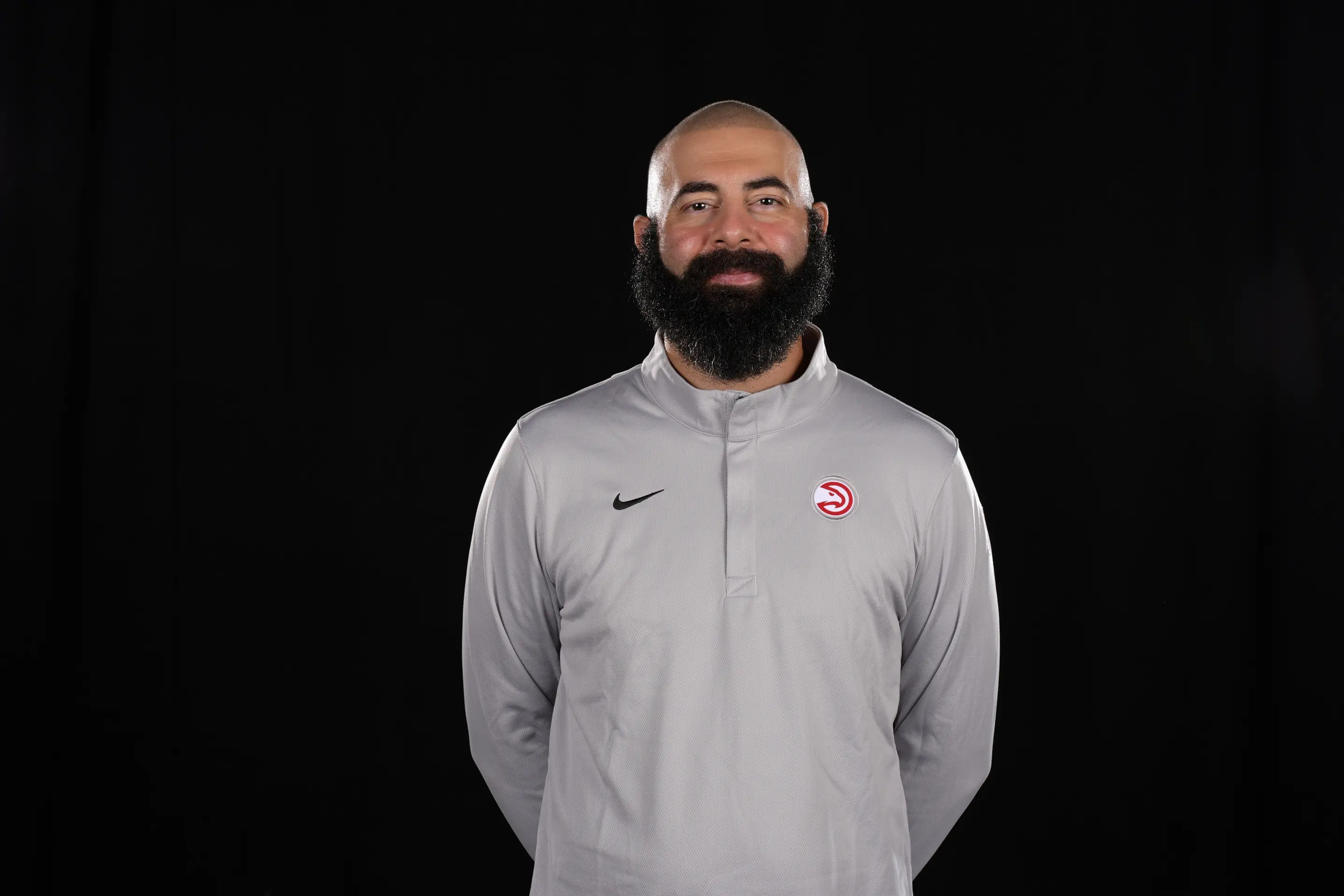
Based on that informal criteria, the best candidate this season is Hawks general manager Onsi Saleh.
Once on the up-and-up, injuries and internal tension led Atlanta down a slippery slope. What Saleh did was provide stability to the franchise through calculated moves. In the offseason, he signed Alexander-Walker and Kristaps Porzingis, addressing the Hawks’ defensive and floor-spacing needs. He also completed a draft night deal that brought a top-10 projected and unprotected 2026 first-round pick to Atlanta.
In January, Saleh got even bolder. After waffling on such a move for a couple of years, the Hawks traded an injured Young. Of course, moving off of a four-time All-Star isn’t often the catalyst for a midseason turnaround. However, it turned out to be just that for Atlanta, “the third team in NBA history to be 4+ games under .500 at the break and finish the season 10+ games over .500” (h/t Hawks PR on X). With that in mind, Johnson isn’t as polished or crafty as Young but his archetype is easier to build around.
When Porzingis’s health proved to be too big of a question, Saleh traded him too. No, Jonathan Kuminga isn’t absolutely bound to be the better player. Nonetheless, it’s another move that sets the Hawks up to have a bright future.
© Scott Wachter-Imagn Images