The Atlantic Coast Conference (ACC) has long struggled to earn the respect it deserves from media, bracketologists, and analytics in men’s basketball. While historically a premier league, the ACC has failed to match the standing of the Big Ten, Big 12, and SEC. Yet every college basketball season, the ACC finds itself at a crossroads. Real signs point to this one shaping up differently.
Non-conference results roll in, and national rankings shift. A handful of marquee matchups set the tone. From there, a narrative takes hold. The league is either praised as elite or criticized as inconsistent, and that verdict tends to stick regardless of what happens next.
Yet this surface-level approach consistently undervalues what is actually happening inside the conference. The University of Miami and other underestimated basketball programs are now forcing people to pay attention. Judging a conference on early results rarely tells the full picture. Roster development, lineup adjustments, and improved chemistry can transform a team from November to March, and early conclusions about the ACC often look incomplete by postseason play.
The teams written off early are suddenly the ones no one wants to face. Once the NCAA Tournament tips off, the ACC consistently silences critics. Final Four and Elite Eight appearances during the league’s toughest seasons prove the conference can compete with anyone when the stakes are highest. ACC success has always come down to execution, not reputation. Underestimated programs are proving the league deserves far more respect than the narrative gives it.
Stop the ACC Narrative: Underrated Teams Deserve More Respect
ACC Perception vs Reality
The criticism directed at the ACC has not come out of nowhere. The conference has produced championship programs, Hall of Fame coaches, and iconic moments in college basketball history. When the league’s depth looks thin, it gets measured against that standard. Between 2022 and 2025, the ACC managed only four to five NCAA Tournament bids, hitting its lowest total in decades. Multiple programs finished outside the top 150 in NET ratings and KenPom, well below other power conferences.
The coaching losses hit the conference hard. Former head coaches Mike Krzyzewski, Roy Williams, Jim Boeheim, Tony Bennett, and Jim Larrañaga all stepped away within a short window, whether through retirement or resignation. These were not just coaches. They were program builders, recruiters, and the faces of the league for decades. Their exits created a leadership void at the worst possible time.
On top of that, the ACC has fallen behind the SEC and Big Ten in NIL investment, making it harder to compete for top talent in a landscape where money and opportunity drive decisions. The foundation that once made this league untouchable has been quietly eroding, and the rest of college basketball has taken notice.
Miami Hurricanes: A Case Study in Defying Expectations
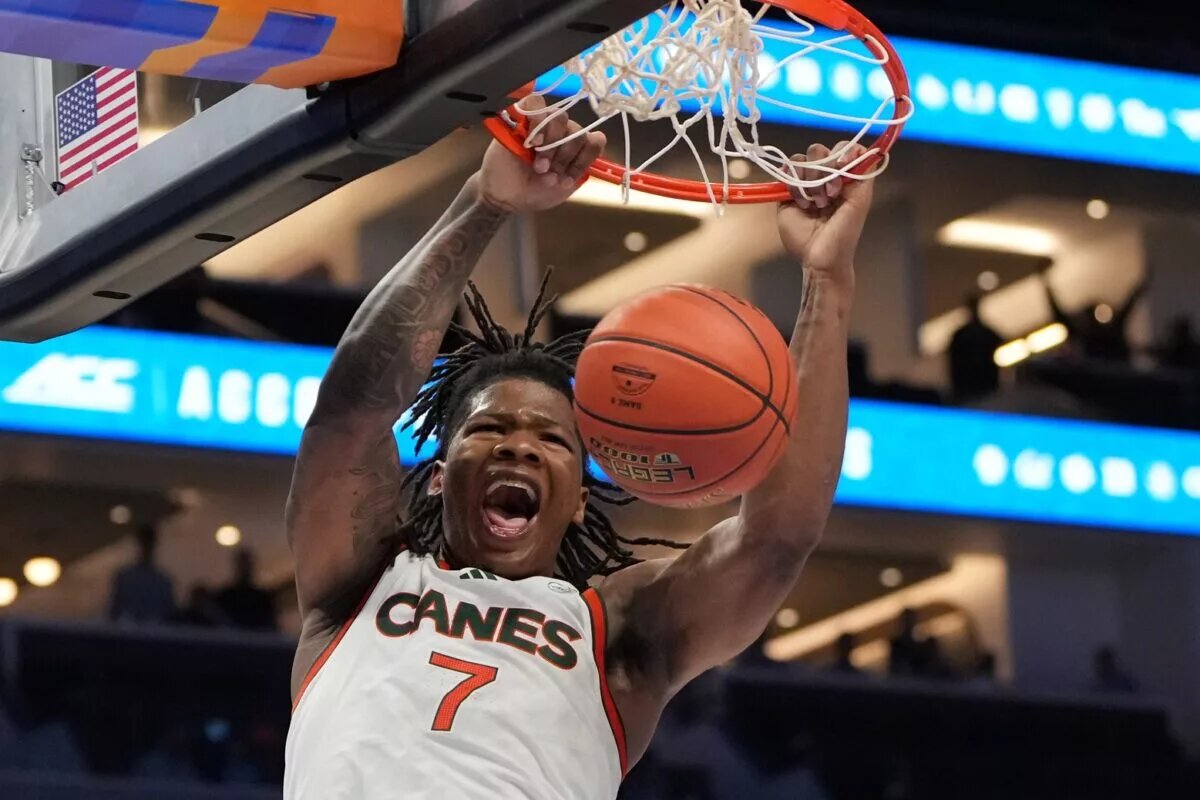
If there is one ACC program that captures this shift, it is the Miami Hurricanes. While the rest of the conference has battled perception issues, Miami has taken a different approach, and the results speak for themselves. As a Power Five program with national recognition, UM built its identity around experienced guards, efficient offense, and adaptability. Reputation has nothing to do with their results. Execution does.
Ball movement, spacing, and smart decisions create quality looks while keeping mistakes low. That brand of system-first basketball is hard to stop when the Hurricanes play their best, and it holds up across different opponents and settings.
Rather than chasing five-star recruiting classes, Miami built a roster around fit, depth, and cohesion. Those qualities show up in the win column every night. The Virginia Tech Hokies and Wake Forest Demon Deacons have followed a similar path, using the portal to rebuild around system fit rather than name value. The Canes are not just competing. They are raising the bar for what people expect from a team of their caliber.
How the Transfer Portal and NIL Are Reshaping ACC Basketball
The transfer portal brought a level of change that did not exist in college basketball a decade ago. A program that looks overmatched in December can look completely different in February once roles get set and chemistry builds. Teams that value fit and growth over recruiting rankings beat preseason projections regularly, and that trend keeps picking up speed.
Success in today’s ACC is no longer tied to recruiting stars or preseason rankings. Rosters need to mesh, players need to buy into the system, and coaches need to put people in spots to succeed when the games matter most. The Hurricanes are one example.
The North Carolina State Wolfpack used the portal to land key transfers and make an improbable Final Four run. The Louisville Cardinals have gone all-in on the portal, landing top-ranked transfers and rebuilding into a legitimate national contender. Both programs show what becomes possible when the right pieces come together.
Far From Afterthoughts: Stronger Than Most Realize
Miami’s story is part of something bigger happening across the conference. The transfer portal and NIL have made roster building more dynamic than at any point in college basketball history, fundamentally changing what it means to be an underdog. A slow start no longer defines a team’s ceiling, and squads that find the right pieces and build chemistry over a season can outperform any preseason projection. This pattern repeats across the ACC every season, with different teams stepping up each year.
Plenty of ACC teams fly under the radar nationally. Yet week after week, they show up and compete with squads that get far more attention. These teams may not climb into the top 25, but they have the coaching, depth, and toughness to beat anyone on a given night. That quiet danger is easy to miss until March Madness arrives. When the bracket gets set, those teams start knocking out favorites and turning heads.
When a conference has multiple teams capable of beating high-seeded opponents, it runs stronger than most people give it credit for. The ACC has more quietly dangerous squads than most admit, and that gets dismissed far too often. The conventional wisdom paints the league as one-dimensional, but what happens on the court tells a completely different story.
The ACC Narrative Deserves a Harder Look

The criticism keeps coming back because of what this conference used to be. When a league has been home to champions, legendary coaches, and decades of Final Four runs, any sign of weakness gets noticed quickly. The ACC is not measured against other conferences. It gets judged against its own history, and that is a much harder standard to live up to.
The most accurate way to evaluate the ACC is as a group of individual programs rather than one collective story. Conference trends offer context but stop short of showing how a specific program grows or performs under pressure. Teams like Miami prove that strong, competitive basketball still exists here. The NBA tells the same story every season, where teams without big names regularly outperform expectations through depth, chemistry, and system play. At every level, underdog expectations say more about the observer than the team proving them wrong.
The narrative is not going away, but it deserves a closer look. Strength in this league spreads from top to bottom, not just among the elite. Experience, adaptability, and consistency matter more than perception over a full season. Where a team sits in the rankings matters far less than how it performs when the games count. In the end, what a team does between the lines will always matter more than the label it carried into the season.
© Bob Donnan-Imagn Images