
Minnesota has started to feel like the place where other teams finish building stars. Kevin Garnett, Kevin Love, Andrew Wiggins, and Karl-Anthony Towns all left and found a ring somewhere else. That does not create magic. It creates a front-office problem that keeps recurring.
The Timberwolves are not cursed in any literal sense. They are just too familiar with the same ending. A star leaves, a contender absorbs the value, and the trophy follows the new address. That sequence keeps turning Minnesota into the warning label.
How the Timberwolves Remain Champion Exporter After Dumping Kevin Garnett And Karl Anthony Towns
Kevin Garnett Set The First Standard
Garnett left the Minnesota Timberwolves in 2007. He was their key defender and leader. When he joined the Boston Celtics, they didn’t just get a great scorer; they also got a player who helped organize their plays and set high standards. This is why Garnett’s departure still affects the Timberwolves today. The result was tough for Minnesota. Garnett won an NBA title with the Celtics in his first season away, turning Minnesota’s loss into Boston’s success.
This exit broke the team’s identity. Minnesota lost the player who made the roster make sense. Boston gained an anchor who made difficult games manageable. After that trade, the Wolves were not dealing with a simple transaction. They faced a structural collapse that triggered a 13-year playoff drought.
A team’s structure lasts longer than its memory. Fans remember the exciting moments, but team managers have to deal with missing players. Garnett’s quick championship win highlighted a tough truth: losing one key player can harm a team’s future. This lesson still holds today.
Kevin Love And Andrew Wiggins Made The Pattern Portable
Love showed that value changes when the role changes. Minnesota needed him to carry the offense. Cleveland only needed him to stretch the floor beside better stars. That smaller ask made his championship ring easier to reach, proving Minnesota’s burden was the real problem.
Wiggins sharpened this exact point soon after. Golden State wanted defense, pace, and reliable wing length, not a franchise savior. He supplied those exact needs, and a championship followed in 2022. His success left Minnesota with a harsh reminder that team fit outweighs individual reputation.
This shared success is what made the pattern feel less like a coincidence. These were different players in different eras. Yet, the common thread was a new setting that made each player easier to use. Minnesota kept paying for individual stars, while rival teams kept winning by finding the right fit.
Karl-Anthony Towns Kept The Sting Alive
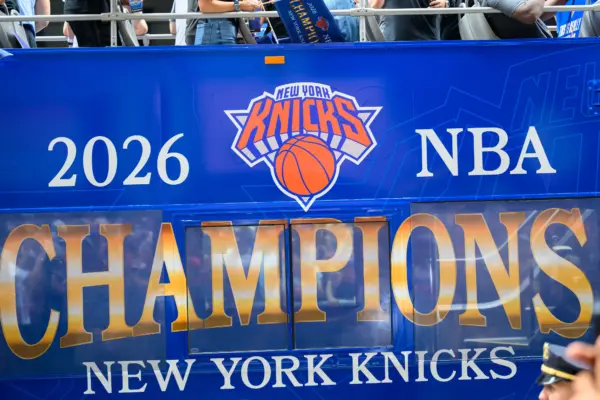
Towns made the latest chapter feel current instead of historical. New York wanted scoring gravity and frontcourt size, and the move gave it both. Once he arrived there, the Knicks could build cleaner spacing and easier possessions. Minnesota lost another player who bent coverages.
The Wolves then had to live with the contrast. They finished 49-33 in the 2025-26 season, which was strong enough to matter. It still was not enough to end the storyline. Towns winning the 2026 title in New York only sharpened the same old ache.
That kind of outcome is why the joke survives. Minnesota did not lose one star and then recover. It kept seeing the next version of that star help somebody else finish the job. Repetition is what turns an anecdote into a roster lesson. The concern grows when a team has an incomplete offense.
The Cap Sheet Tightens The Trap
The current roster explains why the lesson feels expensive now. Anthony Edwards is already tied to a massive extension. Rudy Gobert is due $36.5 million next season. Julius Randle sits at $33.3 million.
Jaden McDaniels is at $26.2 million. Naz Reid is at $25 million. That money buys quality, but it also narrows the room for mistakes. A team with this much payroll cannot afford to be wrong often.
That is why every decision now carries a ripple effect. One contract choice can squeeze the next trade. One fit issue can force the next compromise. Minnesota is not short on talent. It is short on margin, and margin is what contenders usually spend. The larger question remains its identity choice, because expensive rosters rarely survive without one.
The Front Office Has To Beat The Pattern
The hardest part for Minnesota is that the warning keeps getting louder. The franchise has already seen what happens when a star leaves and finds the perfect fit elsewhere. It has also been seen that the next team usually gets the cleaner version of the player.
That is what makes the current moment so delicate. The Wolves do not need to fear talent. They need to fear the wrong version of timing. If the roster keeps drifting toward an expensive balance instead of a clear identity, another city will keep collecting the payoff. This summer feels very crucial, perhaps more than any offseason seen in years.
So the lesson is not mystical. It is managerial. Minnesota keeps producing stars, then watching the best outcome arrive after the exit. Until that changes, every departure will feel like another sentence in the same old story.
Kyle Terada, USA TODAY Sports via Reuters Connect