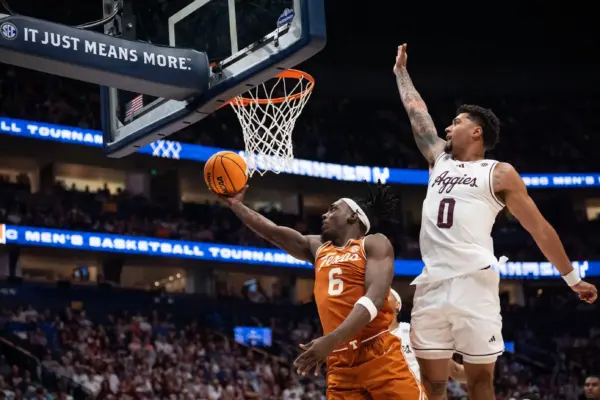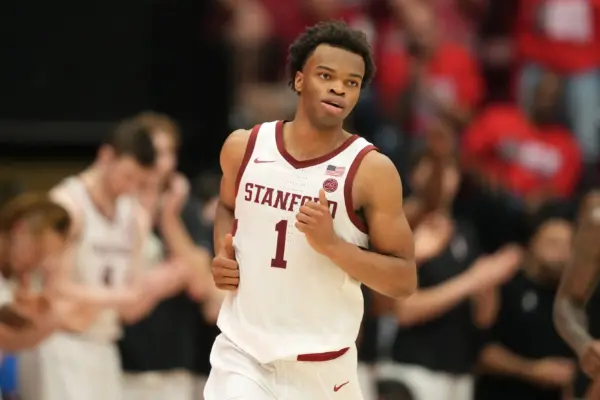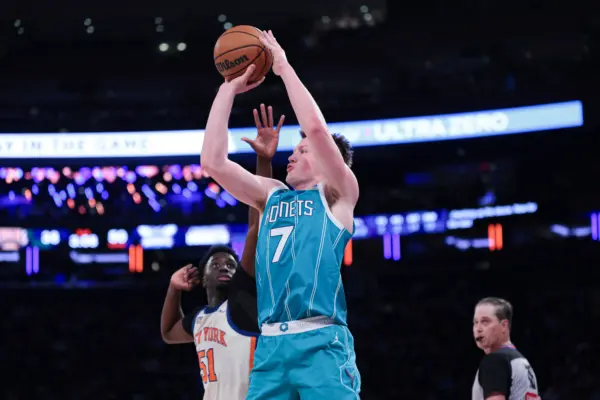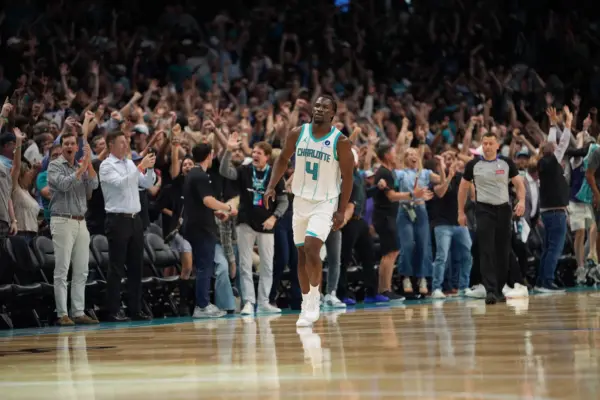


Look at the current depth chart without White, and the problem becomes immediately obvious. Tre Mann was the backup point guard — and the Hornets were 17.2 points worse with him on the floor, and scored 8.9 fewer points offensively with him in the game per 100 possessions this season. That is unplayable at any level, let alone for a team with genuine playoff ambitions.
Sion James can run some point guard minutes in a pinch, but his 12.1% assist percentage does not come close to what is needed backing up LaMelo Ball, who posts a 42.6% assist percentage. The gap between what White provides and what is currently on the roster is enormous. So what are Charlotte’s realistic options if White walks?
4 Realistic Coby White Replacement Options For The Charlotte Hornets
Ayo Dosunmu
Of all the White’s replacement options available in free agency, Ayo Dosunmu makes the most basketball sense. The guard averaged 14.8 points, 3.6 assists, and shot 43.9% from three this season. He’s comfortable operating as a secondary ball handler rather than the primary creator. At 25 years old, he is close to White’s age profile and fits the system Charlotte has built: a player who attacks off the dribble, defends with intensity, and does not need the ball to make an impact.
More importantly, his assist-to-turnover ratio of 2.57:1 reflects exactly the kind of decision-making Charlotte needs from Ball’s backup. Charlotte holds the non-taxpayer mid-level exception worth approximately $14.1 million — enough to sign Dosunmu without breaking the bank. If White leaves, Peterson should pick up the phone immediately.
The only caveat is his fit in the context of Charlotte’s existing backcourt. Ball handles the ball almost exclusively when healthy. Dosunmu, like White, operates best as a secondary creator — meaning the minutes when he truly excels only come when Ball rests. That is a real limitation. However, it is a limitation that existed with White, too, and Charlotte thrived anyway.
Russell Westbrook
At first glance, signing Russell Westbrook feels like a reach back into a previous era. But strip away the narrative and look at what he actually did last season. Russell Westbrook averaged 15.2 points, 6.7 assists, and 5.4 rebounds for the Sacramento Kings — serviceable numbers for a player who will earn somewhere near the veteran minimum in 2026-27. He is 37 years old, but his athleticism has held up better than most players of his age, and his ability to push the pace and make plays in transition aligns with how Charlotte wants to play.
The concern is obvious. Westbrook’s decision-making has always been a live wire, and Charlotte already averages 14.4 turnovers per game — a number that cannot afford to climb further.
Furthermore, his shooting — 33.8% from three last season — does not fit Charlotte’s spacing requirements. Westbrook is a bridge option, not a solution. However, as a one-year deal at minimum cost, he buys Charlotte time while younger options develop.
Select A Guard In The Draft
This option carries a specific credibility because of what team president Jeff Peterson said at his exit interview in April. When asked about the 2026 draft class, Peterson pointed to one area he believes stands above the rest: the guards. “There are at least 10 guys who are NBA players and will impact the league for a long time,” he said.
That quote takes on new significance if White walks — because it suggests Peterson has already done the mental groundwork for a scenario where the backup point guard comes from this draft rather than free agency. He was not just complimenting the class. He was telegraphing a contingency.
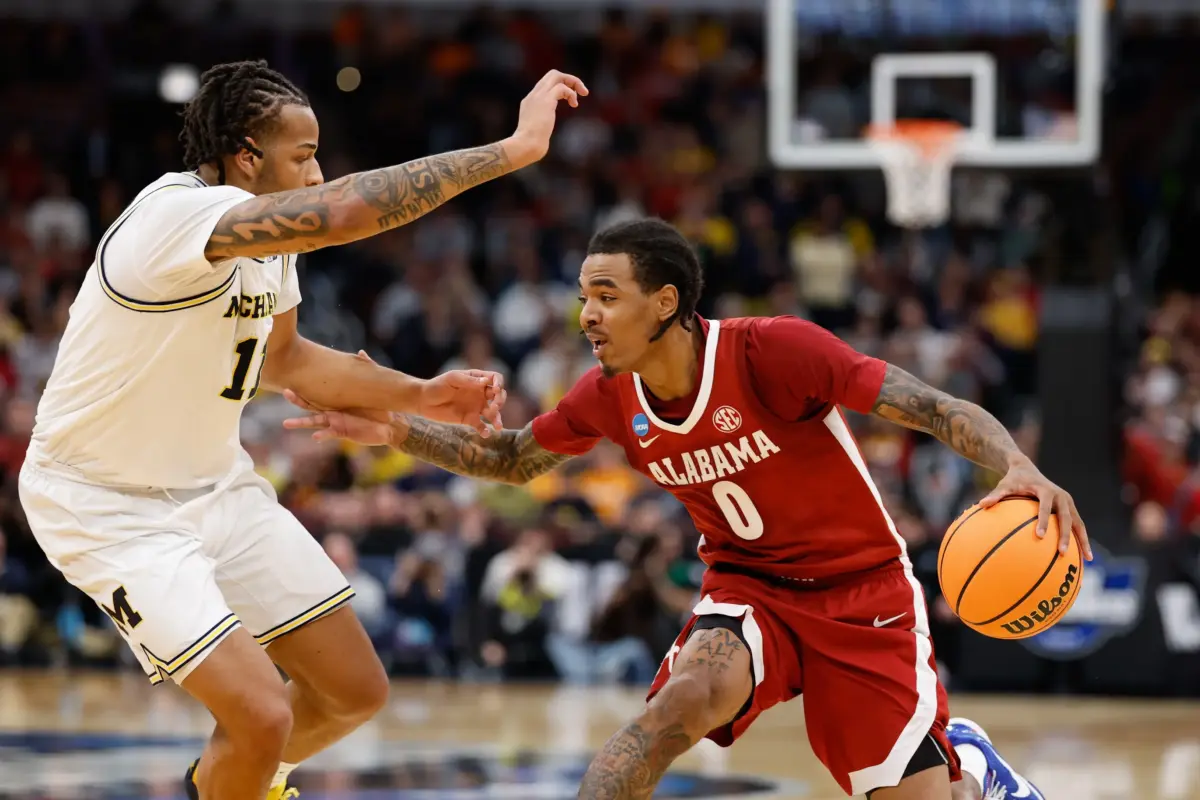
The guards most likely to rise up Charlotte’s draft board in that scenario include Labaron Philon Jr. — who averaged 22 points and shot 39.9% from three at Alabama — along with Brayden Burries, Mikel Brown Jr., Bennett Stirtz, Ebuka Okorie, and Meleek Thomas. Philon, in particular, is the name that generates the most excitement. Lightning quick, gets into the paint at will, and showed genuine creation ability in a breakout sophomore season. At 14th overall, if available, he would be a steal. The honest caveat, as always, is that rookies rarely provide reliable backup point guard minutes in year one. Charlotte’s window demands results now — not development.
Trade for An Established Guard — Using The Expiring Contracts
Charlotte’s most underappreciated asset heading into this offseason is the collection of expiring contracts sitting on the roster. Miles Bridges earns $22.8 million in 2026-27, his final season. Josh Green and Grant Williams both carry expiring deals in the $13-14 million range. Together, those three contracts represent meaningful trade currency for any team looking to shed payroll or rebuild around draft picks.
A trade package centered on Bridges and one of Green or Williams could realistically bring back an established starting-caliber guard or a proven point guard in the $16-20 million salary range. The trade route, alongside using picks 14 and 18 in a trade, also creates an opportunity to address Charlotte’s frontcourt needs simultaneously if structured correctly. Charlotte could move Bridges for a guard plus draft capital and solve two problems in one move.
The Last Word
As the options above make clear, none of these White replacement options is truly inspiring. Westbrook is a band-aid on a wound that needs stitches. Dosunmu is the best realistic fit, but he is not White. A draft pick takes time to develop. A trade dismantles roster depth to fill one gap. Every path is a compromise compared to simply retaining the player who helped transform this team in the second half of last season.
That is why re-signing White is imperative. The Hornets would be in serious trouble without his services, and finding a capable point guard to cover the minutes Ball sits would become the defining challenge of the entire season. Ball is one of the great playmakers in the NBA — but he cannot play 40 minutes every night, and every second he rests, Charlotte needs someone who can sustain the offense rather than drain it. White does that. The alternatives, at best, approximate it. Peterson knows the difference. The urgency of this offseason depends on Peterson acting on it.
Featured Image: Kamil Krzaczynski-Imagn Images