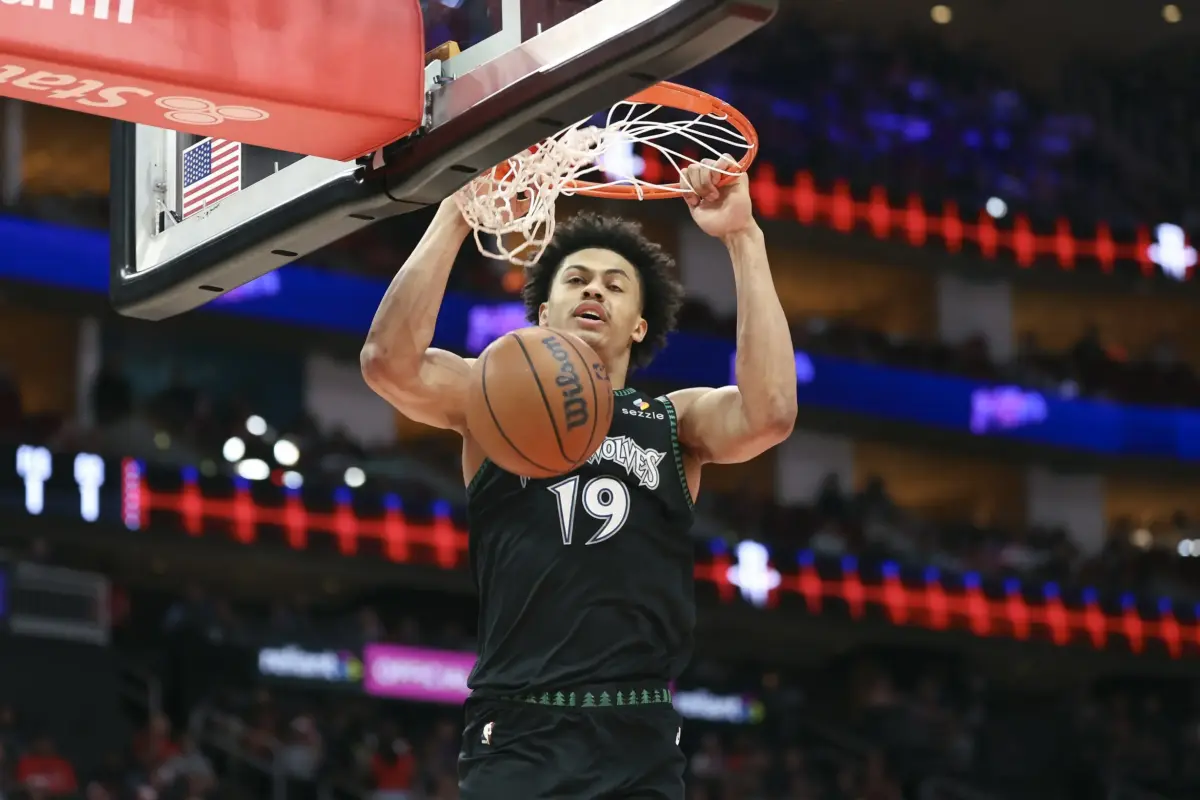

Karl-Anthony Towns remains one of the most popular players in Minnesota Timberwolves history, even after the trade that sent him to the New York Knicks. As fans continue to follow his playoff run from afar, Minnesota faces a different question closer to home. The answer may rest with Joan Beringer, the teenage center whose future could ultimately decide how the Towns trade is judged.
Why Timberwolves’ Karl-Anthony Towns Trade Success Rests On A First-Round Rookie
A City Still Rooting For Its Former Star
Towns spent nine seasons giving Timberwolves fans a reason to believe when the franchise often had little to celebrate. He arrived as the first overall pick, became a six-time All-Star, and helped lead Minnesota back into the playoff picture after years of losing. That history is why so many fans still cheer for him today. To them, Towns was more than a star player. He was the face of the franchise during a decade that tested everyone’s patience.
That is why so many Timberwolves fans are still cheering for New York during this Finals run. Their support has less to do with the Knicks and more to do with Towns. He spent nearly a decade carrying the franchise through losing seasons, coaching changes, and constant roster turnover. For many fans, Towns was the reason they kept believing better days would eventually come.
Karl-Anthony Towns Trade Reshaped Timberwolves
Minnesota’s decision was driven as much by the salary cap as basketball. With Anthony Edwards becoming the face of the franchise, the Timberwolves faced the difficult reality that keeping Towns under the league’s second-apron restrictions would make it harder to build a deep roster around him. Just days before training camp in 2024, they made the move that many fans hoped would never come.
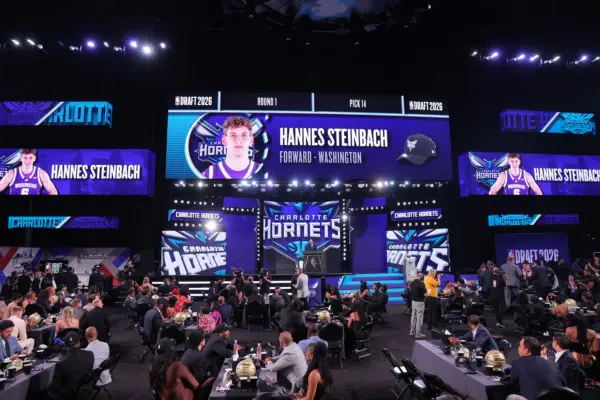
The trade brought back Julius Randle, Donte DiVincenzo, and a future first-round pick from Detroit. When that selection landed at No. 17 in the 2025 draft, Minnesota used it on Beringer, a young French center viewed as one of the most intriguing long-term projects in the class.
The deal was never about finding another Towns. Players with his production and franchise history are not easily replaced. Minnesota made the trade to gain financial flexibility and extend its competitive window around Edwards. Nearly two years later, that calculation is still being tested, and Beringer’s development may ultimately determine whether it was the right one.
Why The Return Package Keeps Getting Complicated
The trade return has become more complicated with time. Randle struggled throughout Minnesota’s second-round loss to San Antonio, and his performance only intensified questions about Randle’s long-term future with the franchise. By the end of the series, many fans had shifted their focus from what Randle could provide to whether the Timberwolves should move on altogether.
DiVincenzo’s situation created another layer of uncertainty. The veteran guard suffered a season-ending Achilles injury during the playoffs, leaving Minnesota without a clear timeline for when he will return to full strength. What once looked like a dependable piece of the Towns trade is now surrounded by questions.
That leaves Beringer in a unique position. Randle is entering his 30s, and DiVincenzo’s future and potential return is tied to his recovery. Beringer is the only player from the deal whose value is still pointing upward. If Minnesota is going to look back on the Towns trade as the move that helped extend its window around Edwards, the young French center may end up being the biggest reason why.
Joan Beringer’s Defensive Ceiling Changes The Math
Beringer averaged an impressive 3.0 blocks per 36 minutes as a rookie this past season. That number signals genuine rim-protecting potential at the NBA level. He turns 20 in November, so the rawness makes complete sense.
The French center played only 40 games and averaged 3.9 points in very limited minutes. Nobody should expect him to replicate Towns’ offensive brilliance. Towns is a six-time All-Star currently starring in the Finals.
However, Beringer’s trajectory points toward becoming the superior defender over time. His athletic upside has been noted by various analysts throughout the draft season. More court time would help him cut down on the fouls that plague his game.
Towns is arguably playing the best defense of his career right now in New York. That fact makes the comparison more difficult than expected. Still, Beringer’s length and mobility project better at consistently erasing perimeter mistakes.
What Must Happen For The Future To Arrive
Beringer cannot crack the rotation while three established veterans block his path. Rudy Gobert, Randle, and Naz Reid occupy the frontcourt depth chart ahead of him. Trading at least one opens the door.
Moving Randle seems most likely, given his $33.3 million salary and declining playoff value. The apron life that cost Minnesota their franchise center now dictates their next move entirely. Shedding salary and creating rotational room for Beringer serve both critical goals simultaneously. Financial pressure created this problem in the first place.
The Timberwolves traded Towns because they truly had no other choice. Now they need Beringer to make that sacrifice worth the enduring pain. His development could finally close the book on Minnesota’s most painful transaction.
Fans still cheer for Towns as he suits up for the Knicks in these Finals, especially seeing Towns’ heroics in Game 1. That genuine affection will not simply disappear anytime soon. However, a functional Beringer would give them something entirely different to rally behind.
Featured Image: Troy Taormina-Imagn Images