

As we head into the second half of the season, the Blue Jays continue to embody inconsistency, flashing their potential one night before falling flat the next. After recording their first series sweep in nearly three months in Boston, Toronto traveled to Chicago and were blown out 16-2, only to respond the next day with their biggest comeback victory of the season. In their series opener against the Houston Astros, they climbed back to the .500 mark before dropping two of their most disappointing—and arguably most frustrating—losses of the first 81 games.
Toronto has time, but not much of it. If it wants to be a team playing meaningful baseball in October, several key issues must be addressed—and quickly.
The Blue Jays’ Offensive Nucleus Needs to Deliver
This should come as no surprise. The Blue Jays’ offense has struggled for much of the first half, and while the responsibility doesn’t rest on one player’s shoulders alone, it begins with the man Toronto invested $500 million in just over a year ago.
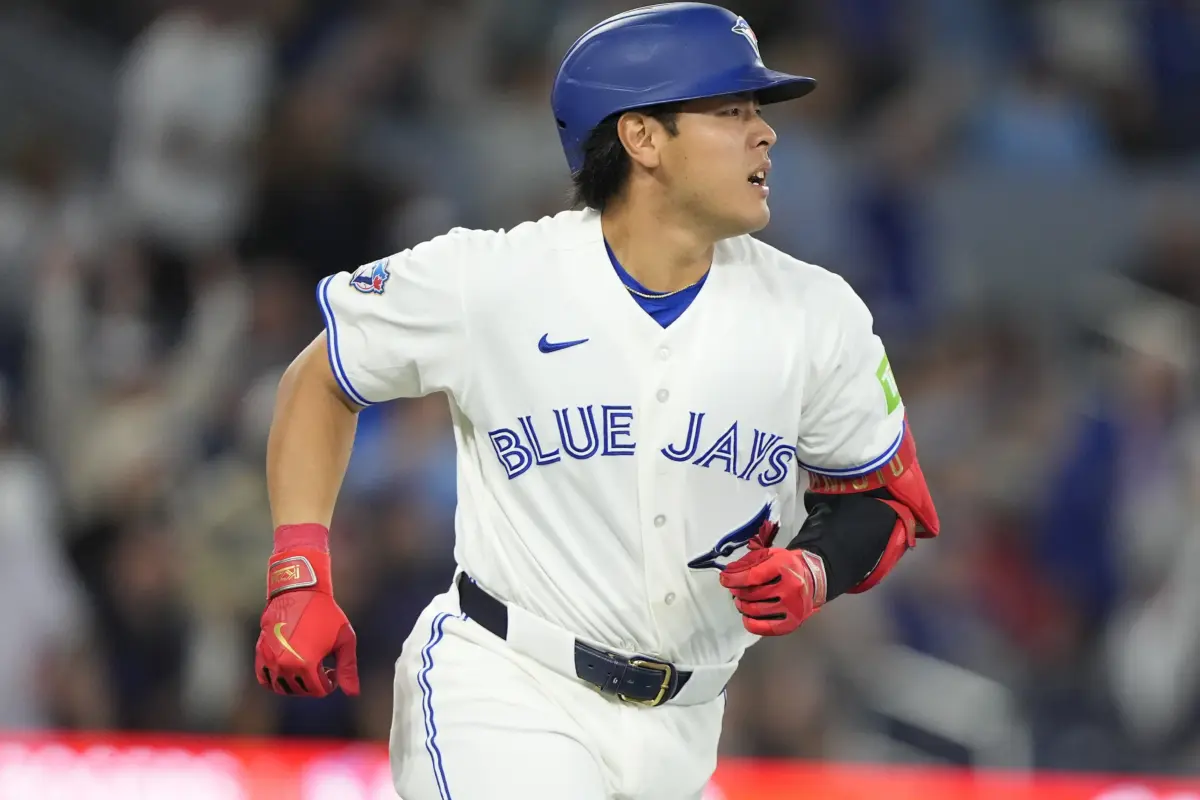
Vladimir Guerrero Jr., though it may not feel like it now, remains the nucleus of this offense, and when the cornerstone of your lineup is producing just four home runs and 32 RBIs while having only five doubles since May 1, it raises legitimate concerns. As it stands, there are seven players on the Blue Jays’ roster with more home runs than the Blue Jays’ first baseman. This offense is built to revolve around the power and run production of Guerrero Jr. and Kazuma Okamoto, who was signed to a four-year, $60 million contract to provide exactly that—middle-of-the-order power and run production. Yet, the Jays’ power duo is completely one-sided, with Okamoto producing more home runs (18) than Guerrero Jr. has extra-base hits (16).
What’s that age-old saying? If nothing changes, nothing changes. And if Guerrero Jr. doesn’t change something, we may see him stay exactly where he is—failing to produce the home runs and RBIs the Jays pay him for.
Lack of Quality Contact Continues to Cost Toronto Runs
Runners in scoring position continue to haunt the Blue Jays’ lineup. Their recent three-game series against Houston was their worst showing all season, leaving 30 runners on base—the most in any three-game set this year. They rank as the worst team in baseball, according to Baseball Reference, with a team slash line of .236/.362/.667 with runners in scoring position.
Toronto currently owns a 6.6% barrel rate and a 36.1% hard-hit rate, according to Statcast, both of which rank in the bottom 10% of Major League Baseball. The Blue Jays aren’t just failing to capitalize with runners in scoring position—they’re struggling to make quality contact, a trend that has carried over into their performance with runners in scoring position.
Pitching and defense can keep you in games, but offense wins them, and Toronto cannot expect to win games when they fail to capitalize on the opportunities given to them.
Self-Inflicted Mistakes
Outside of the offense, self-inflicted mistakes remain costly, often coming on plays that should be made without issue—and the last game of the Astros series is a perfect example.
In the first half of the eighth inning on Wednesday, Jeff Hoffman threw the ball down the left field line on what appeared to be an attempted pickoff, which led to the Astros taking the lead and eventually winning the game.
The Astros take the lead on a throwing error. pic.twitter.com/HpxrFABXxZ
— Sportsnet (@Sportsnet) June 25, 2026
In the bottom half of the inning, newly acquired Luis Urías was caught between second and third base on what he believed would be an extra-base hit from George Springer. Instead, it turned into a flyout (F9) and a double play.
CLUTCH CAM SMITH!#VoteCam ⭐️ https://t.co/W06pfHQMR1 pic.twitter.com/9t7vxXyfkI
— Houston Astros (@astros) June 25, 2026
These are just a few examples of how Toronto’s unforced errors continue to kill them. The Jays keep finding ways to shoot themselves in the foot with too many games being decided by their own mistakes.
Saving the Bullpen Starts With the Rotation
It’s no exaggeration to say the Blue Jays’ bullpen has been stretched thin, logging 21⅓ innings over the past seven days alone. While Kevin Gausman struggled in the series opener against the Texas Rangers, he still managed to grind through six innings, sparing the bullpen from having to cover even more outs.
This is the type of resilience this starting rotation has to bring to the table. Ideally, Toronto should have a starter reach the seventh inning in at least one of every three starts to help ease the burden that has been put on the bullpen as of late.
The Blue Jays’ relief staff, though very limited in depth, has started to show some structure, with Tyler Rogers and Jeff Hoffman controlling the seventh and eighth innings while Louis Varland anchors the ninth; however, they need support. The starting rotation has to find ways to go deep into games to help preserve one of baseball’s most overused bullpens.
With the trade deadline approaching, it’s easy to assume that Ross Atkins and the Blue Jays’ front office will look to possibly add another arm to the rotation and another reliever to the bullpen, preferably a left-hander.
But as far as Toronto is concerned offensively, they have the pieces—and in the second half of the season, they are going to need to find a way to put them together.
Main Image Credit: John E. Sokolowski-Imagn Images