
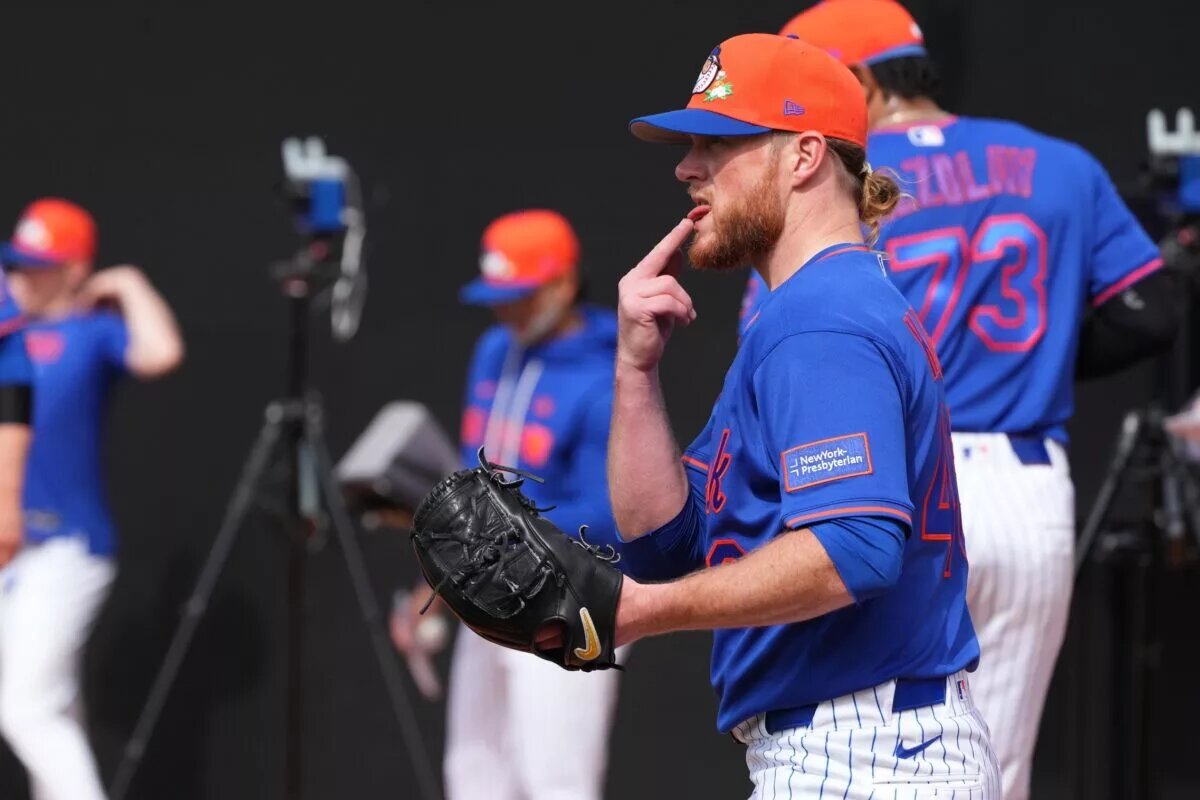

Mets Call Up Craig Kimbrel as Bullpen Issues Mount Early in 2026
The New York Mets are just two weeks into the 2026 season, sitting at 7–7, but one issue has already become clear: the bullpen needs help.
In response, New York made a notable move — calling up veteran closer Craig Kimbrel from Triple-A.
At 37 years old, Kimbrel is no longer the dominant, untouchable force he once was. But this isn’t about recapturing the past. This is about solving a present problem — and Kimbrel may be uniquely equipped to do exactly that.
Why the Mets Turned to Kimbrel

Early in the season, the Mets bullpen has struggled to:
- Close out tight games
- Maintain consistency in late innings
- Establish clear roles
These are common early-season issues, but they can quickly become costly in a competitive National League race.
That’s where Kimbrel fits in.
This move isn’t just about adding another arm — it’s about adding structure, experience, and reliability to a bullpen that currently lacks all three.
What Craig Kimbrel Still Brings at 37
Kimbrel’s prime years made him one of the most dominant closers in baseball history. While he’s no longer at that level, his skillset still translates in key ways.
1. Elite Late-Inning Experience
Few pitchers in MLB history have handled pressure situations like Kimbrel.
He has:
- Closed hundreds of games
- Pitched in postseason environments
- Thrived in high-leverage moments
For a bullpen that’s still finding its identity, that kind of experience is invaluable.
Kimbrel doesn’t need to overpower hitters — he needs to execute in big moments, something he’s done his entire career.
2. Strikeout Stuff That Still Plays
Even in the later stages of his career, Kimbrel remains a swing-and-miss pitcher.
His fastball-curveball combination still:
- Generates strikeouts
- Escapes jams
- Limits reliance on contact
In high-pressure innings, the ability to miss bats is critical — especially with runners on base.
That’s something the Mets bullpen has lacked early in 2026.
3. Immediate Role Stability
Perhaps the biggest impact Kimbrel can make isn’t just performance — it’s clarity.
Right now, the Mets bullpen doesn’t have defined roles. Kimbrel changes that instantly.
He can slot in as:
- A primary closer
- A setup man in the 8th inning
- A high-leverage option based on matchups
Even if he’s not the full-time closer, his presence helps push other relievers into more natural, effective roles.
And in bullpen management, structure often leads to success.
The Risks Are Real
There’s a reason Kimbrel was available to begin the season.
At 37, there are legitimate concerns:
- Command inconsistency
- Occasional struggles with home runs
- Declining velocity compared to his peak
He is no longer a “set-it-and-forget-it” closer.
Instead, he’s a calculated gamble — one that could pay off if used correctly.
Why This Move Could Work for New York

The key to this move is expectation.
If the Mets are relying on Kimbrel to be the dominant All-Star version of himself, they may be disappointed.
But if they use him as:
- A stabilizing veteran
- A high-leverage option
- A bullpen leader
Then this move becomes smart — and potentially impactful.
For a team sitting at .500, small improvements in bullpen performance can quickly translate into wins.
One or two extra saves over a few weeks can be the difference between staying in the playoff race or falling behind.
What This Means for the Mets Moving Forward
At 7–7, the Mets are still defining their identity in 2026.
Calling up Kimbrel signals two things:
- They recognize the bullpen as a weakness
- They are willing to act early to fix it
If Kimbrel performs well, he could:
- Take over late-inning duties
- Help solidify the bullpen long-term
- Even become a valuable piece in a potential trade scenario later in the season
The Last Word
Craig Kimbrel doesn’t need to be the best version of himself to help the Mets — he just needs to be a reliable one.
For a bullpen searching for answers, that alone could be enough to turn close losses into wins and keep New York firmly in the postseason conversation.
And in a long MLB season, those small differences often mean everything.