
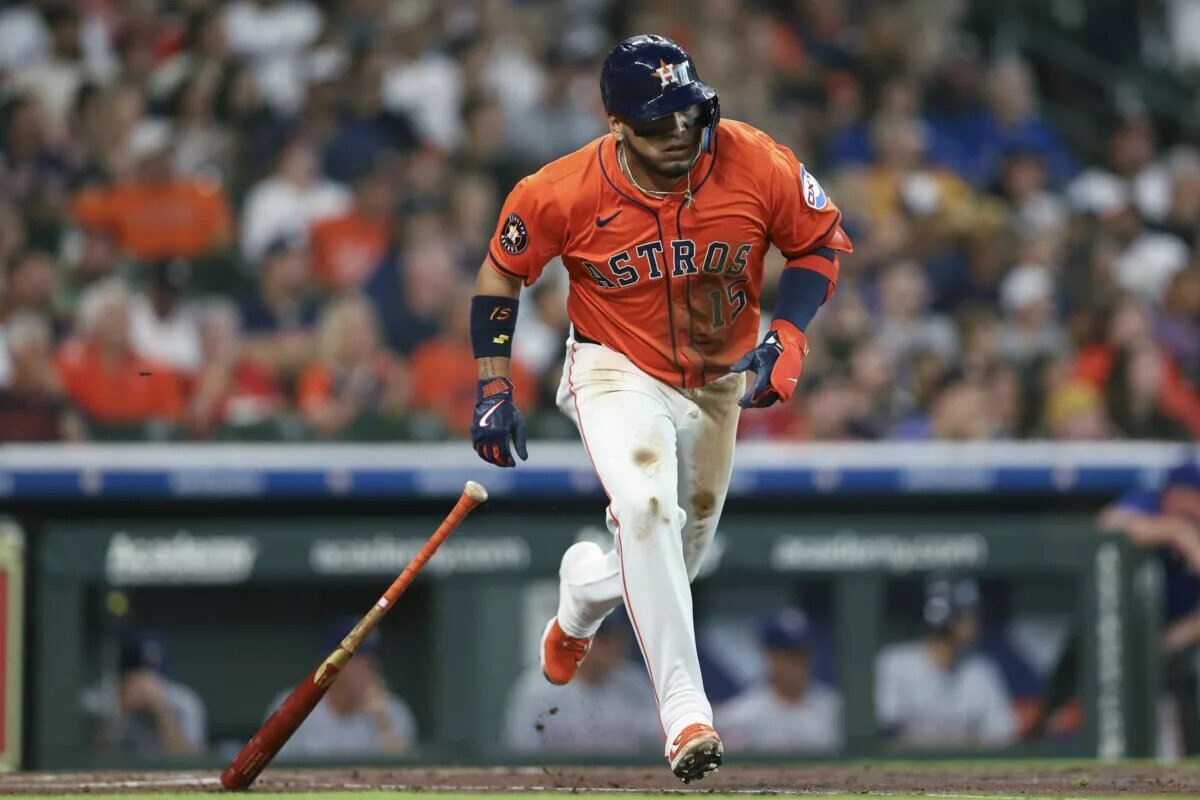
During the course of last season, whether it was first, second, or third (to an extent), the Boston Red Sox had an infield problem. That problem was when Triston Casas and Alex Bregman went down with injuries; they didn’t have solid backup options. Alex Cora decided to platoon several guys around the diamond. Some names that took roles in the infield include Abraham Toro, Nick Sogard, and Nathaniel Lowe. In 2025, the Red Sox used a total of 14 players for the four infield spots.
Naturally, one of the main focuses this offseason was to provide stability to the infield. Over the offseason, they signed Isiah Kiner-Falefa and traded for Caleb Durbin, Willson Contreras, and Andruw Monasterio. This is in addition to Casas coming back and Marcelo Mayer being a big name in the mix. On paper, without injuries, this seems like a pretty good mix. But Boston, wanting more, seems to have reopened discussions with a popular trade name this offseason.
Red Sox Back in Rumors for Isaac Paredes
Isaac Paredes, the third baseman for the Houston Astros, had been in heavy trade rumors this offseason. And it’s easy to see why. With the Carlos Correa reunion at last year’s trade deadline and Jeremy Pena having his breakout season, Paredes is seemingly being pushed out of the infield in Houston. The 27-year-old is coming off a season where he had a slash line of .254/.352/.458 with 20 home runs and 53 RBIs.
Now, prior to the Durbin trade, it was understandable why a move for Paredes made sense. In fact, mock trades were made up of several different players. These trade proposals included Jarren Duran, Brayan Bello, and one of either Payton Tolle or Connelly Early (not altogether, but a combo of these players). Of course, Houston wouldn’t have just given up Paredes on their side either. Here’s why a Paredes trade now could make sense, and also why it wouldn’t.
The Case for Paredes
Paredes, as mentioned, has a tremendous OBP. His .352 would’ve ranked 4th among players who had 150 at-bats with the team (not including Rafael Devers, who was traded midseason). In Houston, he had a low strikeout rate as well, registering at just 17.4%. This would place him at the fourth lowest on 2025’s squad, behind Toro, Bregman, and Masataka Yoshida. His 123 OPS+ puts him just outside the top 5 on the team.
Defensively, he’s an above-average defender with only five errors in 203 chances. That translates to a fielding percentage of .975. If we’re specifically talking about third base, though, Paredes is taller than Durbin by about four inches (5’11” compared to 5’7”). Size can help at that position in terms of fielding range. His arm strength is also considered very good for a third baseman.
Overall, Paredes brings an above-average glove on the defensive end and a good eye at the plate offensively. From an analytical standpoint, it’s easy to see why Craig Breslow and the front office would be interested in him.
The Case Against Paredes
Now, while a few analytics may show that he could be a good addition to the team, there are a few reasons why it isn’t a good idea: there’s more about him, there’s the logistics from the Red Sox standpoint, and there’s the framework of the trade as well.
Why Not Paredes?
First off, while he does have a fielding percentage that was above league average last year, he also had a negative four when it comes to DRS. For comparison, Durbin had a DRS number of positive five at third last year. In addition to that, when comparing him to some of the top batters on the Red Sox, he’s perfectly average. He bats in the .230 to .270 range, he gets on base, and hits 20 homers (except for 2023). While that seems okay, they’re not gaining anything by acquiring him. In addition, the Red Sox made a point last year and this offseason of acquiring hitters who hit lefties well. Paredes batted .200 in 60 at-bats versus left-handers in 2025.
Do the Sox Need Him?
Based on the facts that Paredes’ stats aren’t exactly far and above the rest, there’s really a question of which team he fills. They’ve got multiple people in his position who are being developed. At least for this season, there’s not really an ideal place for him. Mayer’s a natural shortstop, but Trevor Story’s playing there. So his options are second or third. Assuming Durbin’s taking third, Mayer has a chance at second. But so does Monasterio and Romy Gonzalez once he comes back. Logistically, there are too many people in contention for an infield spot already, and trading one to Houston wouldn’t help the Astros on their side either.
What Would a Trade Look Like?
Earlier this offseason, Duran was the heavy centerpiece of several trades. And it’s no question why he was one of the most sought-after players. Despite a down year last season, Duran is still one of the fastest players in the league and was just an MVP candidate 2 seasons ago. He’s also under contract till 2029. All of the reasons listed on why a team would want him are also all reasons the Red Sox should keep him. The trade would make sense for the Astros as they’re running thin on outfielders after the Kyle Tucker trade that brought Paredes in.
The Red Sox could try to offer Yoshida and a prospect, but that might be turned down immediately. Yoshida, while a very good hitter, has a below-average arm in the outfield. With Yordan Alvarez taking up the designated hitter spot at Daikin Park, there’s not really a need for him. Houston’s rotation is a bit weak right now, so it makes sense why they wanted a Bello or a Tolle caliber of player.
The bigger issue for this would be the return package for Boston. Paredes could be a free agent as early as 2027 if his team’s option is declined. Surely, Boston will want more for giving up a valuable asset such as Duran. But they have an abundance at several positions. Someone like Steven Okert could be a package deal, as the Red Sox have concerns about their left-handed bullpen depth. Another option could be catcher Walker Janek, the Astro’s fifth best prospect. The Red Sox were rumored to be in the market for catchers earlier this offseason and could use some depth.
Deal or No Deal?
After looking at the pros and cons of this situation, the Red Sox should probably steer clear of a Paredes trade. Duran could slot in at the DH spot for now, and insiders think if he were being pushed as a trade asset by Boston, they could do better than Paredes in terms of a return. The probable move would just be playing at least the first half of the season out as is, then reevaluate at the trade deadline. Paredes is a solid player, but no evidence shows that they would massively improve with him at this moment.
Main Photo Credit: Troy Taormina-Imagn Images