
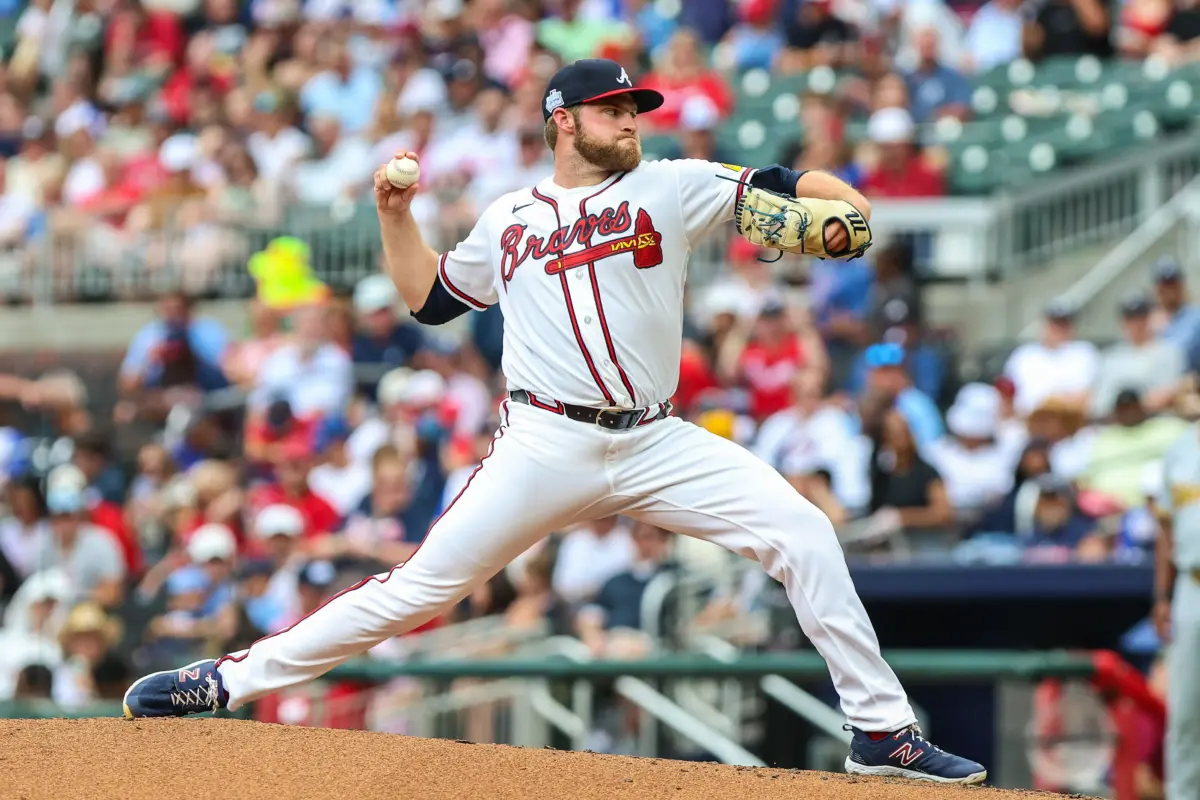

Bryce Elder’s 2026 season has been one of those reminders that development rarely moves in a straight line. After two uneven years that pushed him toward the edge of Atlanta’s rotation picture, Elder has reemerged as something far more valuable than a depth arm. He is giving the Braves real innings, real stability, and one more reason to believe this rotation may be deeper than it looked a few months ago.
Elder entered the season in that familiar, slightly uncomfortable baseball category: useful, but only if you squinted. He was not some failed prospect, and he was not without real success in the senior circuit. He was an All-Star in 2023, after all, which remains one of those facts that is both true and somehow easy to forget after what came next, as the seasons that followed were not especially kind to the 27-year-old Texan. Elder spent time bouncing between Atlanta and Triple-A Gwinnett, searching for the form that once made him one of the better surprise stories in the National League, much like his DH teammate Dominic Smith.
Bryce Elder’s Rough Road Back
In 2024, he was mostly unplayable at the major-league level, posting a 6.52 ERA over 10 starts. In 2025, he was more durable than dominant, the kind of arm a team appreciates when the rotation is hastily duct-taped together but does not necessarily want making a postseason start unless the alternative is asking a bullpen catcher to fake a knuckleball. He ate innings. He had his moments. He also looked, more often than not, like a back-end survival plan.
Then 2026 happened, and Elder has started pitching like someone who wanted to allay the epithet that he was becoming simply an “innings eater.”
Elder’s 2026 Numbers Are No Fluke
Through June 8, Elder is 5-3 with a 2.66 ERA, 1.05 WHIP, and 71 strikeouts across 84 2/3 innings, which represents legitimate top-end rotation production. He is among the National League leaders in several important pitching categories, including innings, ERA, WHIP, and opponent batting average. On Baseball Reference’s pitching leaderboards, his name is no longer hiding in the polite middle of the pack. It is sitting next to arms with far bigger reputations and far less awkward recent baggage.
That is what makes this comeback so intriguing. Elder is not doing this as a flame-throwing reinvention act. He has not suddenly become Spencer Strider without the 1980s mustache. This is still Elder, which means his modus operandi remains: be in command, get the sinker working, focus on pitch sequencing, and ensure you keep your nerve, since living near the edges of the strike zone can sometimes lead to redecorating the steps of the Chop House at Truist Park.
A More Complete Version of Bryce Elder
The difference is that Elder’s pitch arsenal looks more complete now. The slider has become a real weapon, the sinker still gives him his identity, and his revamped cutter has helped stop hitters from sitting in one comfortable lane when facing Elder. That last part matters. Elder’s 2023 success always came with the nagging suspicion that hitters would eventually stop being fooled if he could not keep evolving. For a while, that suspicion turned into reality.
Now, he is giving hitters more to think about. More shapes. More speeds. More uncomfortable decisions. That does not sound as sexy as “triple-digit fastball with wipeout stuff,” but the Braves do not need every starter to be recent Cy Young Award-winner Chris Sale. Sometimes they need a pitcher who can take the ball, avoid the big inning, and hand the game to a dominant bullpen headlined by Dylan Lee, Robert Suarez, and Raisel Iglesias.
Elder has been following those guidelines perfectly. His June 2 start against the Toronto Blue Jays was a tidy example of “Bryce Elder 2.0.” It was not spotless, and that is fine. He allowed three runs over 6 2/3 innings, struck out six, and gave the Braves enough length to let the bullpen finish a 4-3 win.
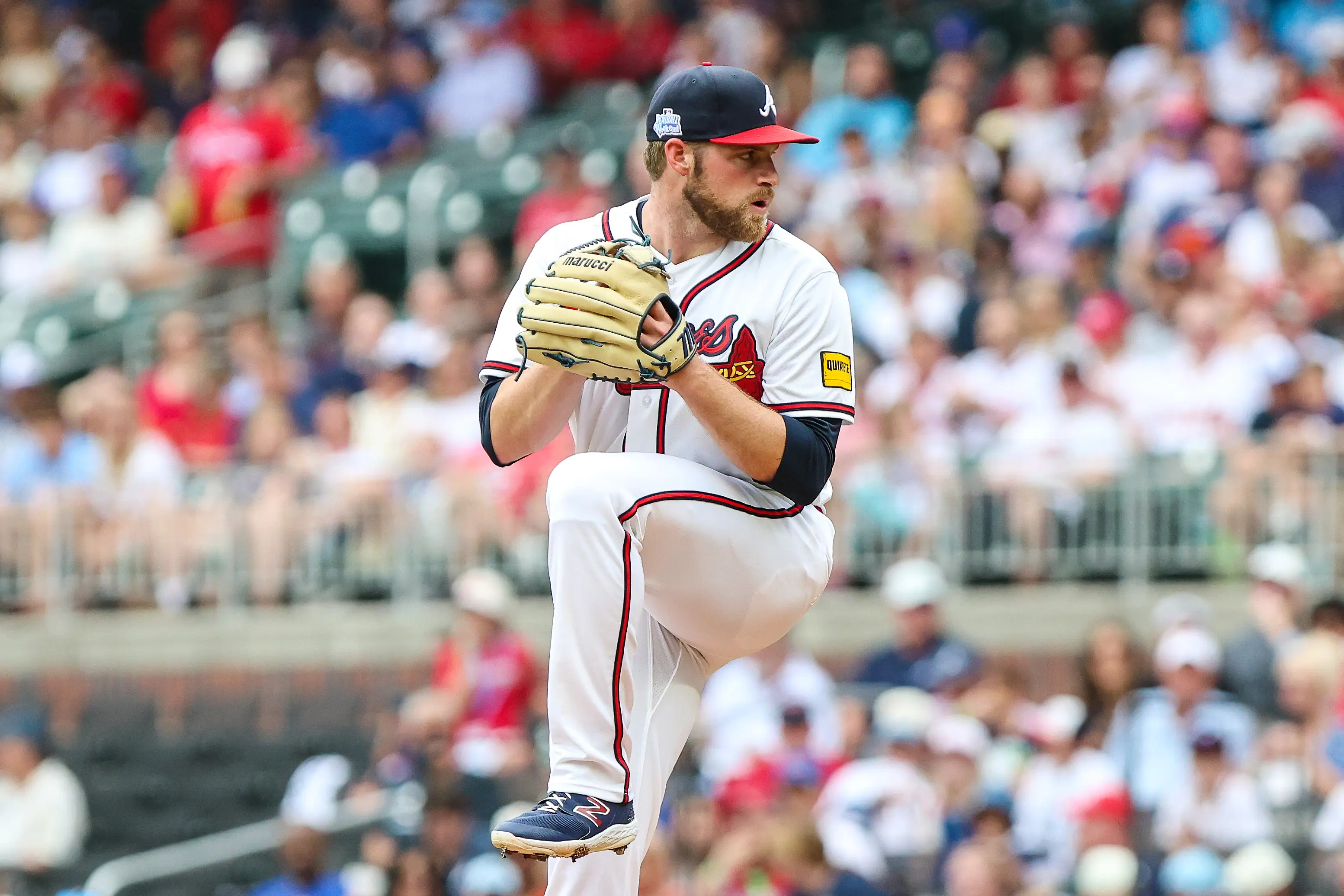
Then, on June 7 against the Pittsburgh Pirates, he allowed just two hits and two runs across six innings in another Atlanta win. After getting roughed up by the Red Sox on May 27, he did not spiral into another “here we go again” stretch. He simply got back to being dependable and rock-solid – descriptors that would not have applied to him the prior two seasons.
Now, the obvious caveat: regression can always make an unwelcome appearance during the long MLB season. Elder’s profile will probably always invite skepticism because he is not a huge strikeout monster, and contact-oriented starters tend to live with smaller margins. If the command slips, the charming little contact-management story can turn into a very loud three-run homer due to one regrettable cutter.
Why Elder’s Bounce-Back Matters for the Braves
But that caveat should not swallow the larger point: Elder has already given the Braves far more than they could have reasonably expected. He has gone from possible roster squeeze to one of the more important stabilizers on a team with the best record in baseball. He has helped protect the bullpen, covered innings, and turned what looked like a potential rotation soft spot into an actual strength.
For Atlanta, that matters. For Elder, it might matter even more. It also might mean that Atlanta should curtail the idea of giving up a king’s ransom to acquire Tarik Skubal at the trade deadline.
Two rough seasons can rewrite how a player is viewed. They can turn an All-Star into a shrug. They can make every decent start feel temporary, and every bad one feel like confirmation. Elder is pitching his way out of that box now. Not with fireworks. Not with a reinvention so dramatic it needs its own documentary voiceover. Just with better execution, more complete stuff, and the stubborn insistence that maybe the Braves had not seen his best version yet.
But it seems they’re seeing it now. And for a team with October glory on its mind, Elder’s resurgence makes Atlanta feel even more complete than it already did.
Main Photo Credit: Jordan Godfree-Imagn Images