
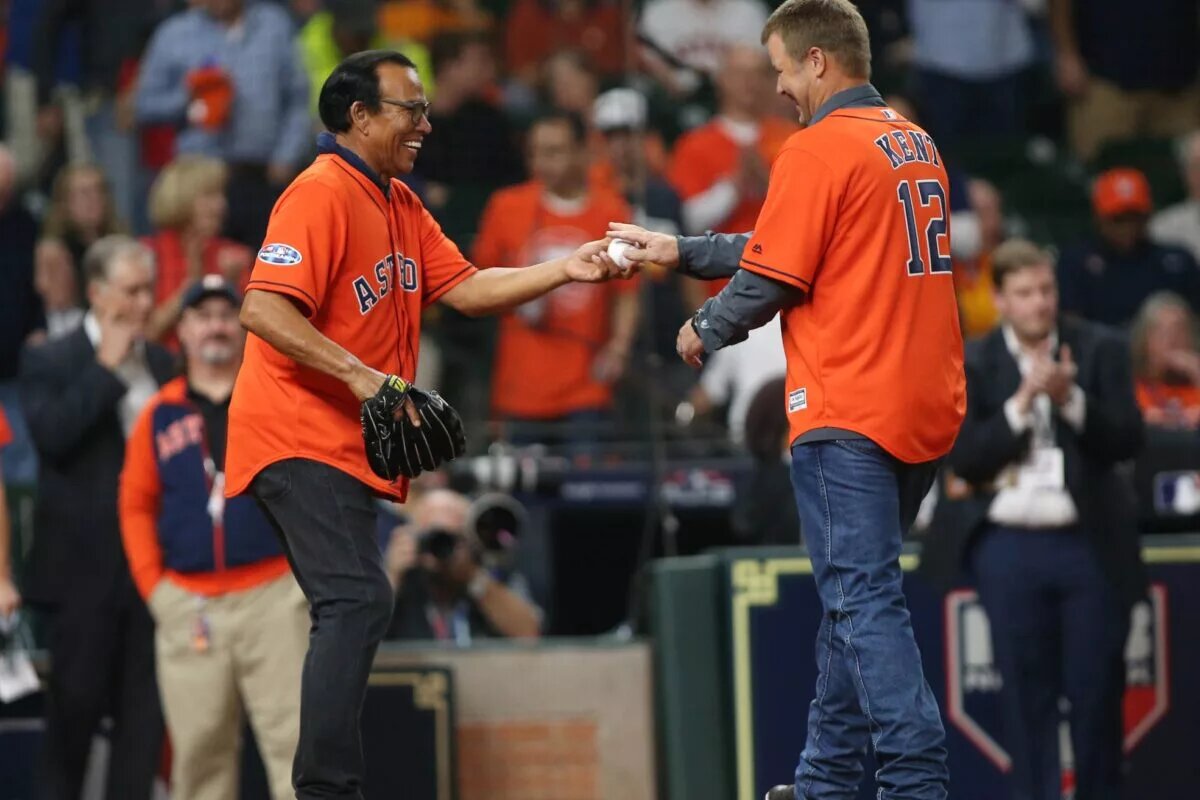

For decades, second base has been one of the toughest positions for Hall of Fame recognition. Unlike first basemen or corner outfielders, second basemen often built their value through defense, versatility, durability, leadership, and advanced metrics that traditional voters historically undervalued. That has left several outstanding players on the outside looking in at Cooperstown.
The recent election of Jeff Kent to the National Baseball Hall of Fame and Museum — with his induction ceremony set for later this year — has reopened conversations about overlooked second basemen across multiple eras. Kent, baseball’s all-time home run leader among second basemen with 377 homers, spent years building Hall support before finally breaking through. His election has become an important benchmark for evaluating other candidates at the position.
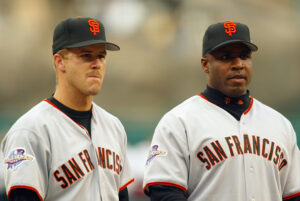
If Kent’s offensive dominance was ultimately enough to earn Cooperstown recognition, then several other second basemen deserve renewed Hall of Fame attention as well.
Here are five second basemen whose Cooperstown cases deserve serious reevaluation.
1. Lou Whitaker
Lou Whitaker’s absence from Cooperstown remains one of the biggest Hall of Fame oversights in baseball history. The longtime Detroit Tigers star quietly built one of the most complete careers ever by a second baseman, finishing with 2,369 hits, 244 home runs, 1,084 RBIs, 143 stolen bases, and 75.1 WAR.
Whitaker was also a five-time All-Star, four-time Silver Slugger, three-time Gold Glove winner, 1984 World Series champion, and the 1978 AL Rookie of the Year. Compared to Kent, Whitaker was the far superior defensive player while still providing tremendous offensive value. Modern analytics overwhelmingly support Whitaker’s candidacy, with WAR totals that exceed many inducted second basemen.
The most shocking part is that Whitaker fell off the BBWAA ballot after just one year. Today, many historians and analysts view that result as one of the greatest ballot failures ever, and the Contemporary Baseball Era Committee should absolutely revisit his candidacy soon.
2. Bobby Grich
If modern analytics existed during the 1980s Hall voting process, Bobby Grich might already have a plaque in Cooperstown. The former Baltimore Orioles and California Angels star combined elite power, defense, patience, and consistency at a position where offensive production was rare.
Grich finished with 224 home runs, a .371 OBP, a 125 OPS+, and 71.1 WAR while earning six All-Star selections and four Gold Gloves. He was essentially a prototype for the modern analytical darling before baseball fully embraced advanced stats.
Compared to Kent, Grich had fewer offensive counting stats but offered significantly more defensive value. Their overall WAR totals are surprisingly close, and many modern analysts actually rank Grich above several inducted Hall of Fame second basemen. His candidacy has gained momentum in recent years, especially among statistically-driven voters.
3. Willie Randolph
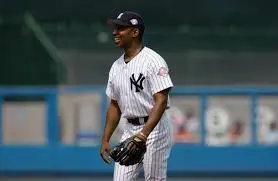
Willie Randolph may have been too subtle for traditional Hall voters. The longtime New York Yankees captain excelled in areas that often went under-appreciated during his era, including elite on-base skills, leadership, defense, consistency, and postseason success.
Randolph finished his career with 2,210 hits, a .373 OBP, and 65.9 WAR while making six All-Star teams. He also appeared in six World Series and won two championships during the Yankees’ late-1970s dynasty years.
Unlike Kent, Randolph was never a huge power hitter, but he was one of the best table-setting second basemen of his generation and one of the defining Yankees of his era. His WAR total surpasses many Hall of Famers already inducted, yet his greatness was often quiet rather than flashy. That should not keep him out of Cooperstown forever.
4. Ian Kinsler
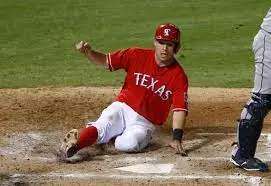
Ian Kinsler represents the modern version of the overlooked complete second baseman. The former Texas Rangers star combined power, speed, defense, and postseason value throughout a highly productive career.
Kinsler finished with 1,999 hits, 257 home runs, 243 stolen bases, and 54.1 WAR while earning four All-Star selections, two Gold Gloves, and a World Series title in 2018. At his peak, he was one of the most well-rounded second basemen in baseball, capable of contributing in every phase of the game.
Compared to Kent, Kinsler lacks the overwhelming offensive totals, but he was a far superior defender and baserunner. As analytical thinking continues reshaping Hall discussions, Kinsler could eventually emerge as a serious Veterans Committee candidate.
5. Tony Phillips
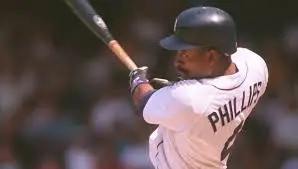
Tony Phillips may be the ultimate hidden gem of baseball history. Because he played everywhere, many fans forget how productive he truly was. Across an 18-year career, Phillips accumulated 2,023 hits, a .374 OBP, and 50.9 WAR while providing elite positional versatility and exceptional plate discipline.
The former Oakland Athletics standout was decades ahead of his time. In today’s game, Phillips would likely be viewed as one of baseball’s most valuable multi-position stars because of his ability to impact games offensively while moving seamlessly around the diamond.
Compared to Kent, Phillips had less power and fewer accolades, but he offered far more versatility, on-base value, and defensive flexibility. Modern baseball increasingly appreciates players like Phillips, which is exactly why his candidacy deserves much more discussion than it historically received.
Why Second Basemen Get Overlooked
Second basemen often suffer in Hall voting because their greatness rarely looks traditional. Many peak earlier, age faster, sacrifice offensive stats for defense, and contribute value in ways older voters did not fully appreciate.
That reality is why players like Lou Whitaker, Bobby Grich, Willie Randolph, Ian Kinsler, and Tony Phillips deserve renewed attention from the Veterans Committee and Contemporary Baseball Era Committee. Jeff Kent’s election already forces voters to reconsider how second basemen should truly be evaluated, and the answer may ultimately help several overlooked stars finally receive the Cooperstown recognition they deserve.